Platon Sudoku · Sudoku Study
Swordfish · Step-by-step example
For one digit, all its positions in three rows fit within the same three columns. Rows and columns can be exchanged. Remove that digit from the three cover columns outside the selected rows.
This course is adapted from Platon Sudoku App. Read the complete example here, then continue learning and practising in the app.
View on Google PlayRecognize the pattern
For one digit, all its positions in three rows fit within the same three columns. Rows and columns can be exchanged.
How to find it
Scan one digit across rows with two or three candidates. Find three rows whose combined candidate columns number exactly three.
What it allows
Remove that digit from the three cover columns outside the selected rows.
Avoid the mix-up
The candidates need not form nine corners. Check every position in each selected row: no candidate may lie outside the three cover columns.
Step-by-step example · Row
This example starts from a saved intermediate position. Its candidates include earlier logical eliminations; they are not fresh automatic notes.
Blue: evidence. Green: conclusion. Crossed-out digits: eliminated candidates. R1C1 means row 1, column 1.
Step 1 · Recognize the Swordfish
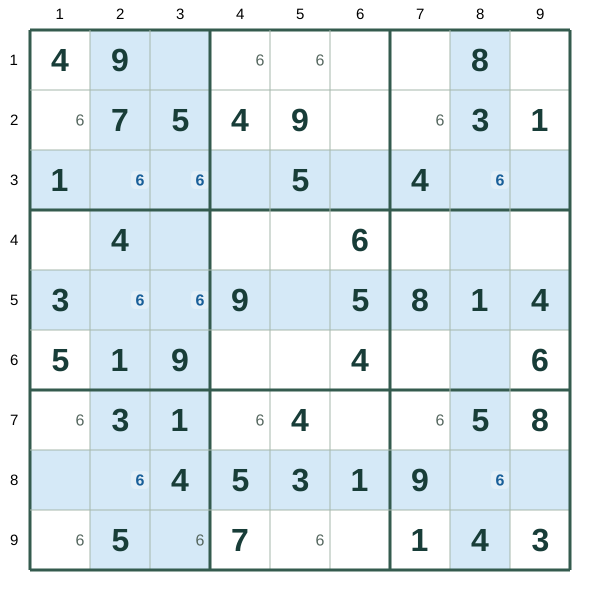
The three base regions (row 3, row 5, row 8) all still need 6, and every remaining 6 candidate in them lies in the same three cover regions (column 2, column 3, column 8). This forms a Swordfish.
Step 2 · See why the covers are occupied
Each base must place one 6, for three placements total. A cover cannot contain two of the same digit. Since every placement is confined to these three covers, the three placements must occupy one cover each.
Step 3 · Remove the targets
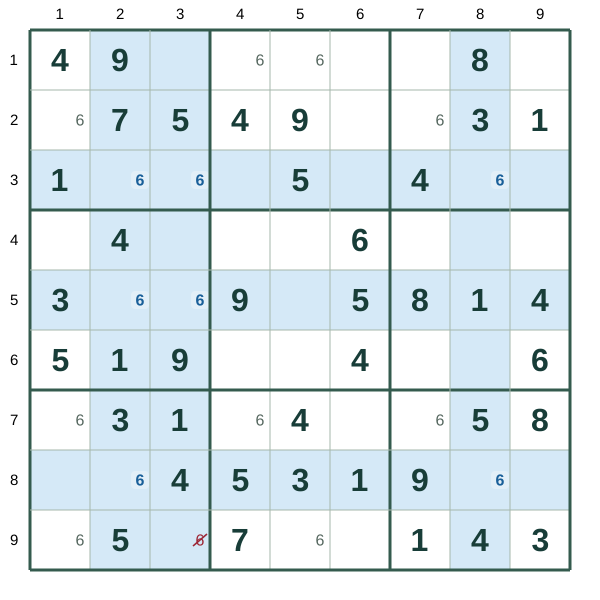
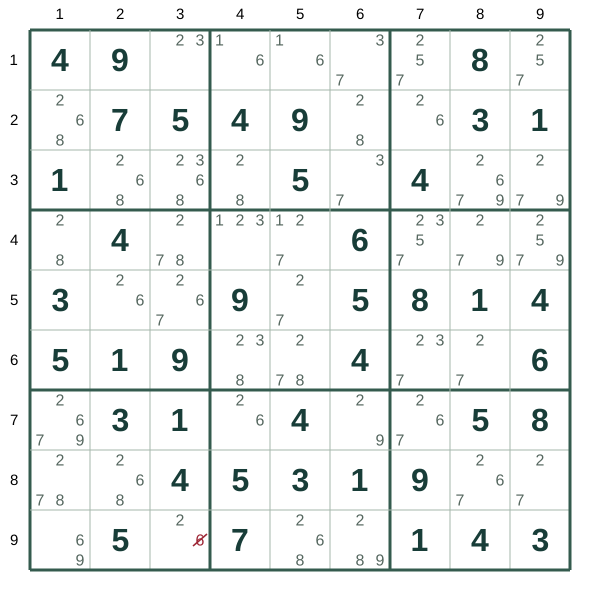
Therefore, 6 in the three covers must be placed inside the base regions. Remove the marked candidates outside the bases: R9C3=6.
What it allows
Therefore, 6 in the three covers must be placed inside the base regions. Remove the marked candidates outside the bases: R9C3=6.
Step-by-step example · Column
This example starts from a saved intermediate position. Its candidates include earlier logical eliminations; they are not fresh automatic notes.
Blue: evidence. Green: conclusion. Crossed-out digits: eliminated candidates. R1C1 means row 1, column 1.
Step 1 · Recognize the Swordfish
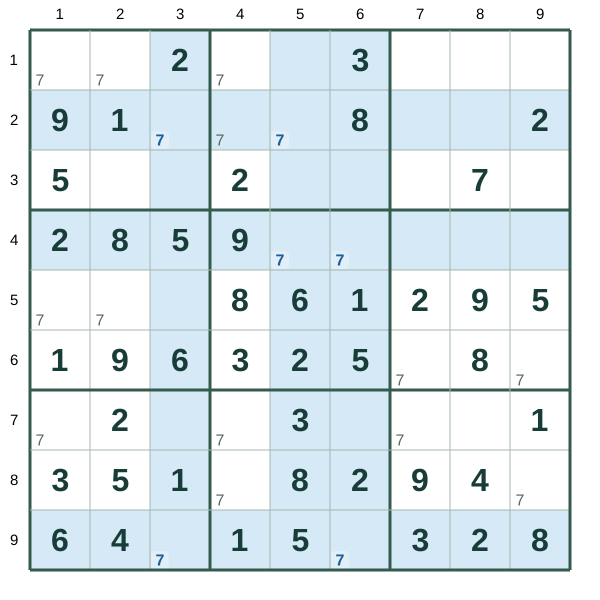
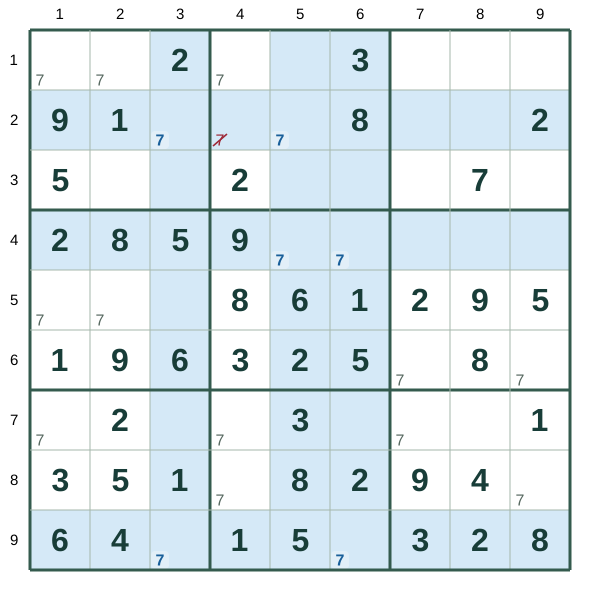
The three base regions (column 3, column 5, column 6) all still need 7, and every remaining 7 candidate in them lies in the same three cover regions (row 2, row 4, row 9). This forms a Swordfish.
Step 2 · See why the covers are occupied
Each base must place one 7, for three placements total. A cover cannot contain two of the same digit. Since every placement is confined to these three covers, the three placements must occupy one cover each.
Step 3 · Remove the targets
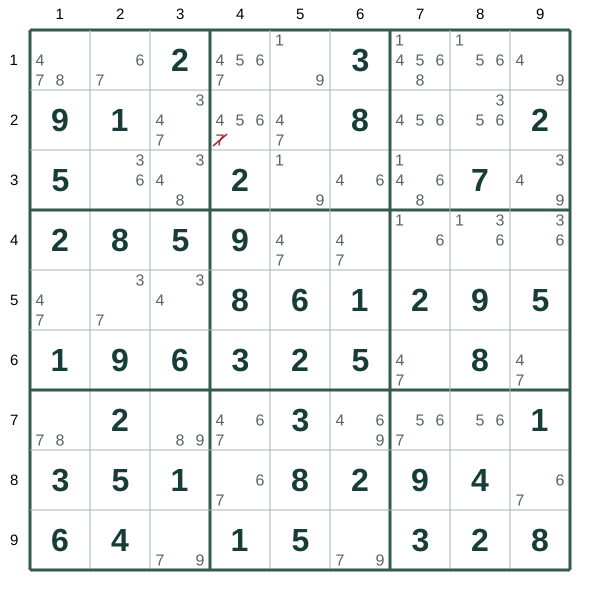
Therefore, 7 in the three covers must be placed inside the base regions. Remove the marked candidates outside the bases: R2C4=7.
What it allows
Therefore, 7 in the three covers must be placed inside the base regions. Remove the marked candidates outside the bases: R2C4=7.
Practice
This course is adapted from Platon Sudoku App. Read the complete example here, then continue learning and practising in the app.
View on Google Play