English

Platon Sudoku · Sudoku Study

Turbot Fish · Step-by-step example

Two strong links for one digit connect through a weak link; the shape may resemble a skyscraper, a kite, or an empty rectangle. Remove the digit from any candidate that sees both outer endpoints.

This course is adapted from Platon Sudoku App. Read the complete example here, then continue learning and practising in the app.

View on Google Play

Recognize the pattern

Two strong links for one digit connect through a weak link; the shape may resemble a skyscraper, a kite, or an empty rectangle.

How to find it

Trace two strong links and their weak connection. Identify the two outer endpoints before looking for a shared target.

What it allows

Remove the digit from any candidate that sees both outer endpoints.

Avoid the mix-up

Two highlighted pairs are not enough without a valid weak connection. A candidate seeing only one outer end cannot be removed.

Step-by-step example · Skyscraper

This example starts from a saved intermediate position. Its candidates include earlier logical eliminations; they are not fresh automatic notes.

Blue: evidence. Green: conclusion. Crossed-out digits: eliminated candidates. R1C1 means row 1, column 1.

Step 1 · See the shared four-candidate chain

Turbot Fish is the umbrella name for a four-candidate X-Chain. Skyscraper, Two-String Kite, and a two-candidate Empty Rectangle are named layouts of this same chain. Follow the four circles for 3.
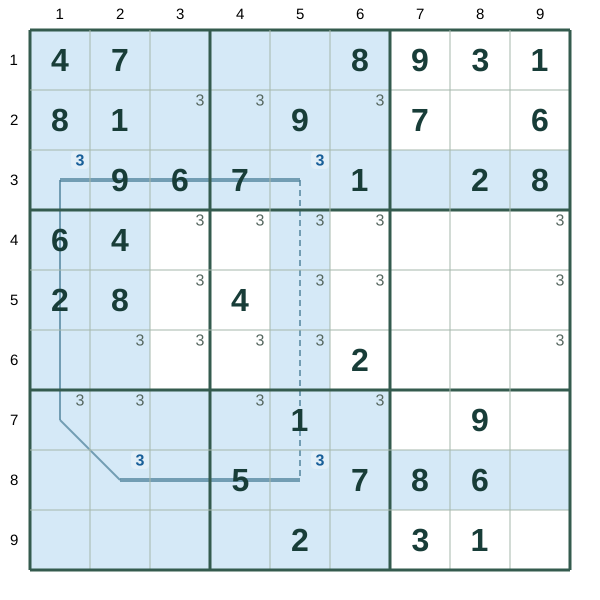
Turbot Fish is the umbrella name for a four-candidate X-Chain. Skyscraper, Two-String Kite, and a two-candidate Empty Rectangle are named layouts of this same chain. Follow the four circles for 3.
Step 2 · Two places in row 3

In row 3, 3 can only go in R3C1 or R3C5. One of them must be 3.
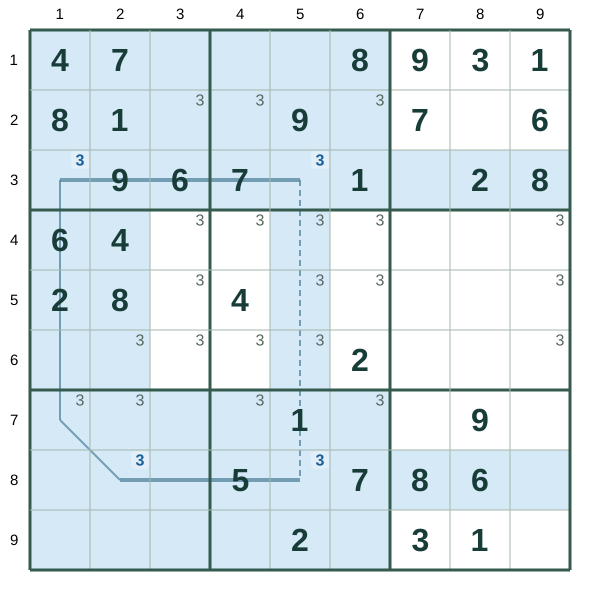
In row 3, 3 can only go in R3C1 or R3C5. One of them must be 3.
Step 3 · Two places in row 8

In row 8, 3 can only go in R8C2 or R8C5. One of them must be 3.
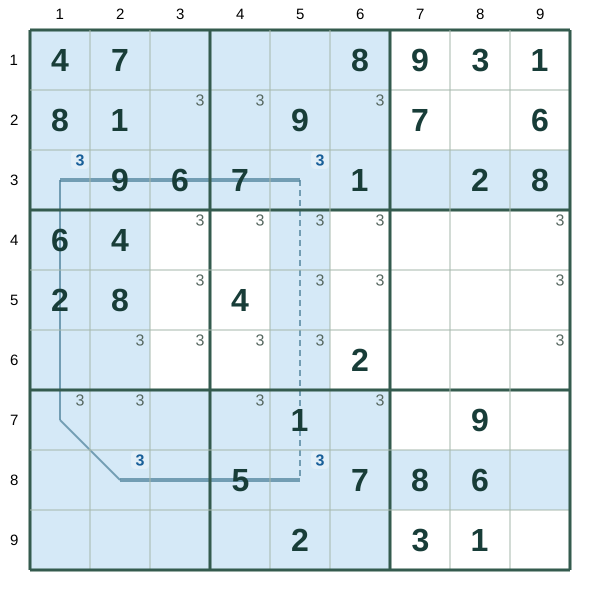
In row 8, 3 can only go in R8C2 or R8C5. One of them must be 3.
Step 4 · Connect the two strong links

R3C5 and R8C5 see each other in column 5. They form the weak link: they cannot both be 3. This layout is Skyscraper; here we are viewing its shared Turbot Fish chain.
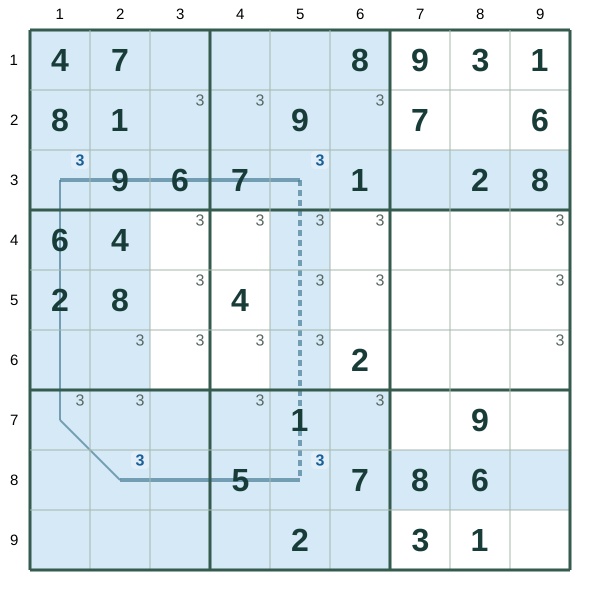
R3C5 and R8C5 see each other in column 5. They form the weak link: they cannot both be 3. This layout is Skyscraper; here we are viewing its shared Turbot Fish chain.
Step 5 · Try an assumption

What if R7C1 were 3? Numbers marked ? are part of this assumption, not confirmed answers. R3C1 shares column 1 with R7C1, so it cannot also be 3. R8C2 shares box 7 with R7C1, so it cannot also be 3.
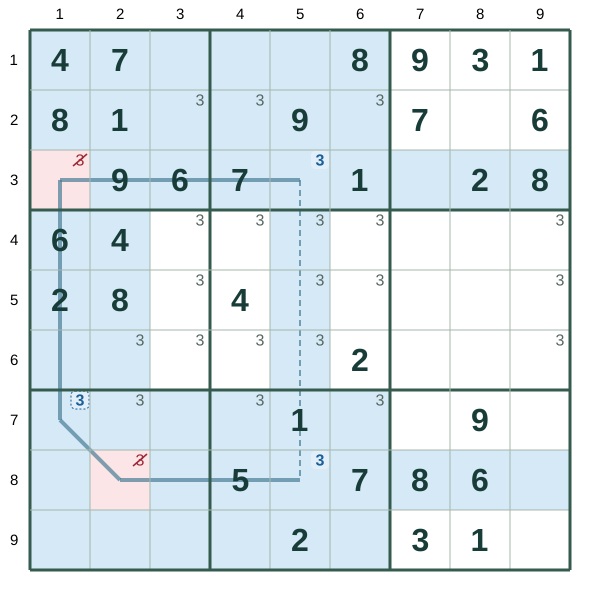
What if R7C1 were 3? Numbers marked ? are part of this assumption, not confirmed answers. R3C1 shares column 1 with R7C1, so it cannot also be 3. R8C2 shares box 7 with R7C1, so it cannot also be 3.
Step 6 · Two identical digits in one region

R3C1 cannot be 3, so row 3 has only R3C5 left. Under this assumption, it must be 3. R8C2 cannot be 3, so row 8 forces R8C5 to be 3. But R3C5 and R8C5 share column 5: that would put 3 there twice!
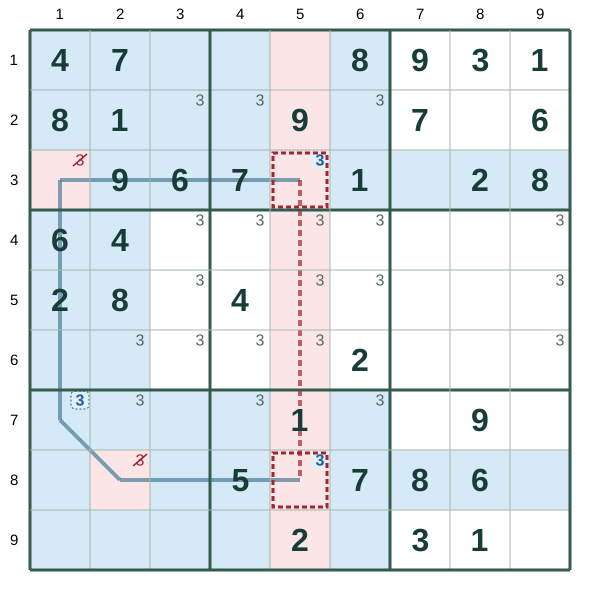
R3C1 cannot be 3, so row 3 has only R3C5 left. Under this assumption, it must be 3. R8C2 cannot be 3, so row 8 forces R8C5 to be 3. But R3C5 and R8C5 share column 5: that would put 3 there twice!
Step 7 · The assumption cannot be right

For each target, assuming 3 repeats that digit in column 5. Remove candidate 3 from R7C1; all temporary assumptions are withdrawn.
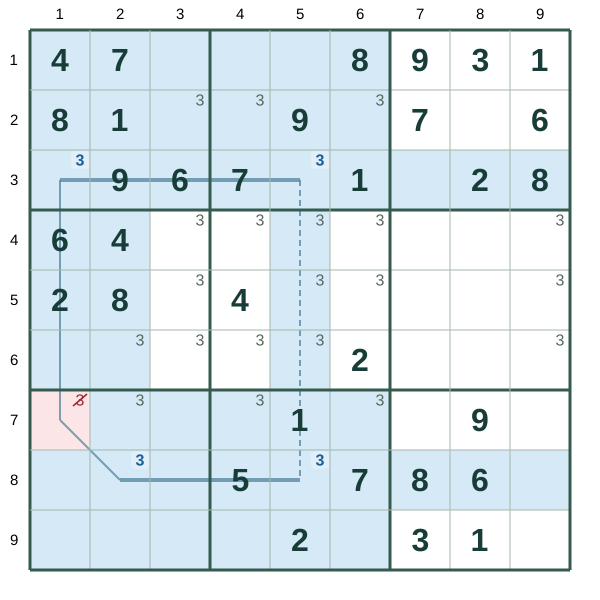
For each target, assuming 3 repeats that digit in column 5. Remove candidate 3 from R7C1; all temporary assumptions are withdrawn.
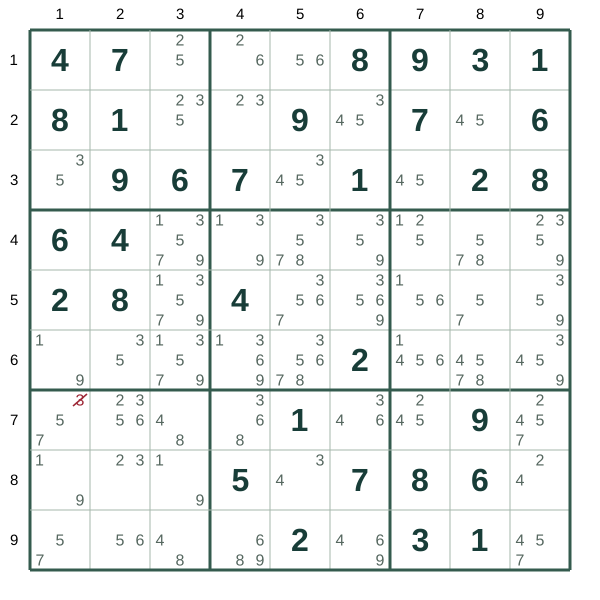

What it allows

For each target, assuming 3 repeats that digit in column 5. Remove candidate 3 from R7C1; all temporary assumptions are withdrawn.

Turbot Fish · Remove the digit from any candidate that sees both outer endpoints.

Step-by-step example · Two-string kite

This example starts from a saved intermediate position. Its candidates include earlier logical eliminations; they are not fresh automatic notes.

Blue: evidence. Green: conclusion. Crossed-out digits: eliminated candidates. R1C1 means row 1, column 1.

Step 1 · See the shared four-candidate chain

Turbot Fish is the umbrella name for a four-candidate X-Chain. Skyscraper, Two-String Kite, and a two-candidate Empty Rectangle are named layouts of this same chain. Follow the four circles for 4.
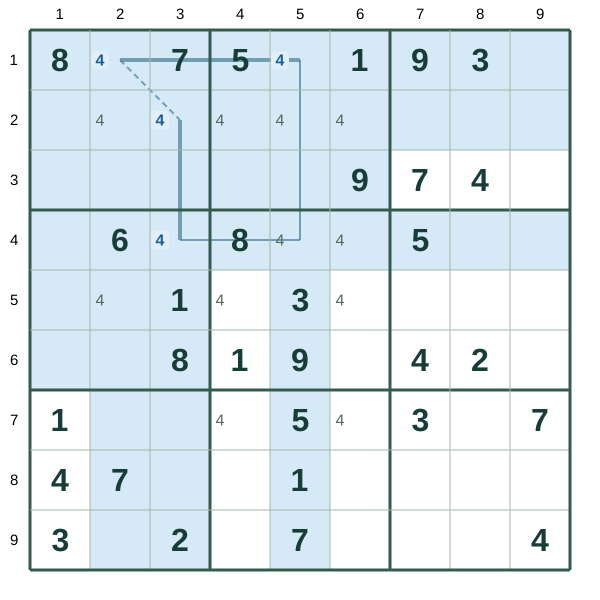
Turbot Fish is the umbrella name for a four-candidate X-Chain. Skyscraper, Two-String Kite, and a two-candidate Empty Rectangle are named layouts of this same chain. Follow the four circles for 4.
Step 2 · Two places in row 1

In row 1, 4 can only go in R1C5 or R1C2. One of them must be 4.
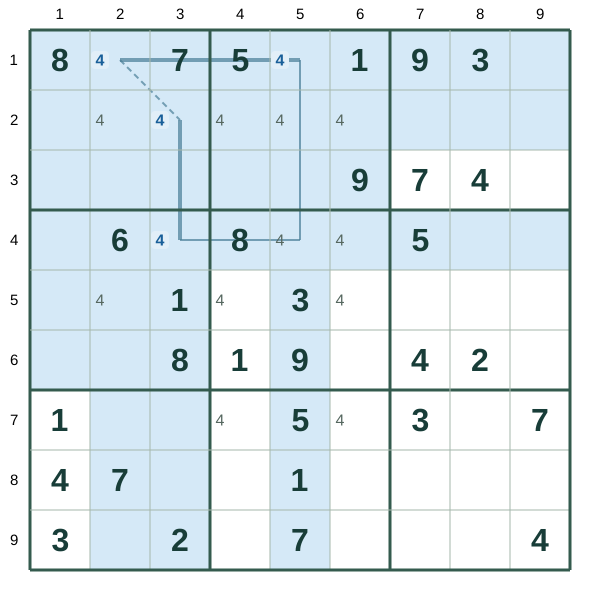
In row 1, 4 can only go in R1C5 or R1C2. One of them must be 4.
Step 3 · Two places in column 3

In column 3, 4 can only go in R4C3 or R2C3. One of them must be 4.
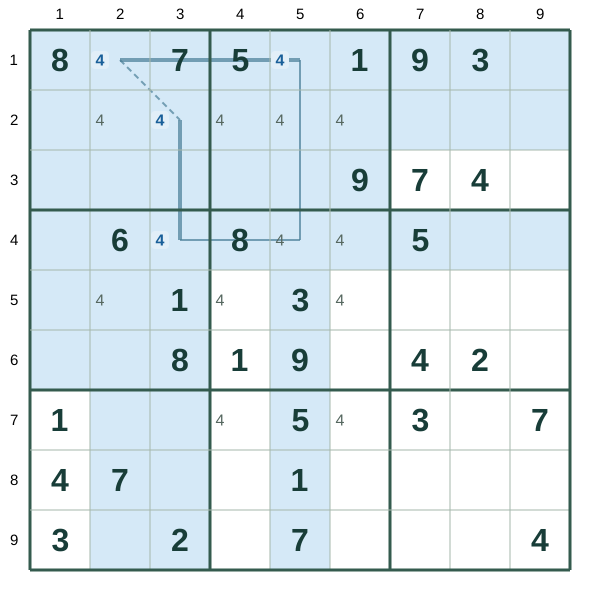
In column 3, 4 can only go in R4C3 or R2C3. One of them must be 4.
Step 4 · Connect the two strong links

R1C2 and R2C3 see each other in box 1. They form the weak link: they cannot both be 4. This layout is Two-String Kite; here we are viewing its shared Turbot Fish chain.
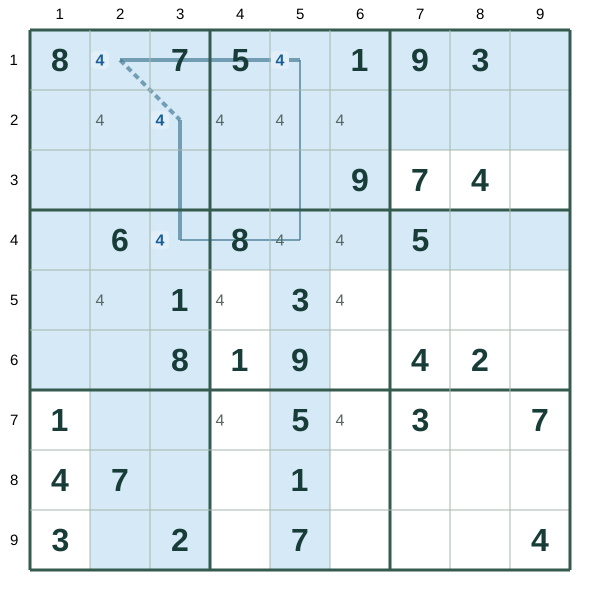
R1C2 and R2C3 see each other in box 1. They form the weak link: they cannot both be 4. This layout is Two-String Kite; here we are viewing its shared Turbot Fish chain.
Step 5 · Try an assumption

What if R4C5 were 4? Numbers marked ? are part of this assumption, not confirmed answers. R1C5 shares column 5 with R4C5, so it cannot also be 4. R4C3 shares row 4 with R4C5, so it cannot also be 4.
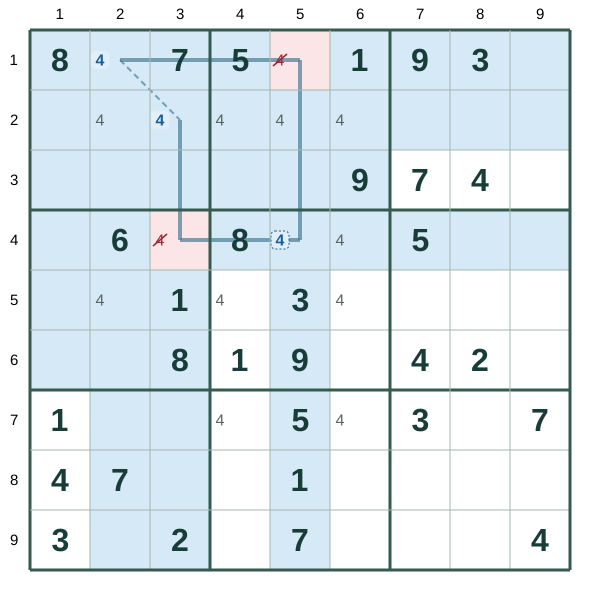
What if R4C5 were 4? Numbers marked ? are part of this assumption, not confirmed answers. R1C5 shares column 5 with R4C5, so it cannot also be 4. R4C3 shares row 4 with R4C5, so it cannot also be 4.
Step 6 · Two identical digits in one region

R1C5 cannot be 4, so row 1 has only R1C2 left. Under this assumption, it must be 4. R4C3 cannot be 4, so column 3 forces R2C3 to be 4. But R1C2 and R2C3 share box 1: that would put 4 there twice!
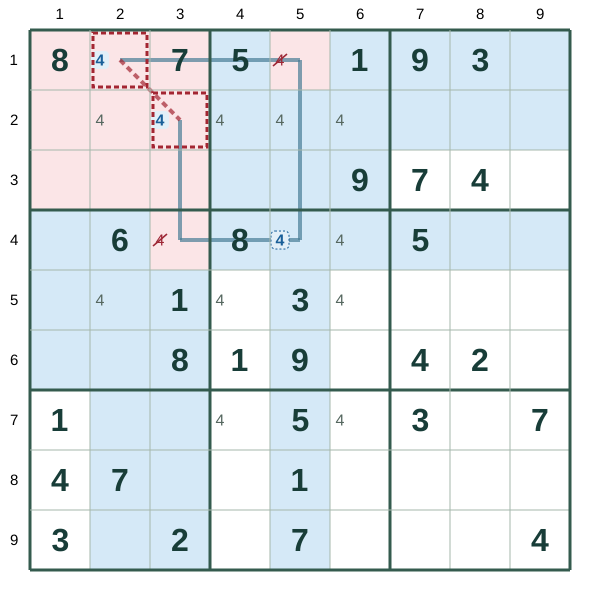
R1C5 cannot be 4, so row 1 has only R1C2 left. Under this assumption, it must be 4. R4C3 cannot be 4, so column 3 forces R2C3 to be 4. But R1C2 and R2C3 share box 1: that would put 4 there twice!
Step 7 · The assumption cannot be right

For each target, assuming 4 repeats that digit in box 1. Remove candidate 4 from R4C5; all temporary assumptions are withdrawn.
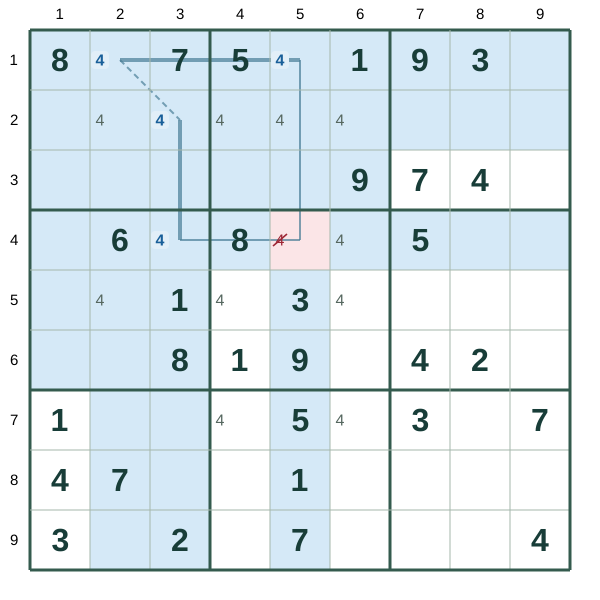
For each target, assuming 4 repeats that digit in box 1. Remove candidate 4 from R4C5; all temporary assumptions are withdrawn.
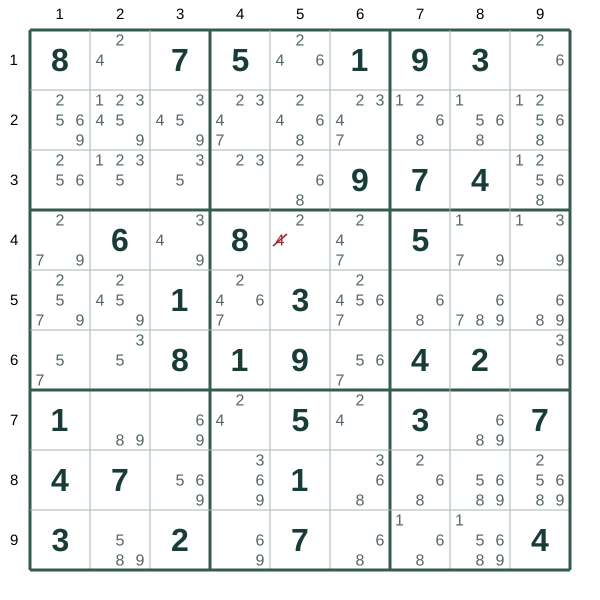

What it allows

For each target, assuming 4 repeats that digit in box 1. Remove candidate 4 from R4C5; all temporary assumptions are withdrawn.

Turbot Fish · Remove the digit from any candidate that sees both outer endpoints.

Step-by-step example · Empty rectangle

This example starts from a saved intermediate position. Its candidates include earlier logical eliminations; they are not fresh automatic notes.

Blue: evidence. Green: conclusion. Crossed-out digits: eliminated candidates. R1C1 means row 1, column 1.

Step 1 · See the shared four-candidate chain

Turbot Fish is the umbrella name for a four-candidate X-Chain. Skyscraper, Two-String Kite, and a two-candidate Empty Rectangle are named layouts of this same chain. Follow the four circles for 1.
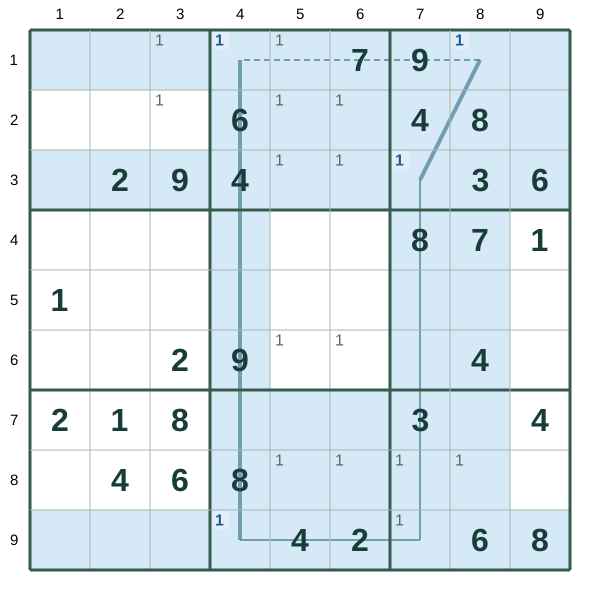
Turbot Fish is the umbrella name for a four-candidate X-Chain. Skyscraper, Two-String Kite, and a two-candidate Empty Rectangle are named layouts of this same chain. Follow the four circles for 1.
Step 2 · Two places in box 3

In box 3, 1 can only go in R3C7 or R1C8. One of them must be 1.
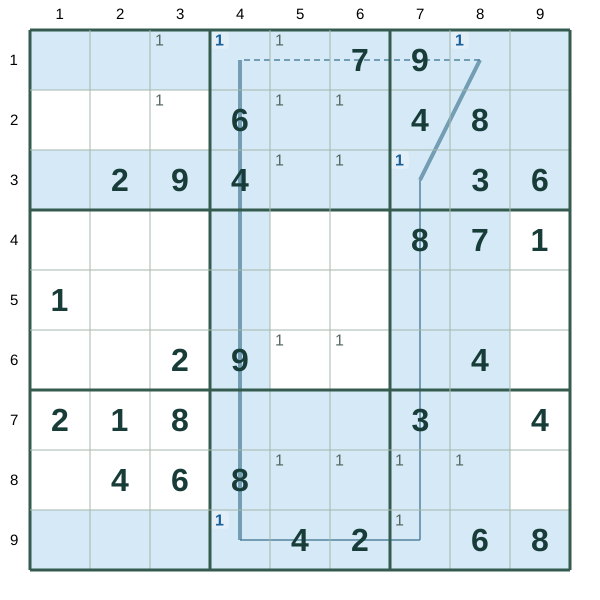
In box 3, 1 can only go in R3C7 or R1C8. One of them must be 1.
Step 3 · Two places in column 4

In column 4, 1 can only go in R9C4 or R1C4. One of them must be 1.
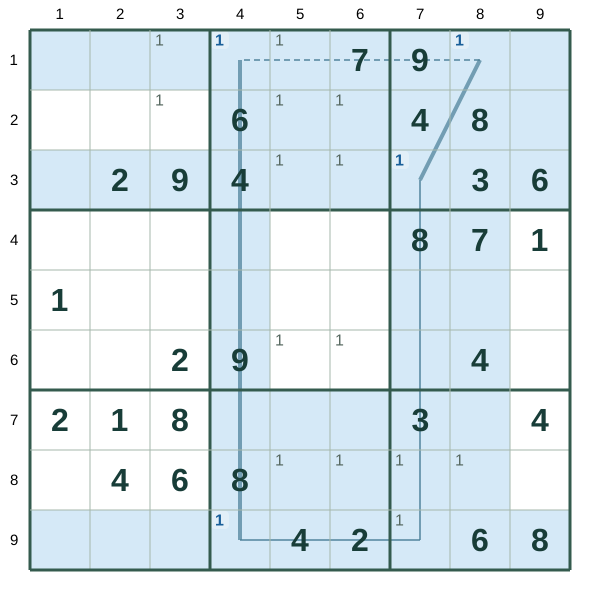
In column 4, 1 can only go in R9C4 or R1C4. One of them must be 1.
Step 4 · Connect the two strong links

R1C8 and R1C4 see each other in row 1. They form the weak link: they cannot both be 1. This layout is Empty Rectangle; here we are viewing its shared Turbot Fish chain.
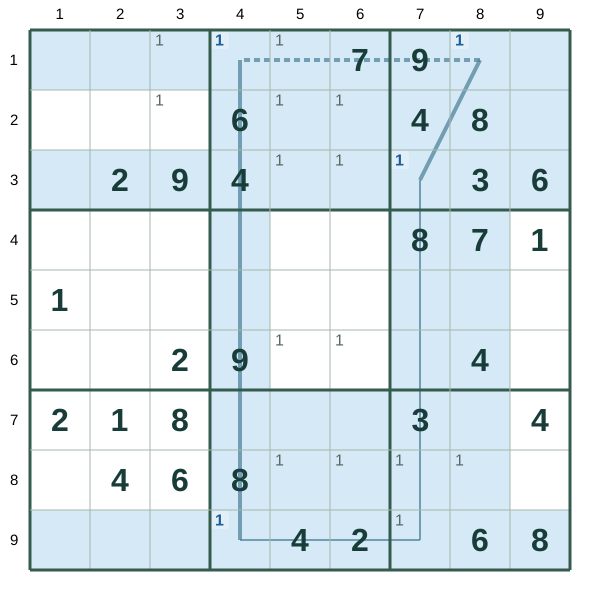
R1C8 and R1C4 see each other in row 1. They form the weak link: they cannot both be 1. This layout is Empty Rectangle; here we are viewing its shared Turbot Fish chain.
Step 5 · Try an assumption

What if R9C7 were 1? Numbers marked ? are part of this assumption, not confirmed answers. R3C7 shares column 7 with R9C7, so it cannot also be 1. R9C4 shares row 9 with R9C7, so it cannot also be 1.
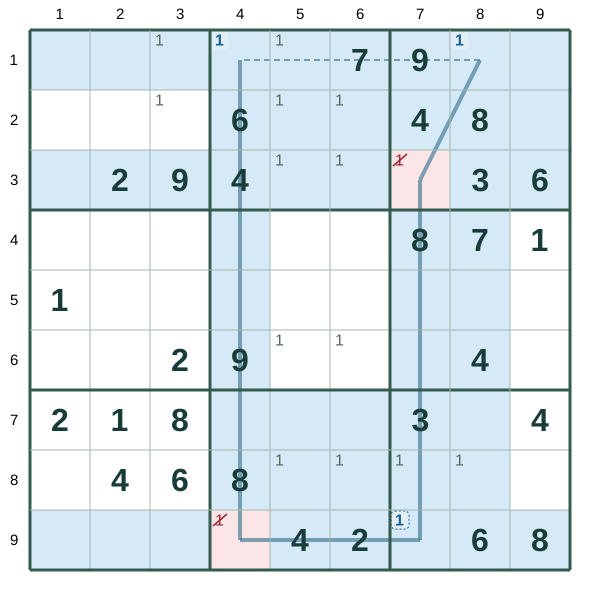
What if R9C7 were 1? Numbers marked ? are part of this assumption, not confirmed answers. R3C7 shares column 7 with R9C7, so it cannot also be 1. R9C4 shares row 9 with R9C7, so it cannot also be 1.
Step 6 · Two identical digits in one region

R3C7 cannot be 1, so box 3 has only R1C8 left. Under this assumption, it must be 1. R9C4 cannot be 1, so column 4 forces R1C4 to be 1. But R1C8 and R1C4 share row 1: that would put 1 there twice!
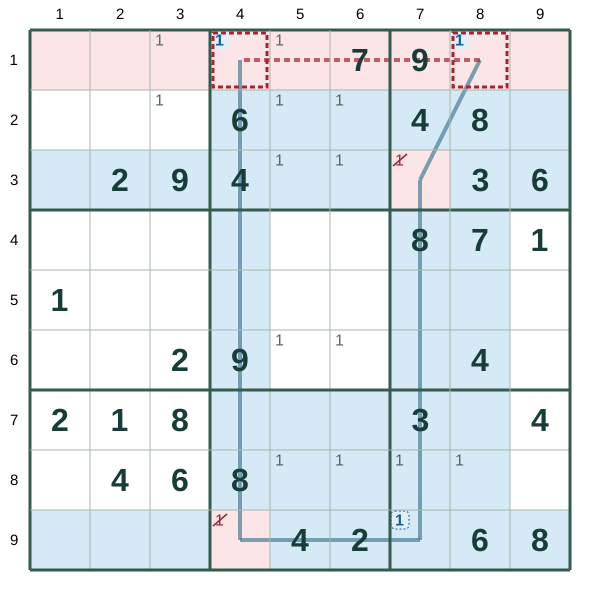
R3C7 cannot be 1, so box 3 has only R1C8 left. Under this assumption, it must be 1. R9C4 cannot be 1, so column 4 forces R1C4 to be 1. But R1C8 and R1C4 share row 1: that would put 1 there twice!
Step 7 · The assumption cannot be right

For each target, assuming 1 repeats that digit in row 1. Remove candidate 1 from R9C7; all temporary assumptions are withdrawn.
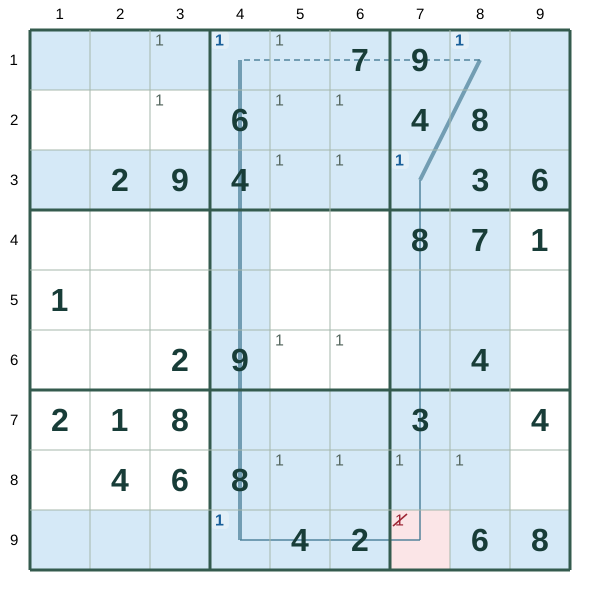
For each target, assuming 1 repeats that digit in row 1. Remove candidate 1 from R9C7; all temporary assumptions are withdrawn.

What it allows

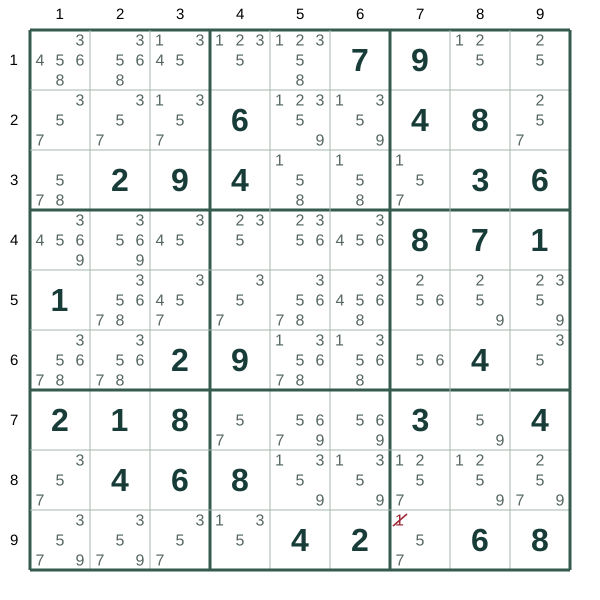
For each target, assuming 1 repeats that digit in row 1. Remove candidate 1 from R9C7; all temporary assumptions are withdrawn.

Turbot Fish · Remove the digit from any candidate that sees both outer endpoints.

Practice

This course is adapted from Platon Sudoku App. Read the complete example here, then continue learning and practising in the app.

View on Google Play