English

Platon Sudoku · Sudoku Study

Forcing Net · Step-by-step example

A forcing net branches and merges candidate implications. It can refute an assumption or prove a common result across alternatives. Remove a refuted candidate or apply the result shared by all exhaustive branches.

This course is adapted from Platon Sudoku App. Read the complete example here, then continue learning and practising in the app.

View on Google Play

Recognize the pattern

A forcing net branches and merges candidate implications. It can refute an assumption or prove a common result across alternatives.

How to find it

Track each premise through the branching network, check every link, and compare contradictions or common endpoints.

What it allows

Remove a refuted candidate or apply the result shared by all exhaustive branches.

Avoid the mix-up

Do not skip a branch or confuse a shared effect with an effect from only one path.

Step-by-step example · Contradiction

This example starts from a saved intermediate position. Its candidates include earlier logical eliminations; they are not fresh automatic notes.

Blue: evidence. Green: conclusion. Crossed-out digits: eliminated candidates. R1C1 means row 1, column 1.

Step 1 · Where to look

R1C3=7 is either true or false. The graph tests R1C3=7 is true; a contradiction rules out that state and forces R1C3=7 is false, so the two possible states are fully covered. This is a Forcing Net, not a Forcing Chain, because the verified dependency graph fans out or merges instead of remaining a single linear implication path. The explored branch contains 49 verified nodes.
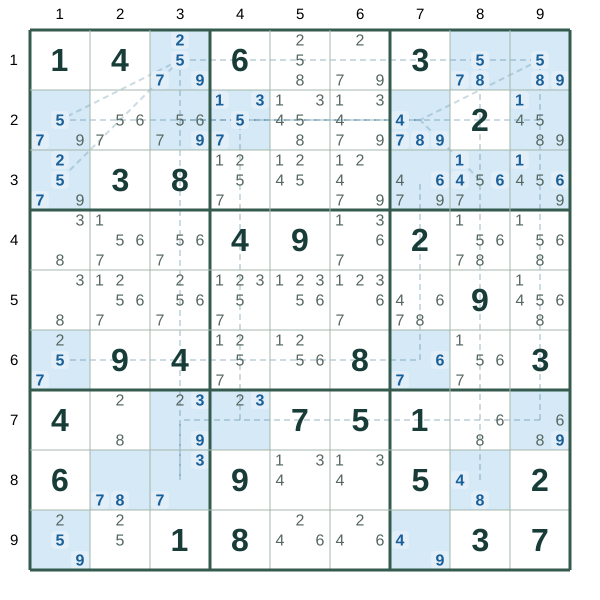
R1C3=7 is either true or false. The graph tests R1C3=7 is true; a contradiction rules out that state and forces R1C3=7 is false, so the two possible states are fully covered. This is a Forcing Net, not a Forcing Chain, because the verified dependency graph fans out or merges instead of remaining a single linear implication path. The explored branch contains 49 verified nodes.
Step 2 · Reasoning

Branch 1: suppose R1C3=7 is true.
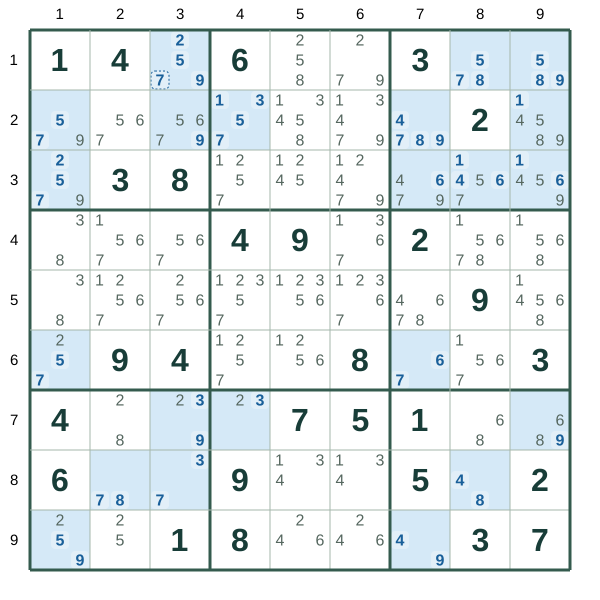
Branch 1: suppose R1C3=7 is true.
Step 3 · Reasoning

R1C3=7 is true. Remove {R1C3=2, R1C3=9, R1C8=7, R2C1=7, R3C1=7, R8C3=7}.
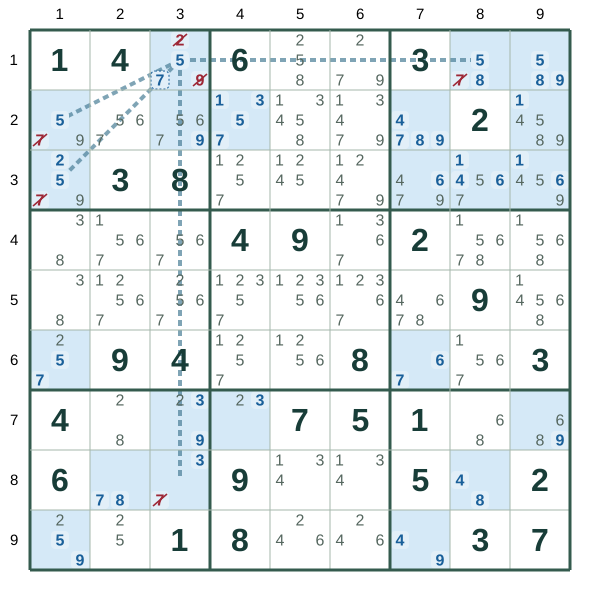
R1C3=7 is true. Remove {R1C3=2, R1C3=9, R1C8=7, R2C1=7, R3C1=7, R8C3=7}.
Step 4 · Reasoning

After the preceding exclusions, R8C3=3 is the only remaining option in R8C3. It is forced under this assumption.
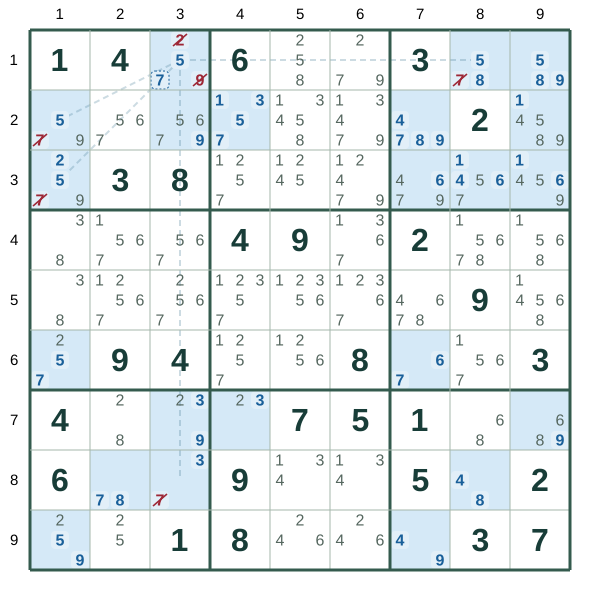
After the preceding exclusions, R8C3=3 is the only remaining option in R8C3. It is forced under this assumption.
Step 5 · Reasoning

R8C3=3 is true. Remove R7C3=3.
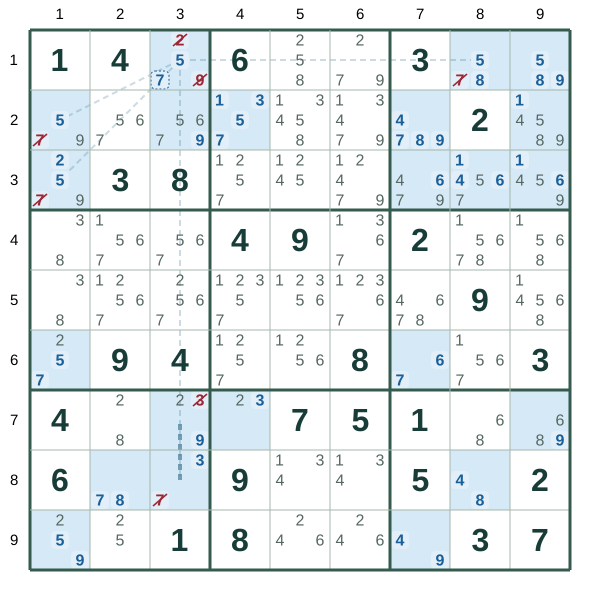
R8C3=3 is true. Remove R7C3=3.
Step 6 · Reasoning

After the preceding exclusions, R7C4=3 is the only remaining option in row 7. It is forced under this assumption.
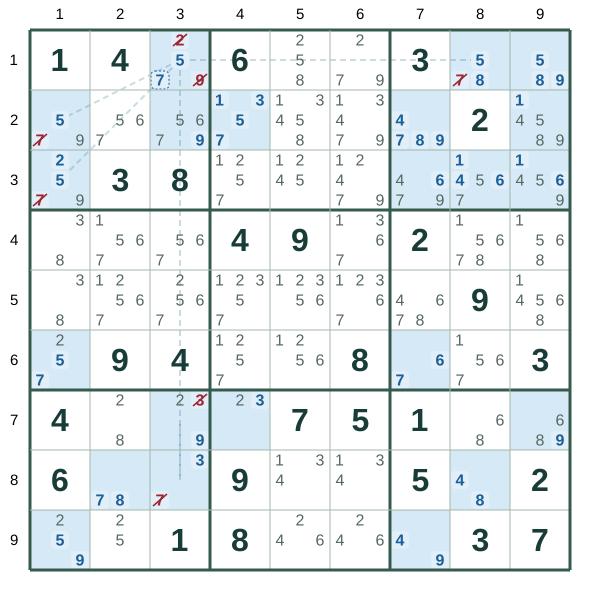
After the preceding exclusions, R7C4=3 is the only remaining option in row 7. It is forced under this assumption.
Step 7 · Reasoning

After the preceding exclusions, R8C2=7 is the only remaining option in row 8. It is forced under this assumption.
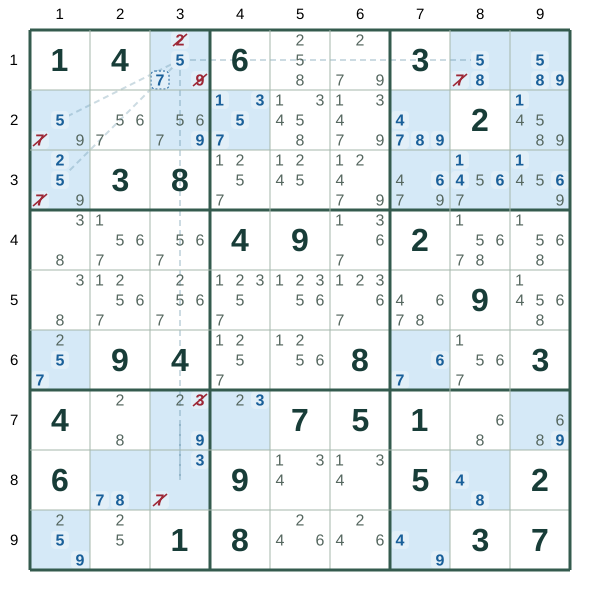
After the preceding exclusions, R8C2=7 is the only remaining option in row 8. It is forced under this assumption.
Step 8 · Reasoning

R8C2=7 is true. Remove R8C2=8.
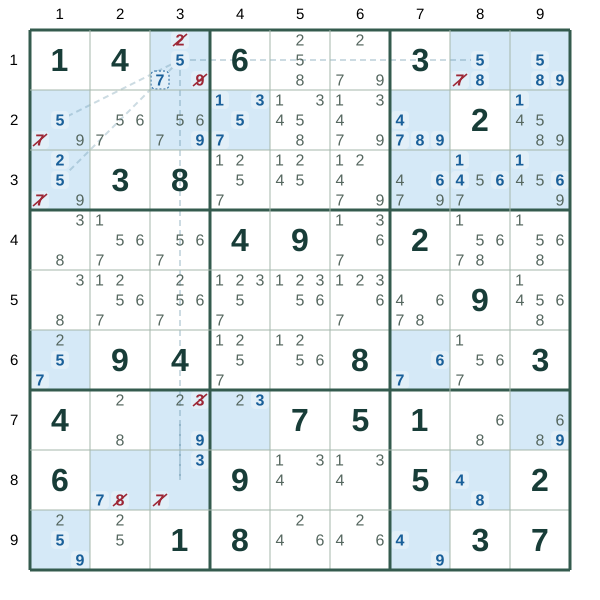
R8C2=7 is true. Remove R8C2=8.
Step 9 · Reasoning

After the preceding exclusions, R8C8=8 is the only remaining option in row 8. It is forced under this assumption.
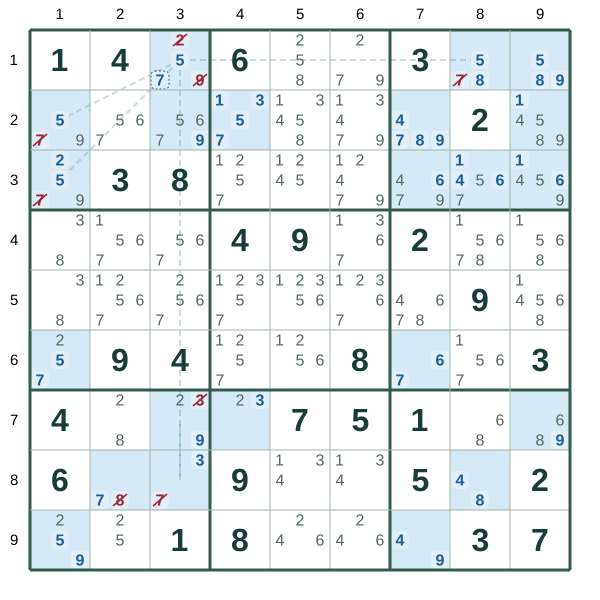
After the preceding exclusions, R8C8=8 is the only remaining option in row 8. It is forced under this assumption.
Step 10 · Reasoning

R8C8=8 is true. Remove R8C8=4.
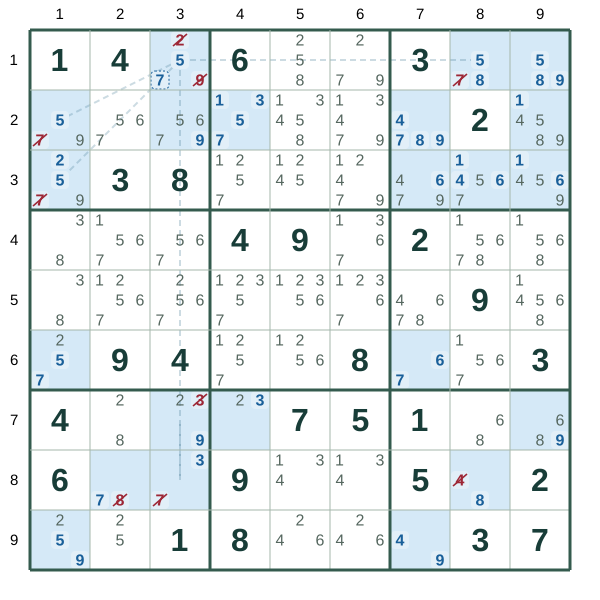
R8C8=8 is true. Remove R8C8=4.
Step 11 · Reasoning

After the preceding exclusions, R6C1=7 is the only remaining option in column 1. It is forced under this assumption.
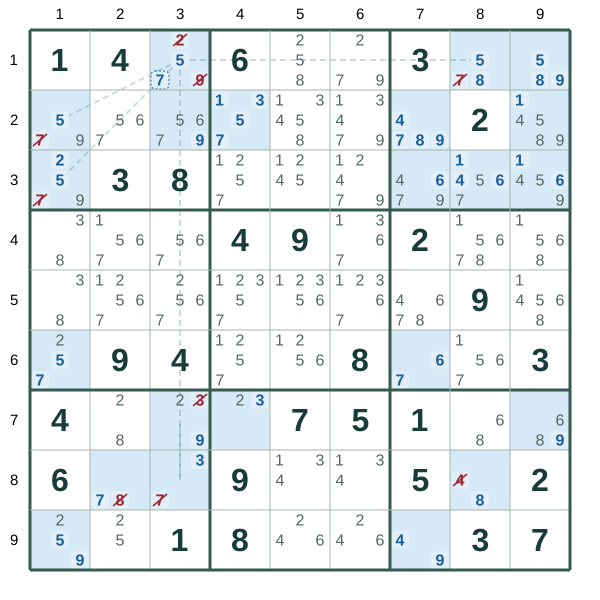
After the preceding exclusions, R6C1=7 is the only remaining option in column 1. It is forced under this assumption.
Step 12 · Reasoning

R6C1=7 is true. Remove R6C1=5.
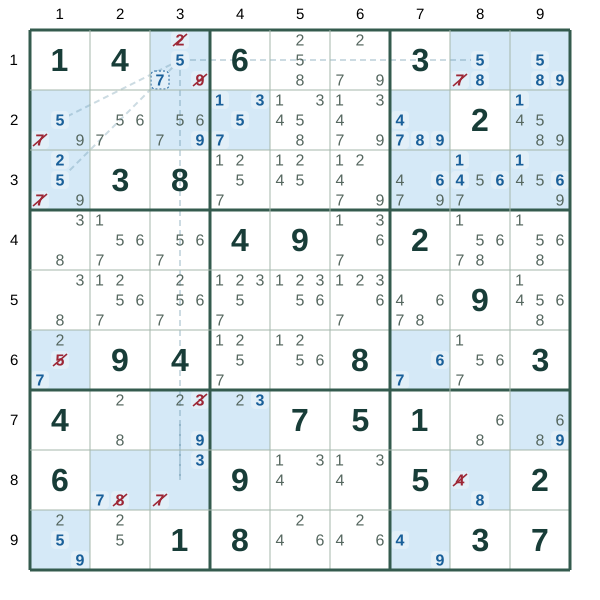
R6C1=7 is true. Remove R6C1=5.
Step 13 · Reasoning

After the preceding exclusions, R3C8=4 is the only remaining option in column 8. It is forced under this assumption.
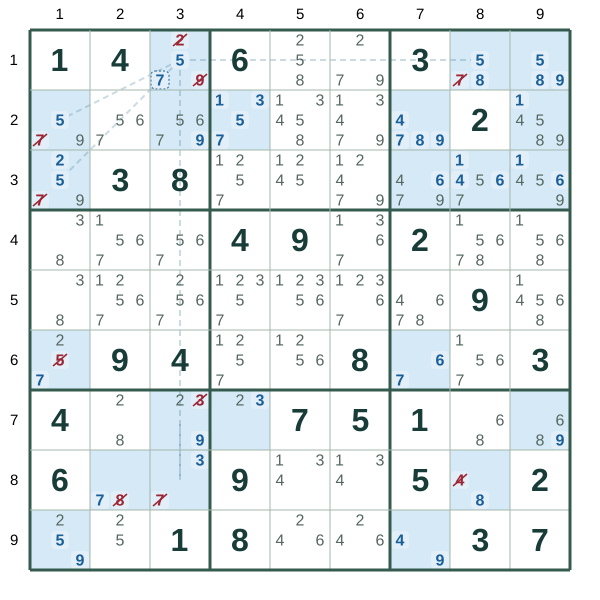
After the preceding exclusions, R3C8=4 is the only remaining option in column 8. It is forced under this assumption.
Step 14 · Reasoning

R3C8=4 is true. Remove {R3C8=1, R3C8=6}.
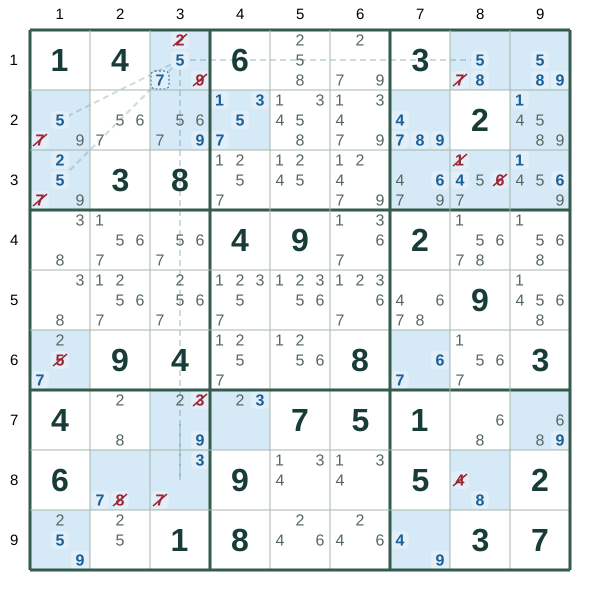
R3C8=4 is true. Remove {R3C8=1, R3C8=6}.
Step 15 · Reasoning

After the preceding exclusions, R3C1=2 is the only remaining option in box 1. It is forced under this assumption.
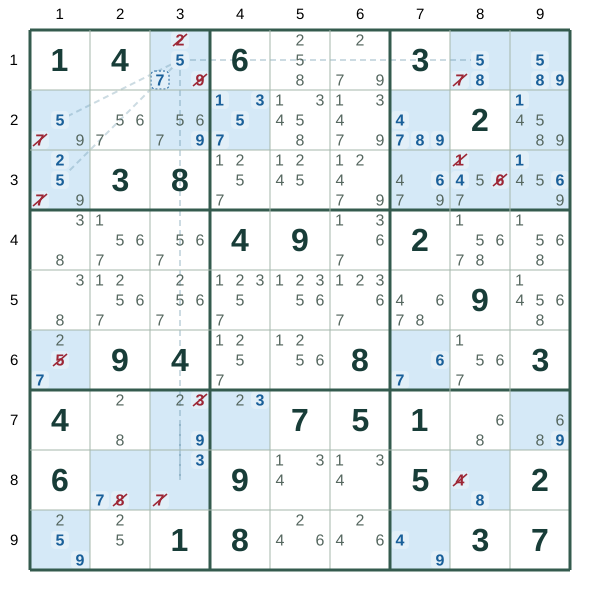
After the preceding exclusions, R3C1=2 is the only remaining option in box 1. It is forced under this assumption.
Step 16 · Reasoning

R3C1=2 is true. Remove R3C1=5.
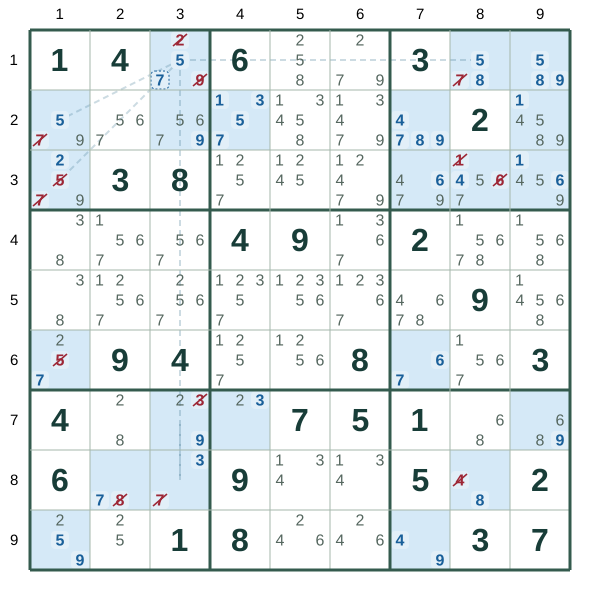
R3C1=2 is true. Remove R3C1=5.
Step 17 · Reasoning

After the preceding exclusions, R9C7=4 is the only remaining option in box 9. It is forced under this assumption.
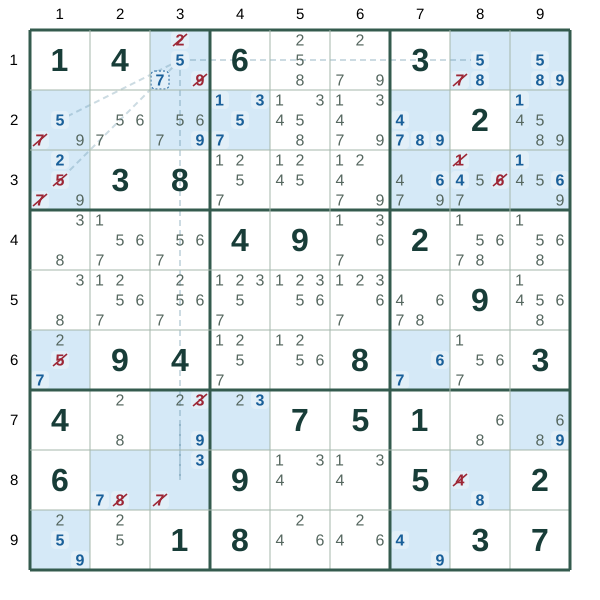
After the preceding exclusions, R9C7=4 is the only remaining option in box 9. It is forced under this assumption.
Step 18 · Reasoning

R9C7=4 is true. Remove R9C7=9.
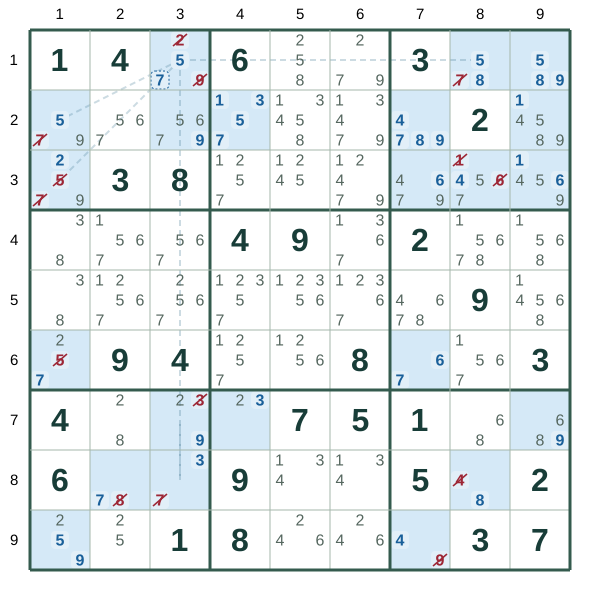
R9C7=4 is true. Remove R9C7=9.
Step 19 · Reasoning

After the preceding exclusions, R7C9=9 is the only remaining option in box 9. It is forced under this assumption.
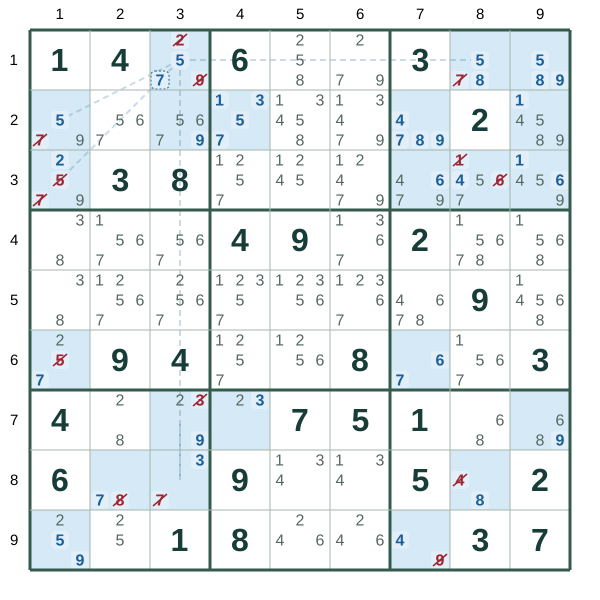
After the preceding exclusions, R7C9=9 is the only remaining option in box 9. It is forced under this assumption.
Step 20 · Reasoning

R3C8=4 is true. Remove R2C7=4.
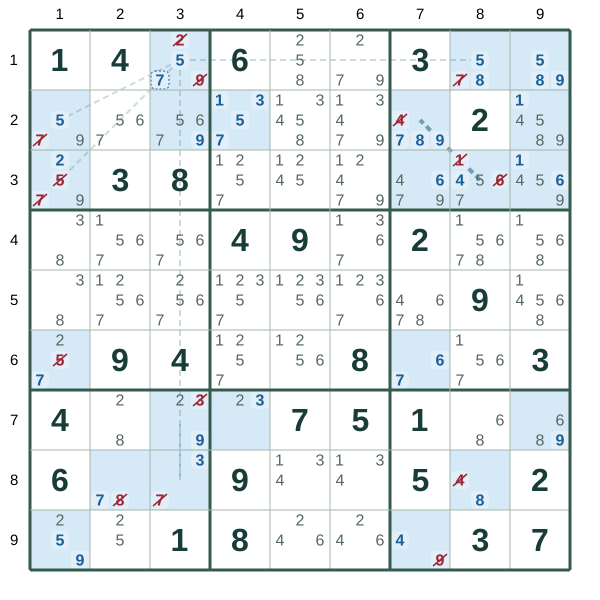
R3C8=4 is true. Remove R2C7=4.
Step 21 · Reasoning

R6C1=7 is true. Remove R6C7=7.
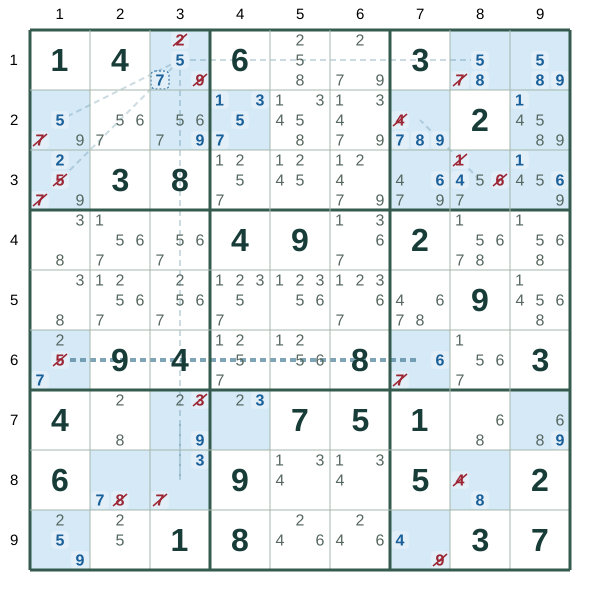
R6C1=7 is true. Remove R6C7=7.
Step 22 · Reasoning

After the preceding exclusions, R6C7=6 is the only remaining option in R6C7. It is forced under this assumption.
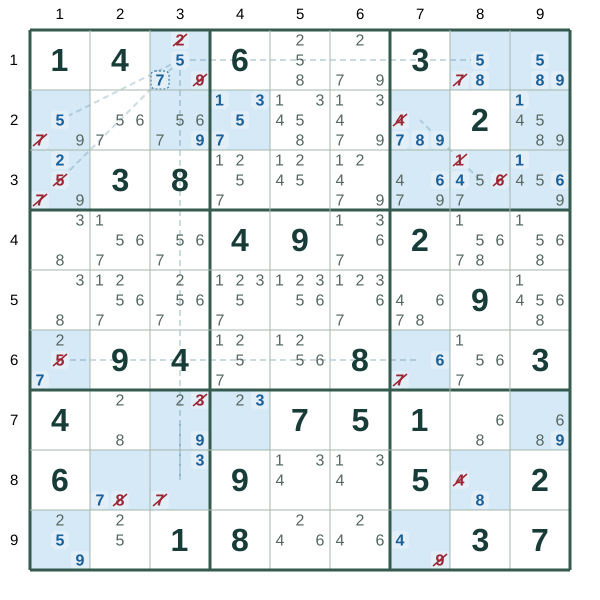
After the preceding exclusions, R6C7=6 is the only remaining option in R6C7. It is forced under this assumption.
Step 23 · Reasoning

R6C7=6 is true. Remove R3C7=6.
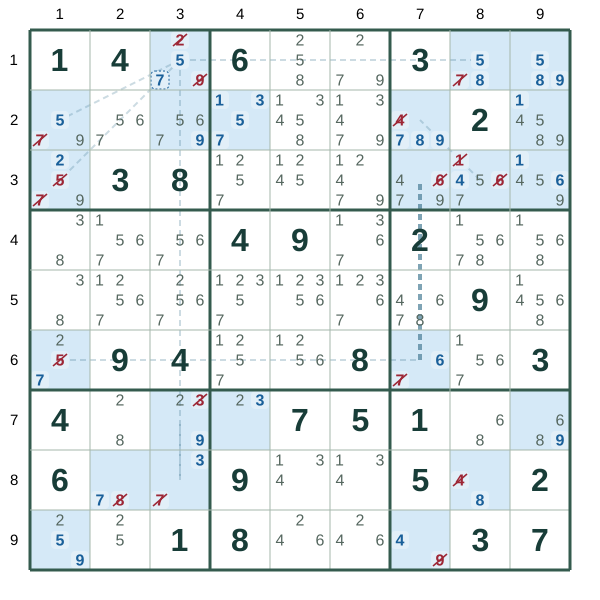
R6C7=6 is true. Remove R3C7=6.
Step 24 · Reasoning

R7C4=3 is true. Remove R2C4=3.
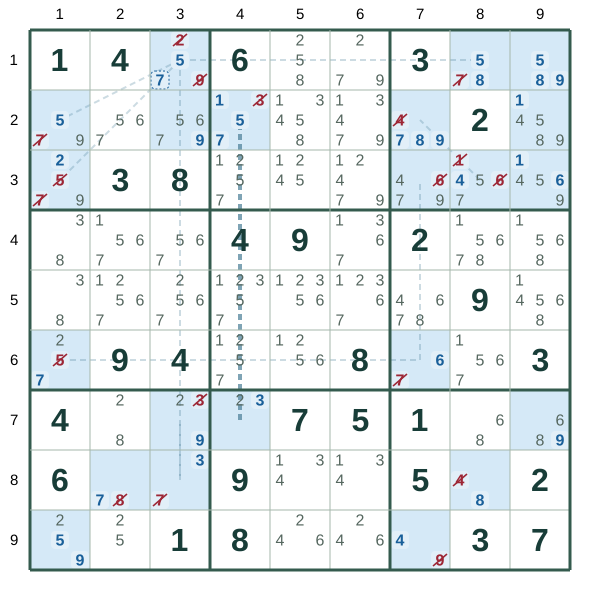
R7C4=3 is true. Remove R2C4=3.
Step 25 · Reasoning

R7C9=9 is true. Remove {R1C9=9, R7C3=9}.
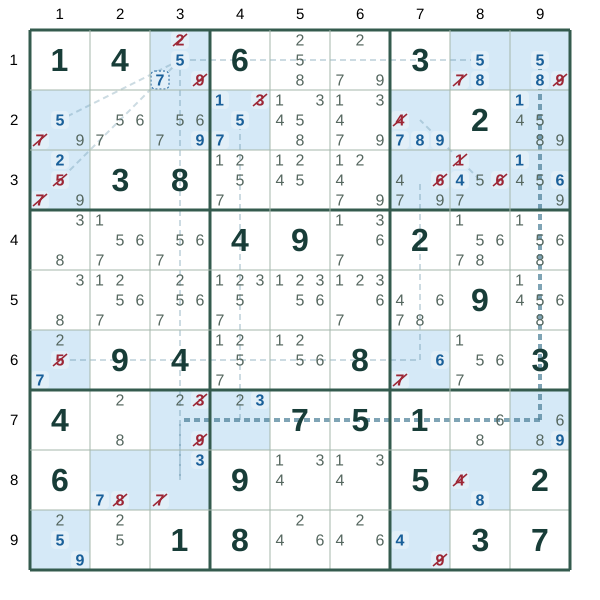
R7C9=9 is true. Remove {R1C9=9, R7C3=9}.
Step 26 · Reasoning

R8C8=8 is true. Remove R1C8=8.
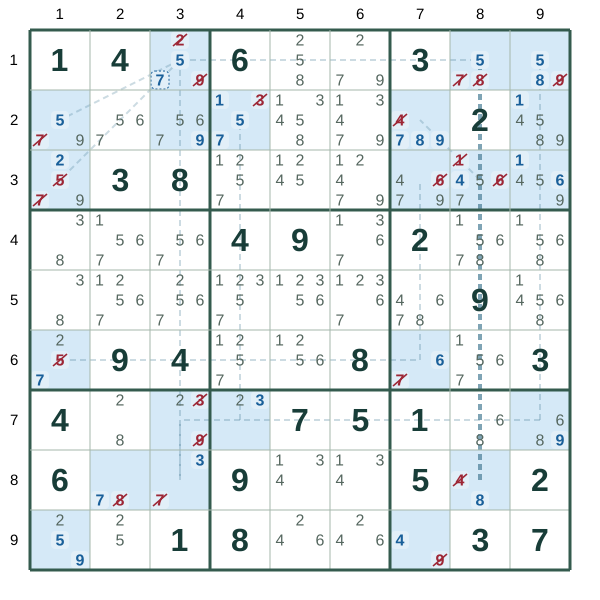
R8C8=8 is true. Remove R1C8=8.
Step 27 · Reasoning

After the preceding exclusions, R3C9=6 is the only remaining option in row 3. It is forced under this assumption.
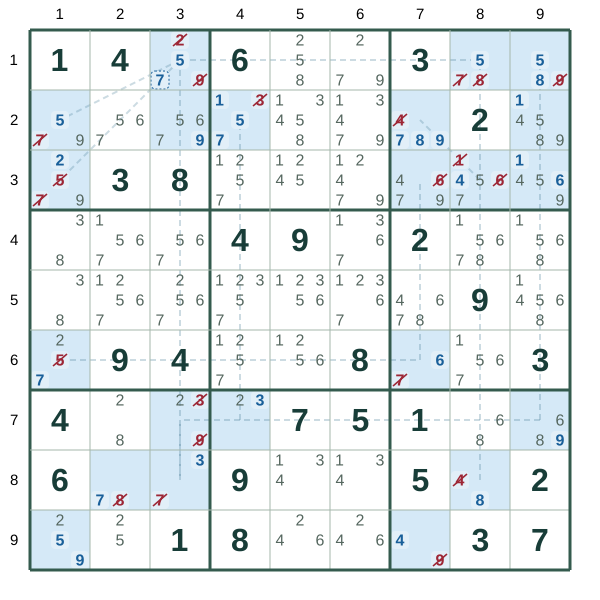
After the preceding exclusions, R3C9=6 is the only remaining option in row 3. It is forced under this assumption.
Step 28 · Reasoning

R3C9=6 is true. Remove R3C9=1.
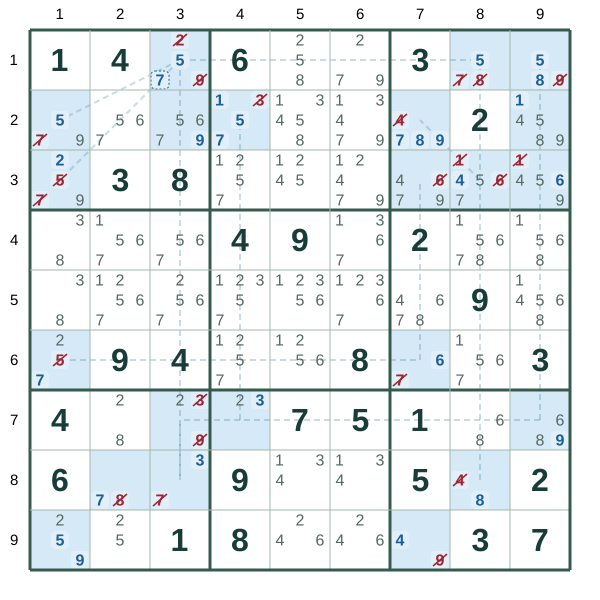
R3C9=6 is true. Remove R3C9=1.
Step 29 · Reasoning

After the preceding exclusions, R9C1=9 is the only remaining option in row 9. It is forced under this assumption.
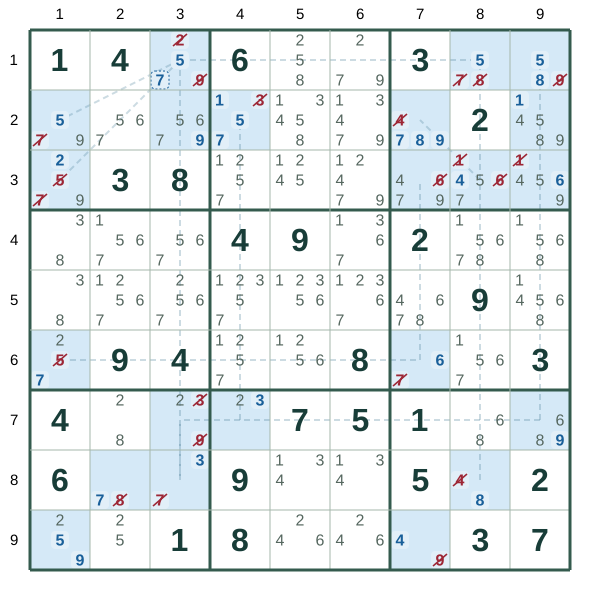
After the preceding exclusions, R9C1=9 is the only remaining option in row 9. It is forced under this assumption.
Step 30 · Reasoning

R9C1=9 is true. Remove R9C1=5.
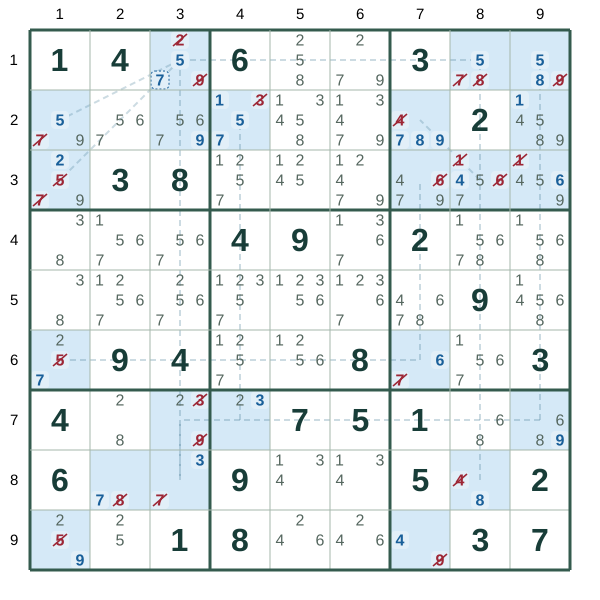
R9C1=9 is true. Remove R9C1=5.
Step 31 · Reasoning

After the preceding exclusions, R2C1=5 is the only remaining option in column 1. It is forced under this assumption.
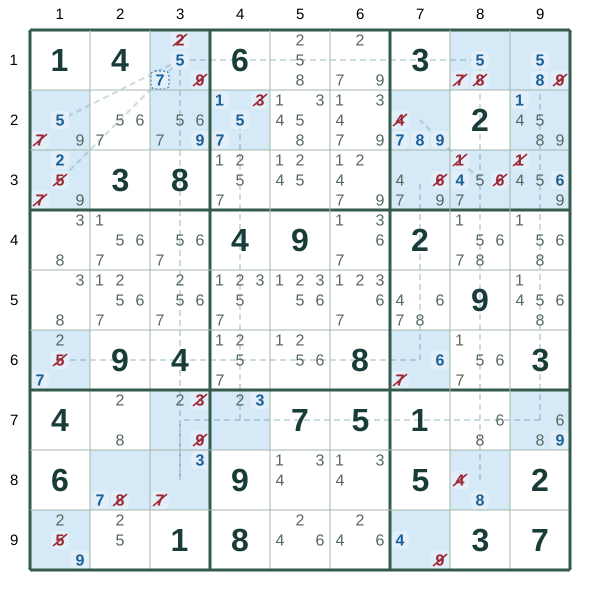
After the preceding exclusions, R2C1=5 is the only remaining option in column 1. It is forced under this assumption.
Step 32 · Reasoning

After the preceding exclusions, R2C3=9 is the only remaining option in column 3. It is forced under this assumption.
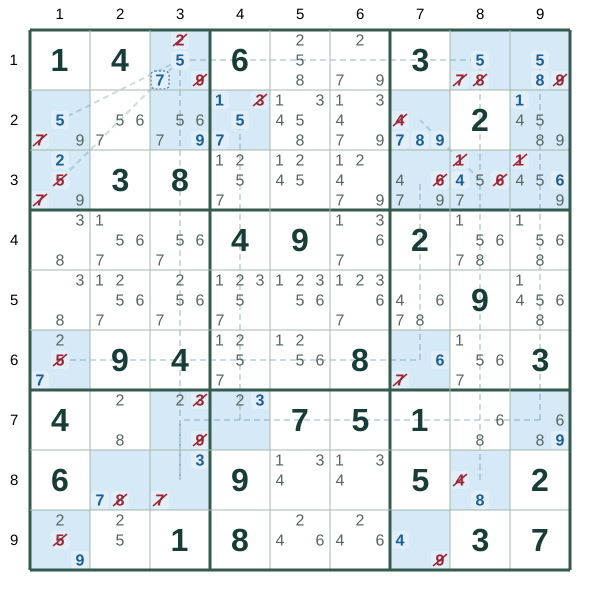
After the preceding exclusions, R2C3=9 is the only remaining option in column 3. It is forced under this assumption.
Step 33 · Reasoning

After the preceding exclusions, R2C9=1 is the only remaining option in box 3. It is forced under this assumption.
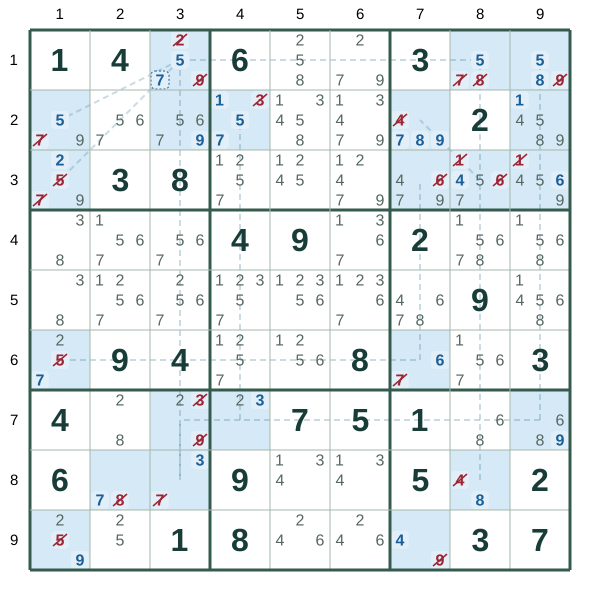
After the preceding exclusions, R2C9=1 is the only remaining option in box 3. It is forced under this assumption.
Step 34 · Reasoning

After the preceding exclusions, R1C8=5 is the only remaining option in R1C8. It is forced under this assumption.
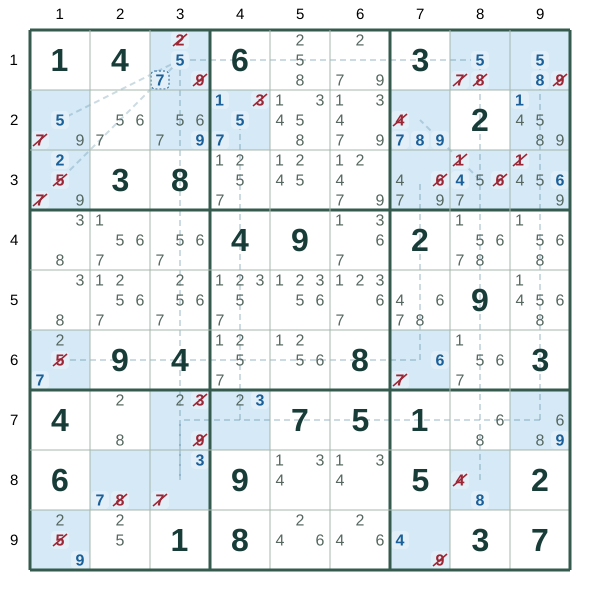
After the preceding exclusions, R1C8=5 is the only remaining option in R1C8. It is forced under this assumption.
Step 35 · Reasoning

R1C8=5 is true. Remove R1C9=5.
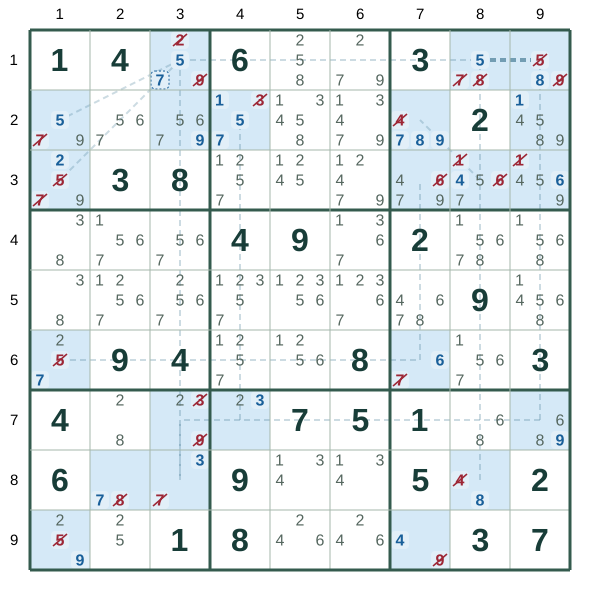
R1C8=5 is true. Remove R1C9=5.
Step 36 · Reasoning

After the preceding exclusions, R1C9=8 is the only remaining option in R1C9. It is forced under this assumption.
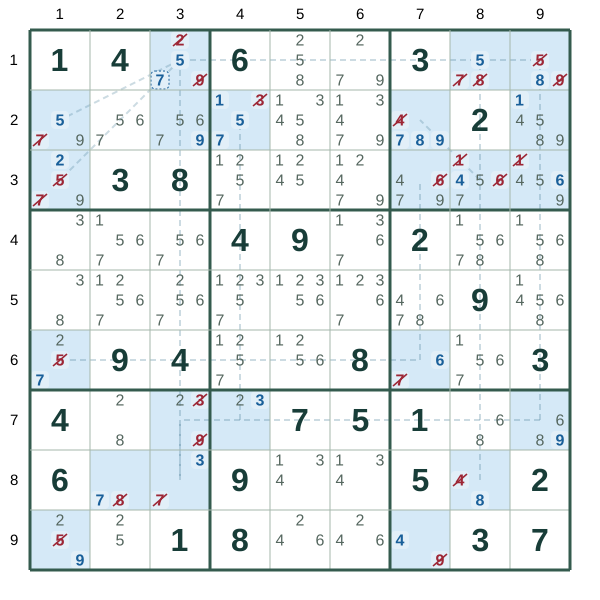
After the preceding exclusions, R1C9=8 is the only remaining option in R1C9. It is forced under this assumption.
Step 37 · Reasoning

R1C9=8 is true. Remove R2C7=8.
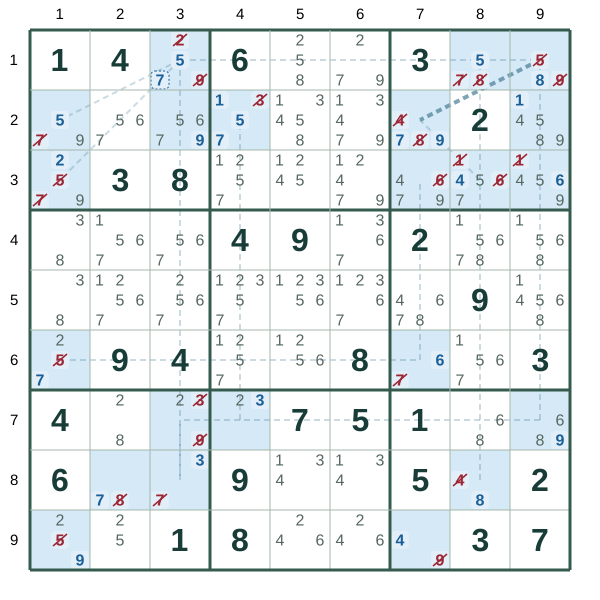
R1C9=8 is true. Remove R2C7=8.
Step 38 · Reasoning

R2C1=5 is true. Remove R2C4=5.
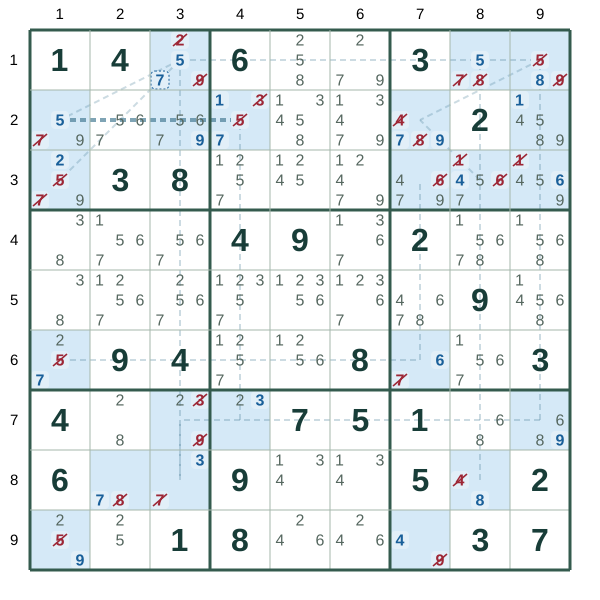
R2C1=5 is true. Remove R2C4=5.
Step 39 · Reasoning

R2C3=9 is true. Remove R2C7=9.
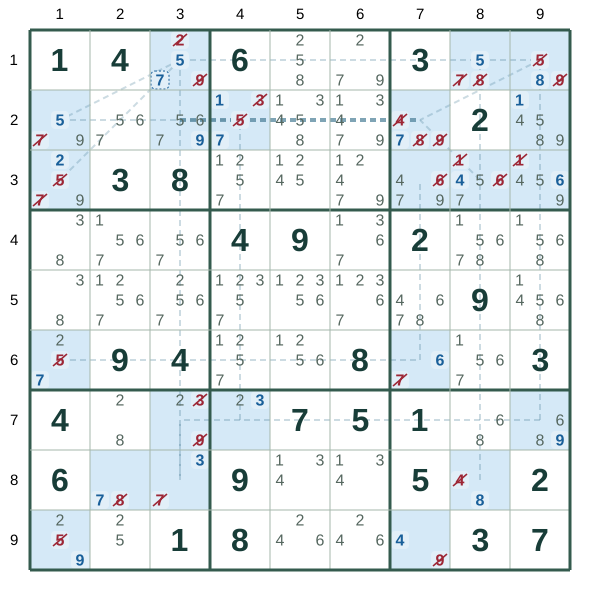
R2C3=9 is true. Remove R2C7=9.
Step 40 · Reasoning

After the preceding exclusions, R2C7=7 is the only remaining option in R2C7. It is forced under this assumption.
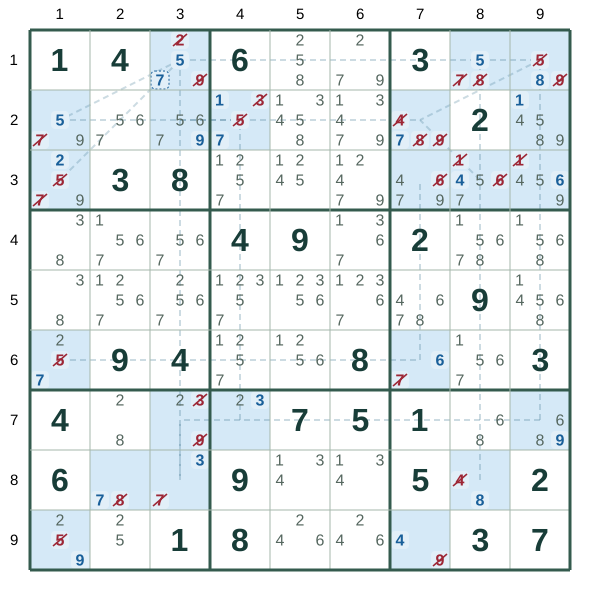
After the preceding exclusions, R2C7=7 is the only remaining option in R2C7. It is forced under this assumption.
Step 41 · Reasoning

R2C7=7 is true. Remove R2C4=7.
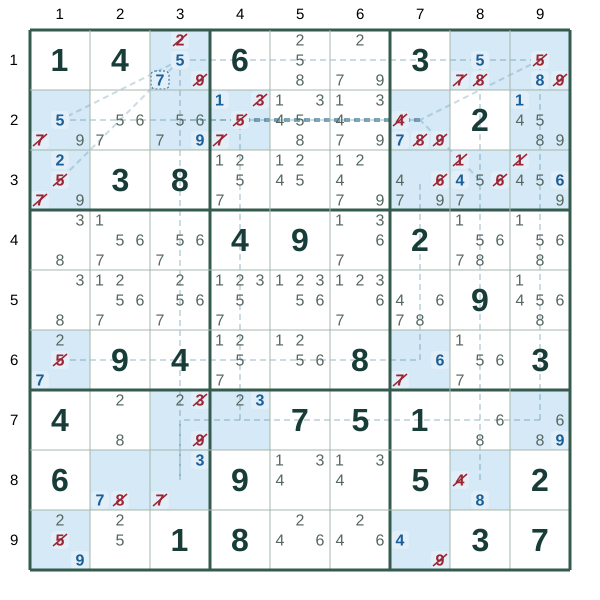
R2C7=7 is true. Remove R2C4=7.
Step 42 · Reasoning

R2C9=1 is true. Remove R2C4=1.
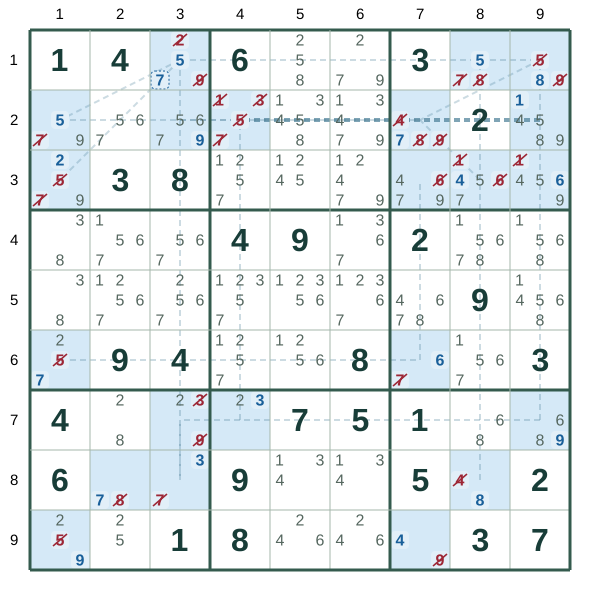
R2C9=1 is true. Remove R2C4=1.
Step 43 · Reasoning

This assumption leaves no possible value or position in R2C4: {R2C4=1, R2C4=3, R2C4=5, R2C4=7}. A Sudoku cell and each missing digit in a region must have an option. The assumption is impossible.
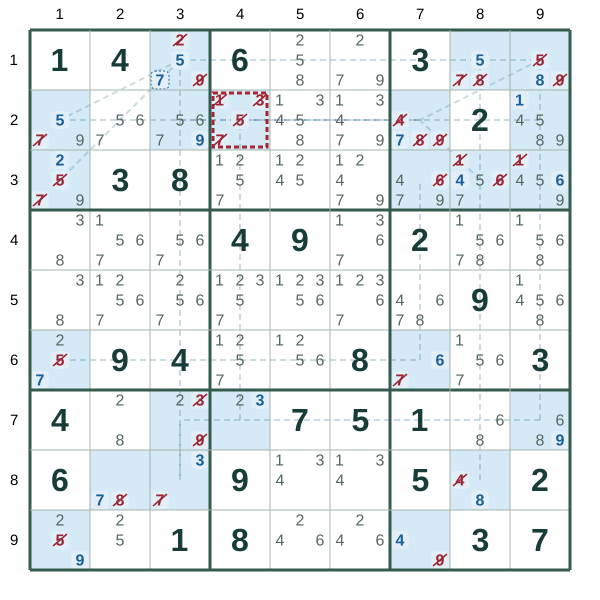
This assumption leaves no possible value or position in R2C4: {R2C4=1, R2C4=3, R2C4=5, R2C4=7}. A Sudoku cell and each missing digit in a region must have an option. The assumption is impossible.
Step 44 · Withdraw the previous rectangle filling

Withdraw this assumption and its consequences. Return to the unchanged candidate snapshot before examining the next possibility.
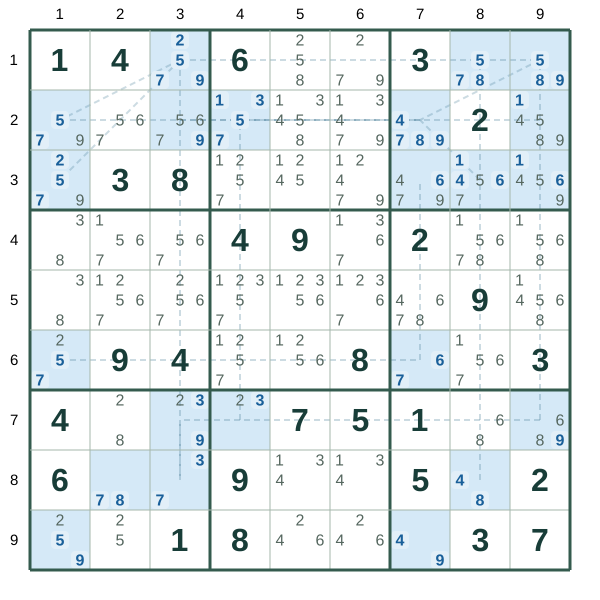
Withdraw this assumption and its consequences. Return to the unchanged candidate snapshot before examining the next possibility.
Step 45 · Conclusion

R1C3=7 can be removed because it cannot be true in this pattern.
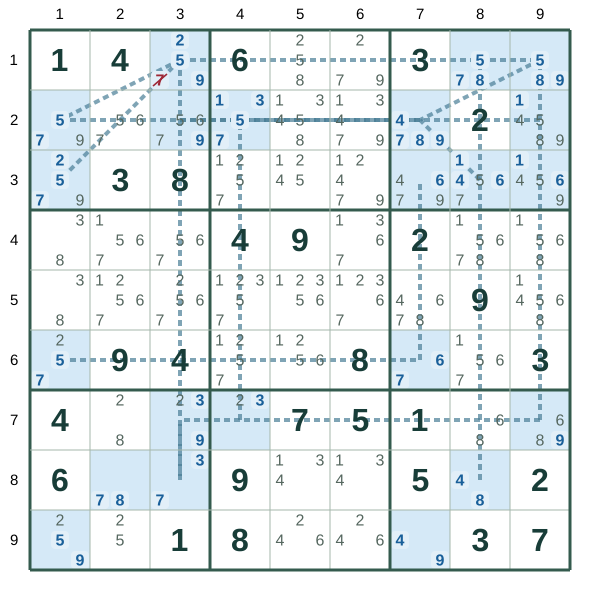
R1C3=7 can be removed because it cannot be true in this pattern.

What it allows

R1C3=7 can be removed because it cannot be true in this pattern.
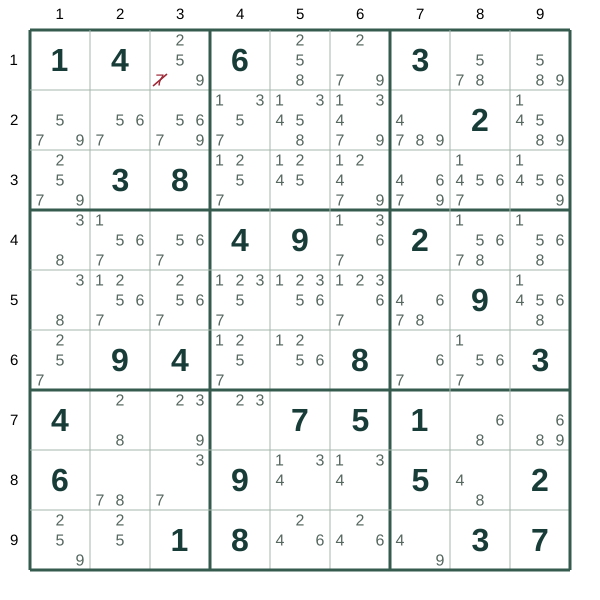
Forcing Net · Remove a refuted candidate or apply the result shared by all exhaustive branches.

Step-by-step example · Common result

This example starts from a saved intermediate position. Its candidates include earlier logical eliminations; they are not fresh automatic notes.

Blue: evidence. Green: conclusion. Crossed-out digits: eliminated candidates. R1C1 means row 1, column 1.

Step 1 · Where to look

The root set R7C5=2, R7C5=4, R7C5=9 contains every possible start in R7C5, so the root branches are exhaustive. This is a Forcing Net, not a Forcing Chain, because the verified dependency graph fans out or merges instead of remaining a single linear implication path. The dependency graph contains 58 verified nodes across 3 root branches. The common result to check is R3C6=2 is true.
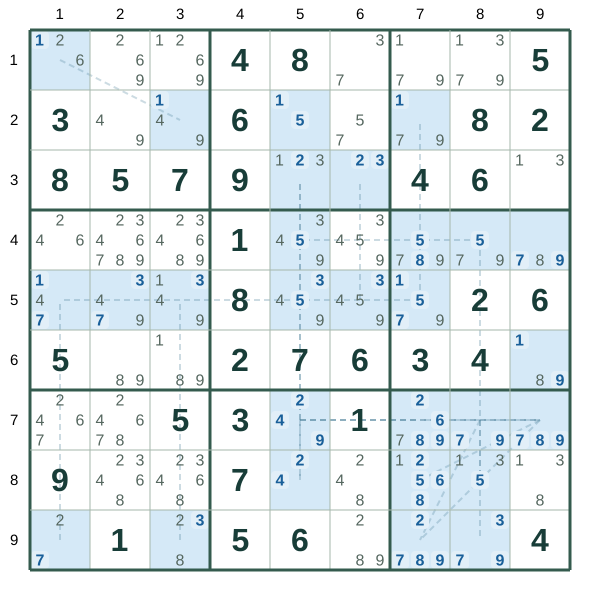
The root set R7C5=2, R7C5=4, R7C5=9 contains every possible start in R7C5, so the root branches are exhaustive. This is a Forcing Net, not a Forcing Chain, because the verified dependency graph fans out or merges instead of remaining a single linear implication path. The dependency graph contains 58 verified nodes across 3 root branches. The common result to check is R3C6=2 is true.
Step 2 · Reasoning

Branch 1: suppose R7C5=2 is true.
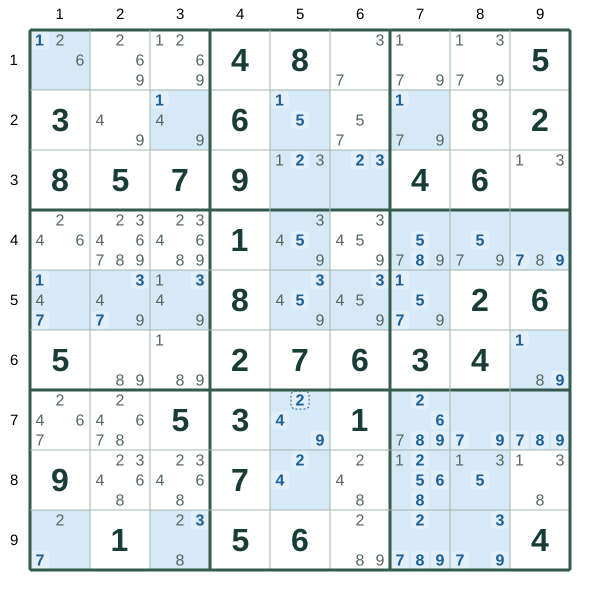
Branch 1: suppose R7C5=2 is true.
Step 3 · Reasoning

R7C5=2 is true. Remove R3C5=2.
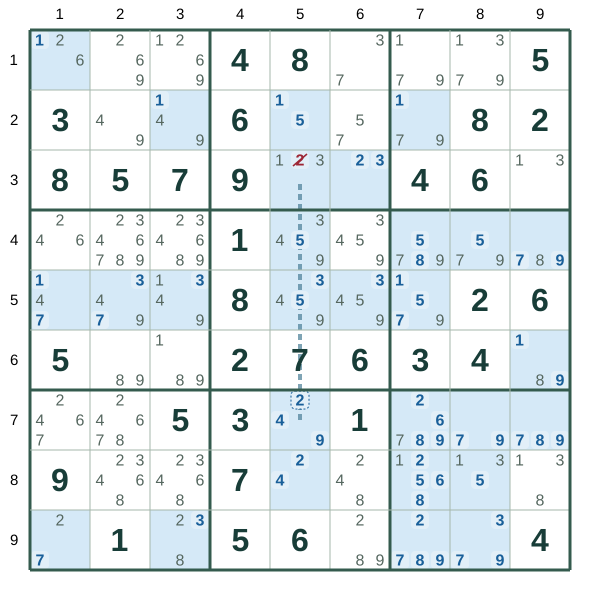
R7C5=2 is true. Remove R3C5=2.
Step 4 · Reasoning

After the preceding exclusions, R3C6=2 is the only remaining option in row 3. It is forced under this assumption.
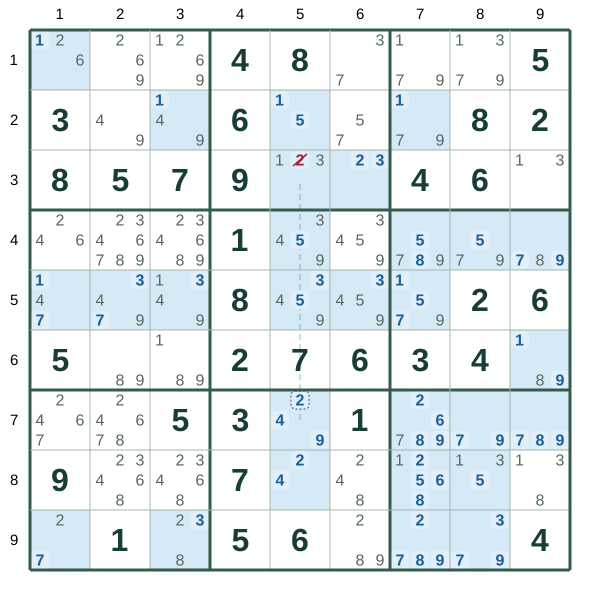
After the preceding exclusions, R3C6=2 is the only remaining option in row 3. It is forced under this assumption.
Step 5 · Withdraw the previous rectangle filling

Withdraw this assumption and its consequences. Return to the unchanged candidate snapshot before examining the next possibility.
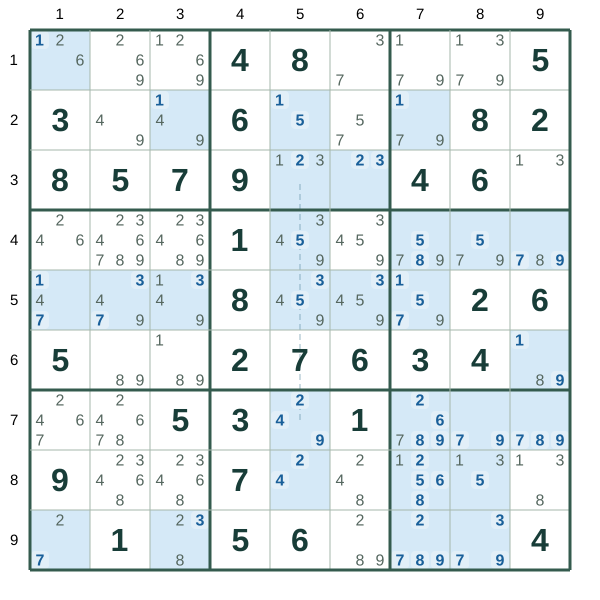
Withdraw this assumption and its consequences. Return to the unchanged candidate snapshot before examining the next possibility.
Step 6 · Reasoning

Branch 2: suppose R7C5=4 is true.
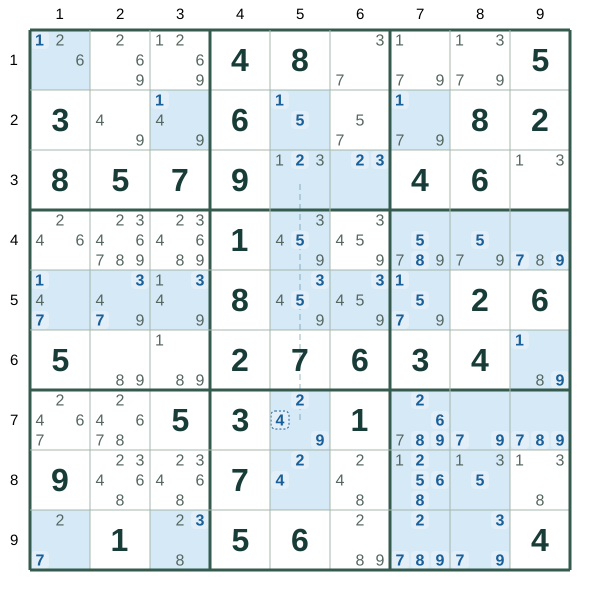
Branch 2: suppose R7C5=4 is true.
Step 7 · Reasoning

R7C5=4 is true. Remove R8C5=4.
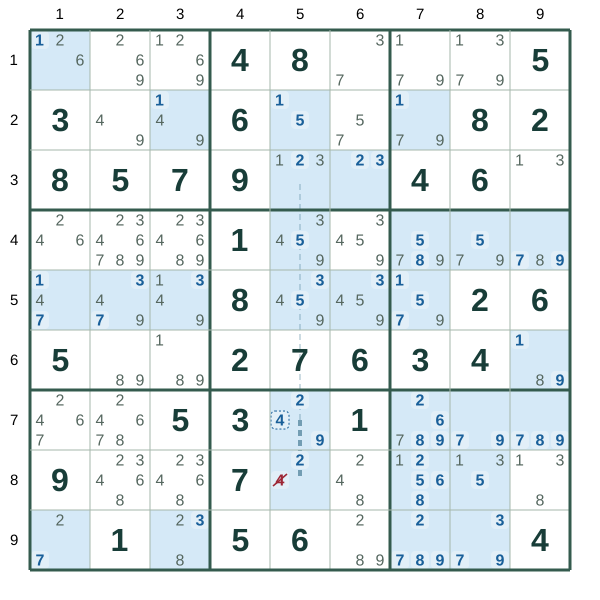
R7C5=4 is true. Remove R8C5=4.
Step 8 · Reasoning

After the preceding exclusions, R8C5=2 is the only remaining option in R8C5. It is forced under this assumption.
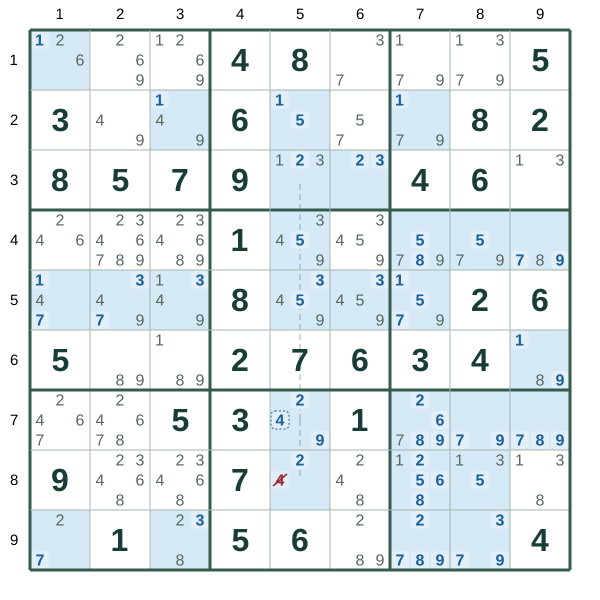
After the preceding exclusions, R8C5=2 is the only remaining option in R8C5. It is forced under this assumption.
Step 9 · Reasoning

R8C5=2 is true. Remove R3C5=2.
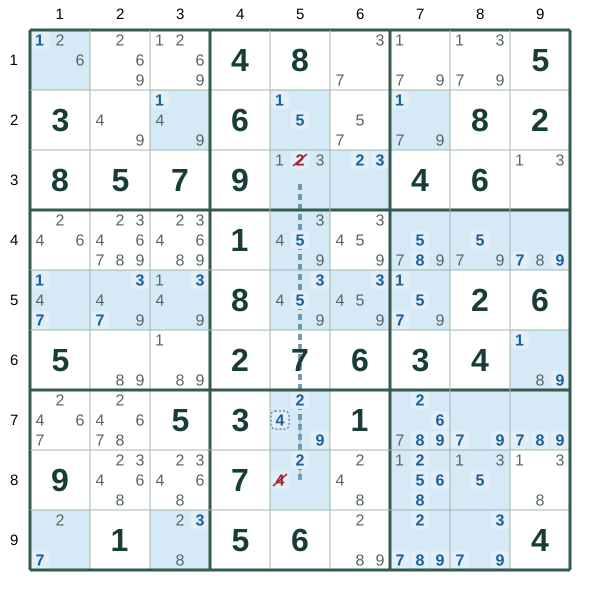
R8C5=2 is true. Remove R3C5=2.
Step 10 · Reasoning

After the preceding exclusions, R3C6=2 is the only remaining option in row 3. It is forced under this assumption.
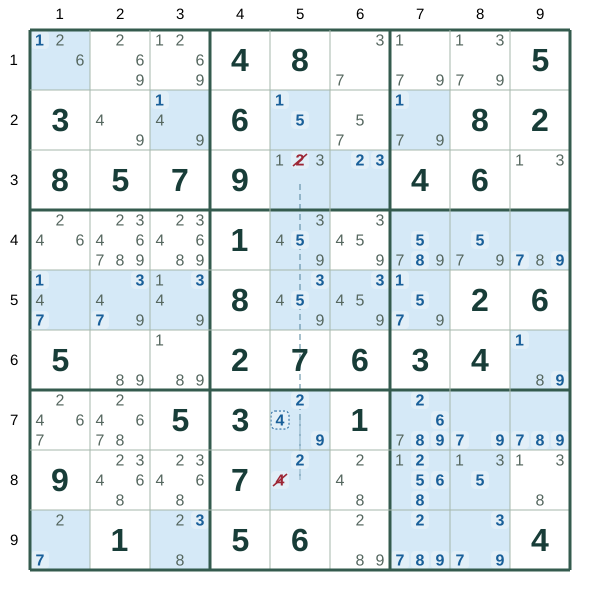
After the preceding exclusions, R3C6=2 is the only remaining option in row 3. It is forced under this assumption.
Step 11 · Withdraw the previous rectangle filling

Withdraw this assumption and its consequences. Return to the unchanged candidate snapshot before examining the next possibility.
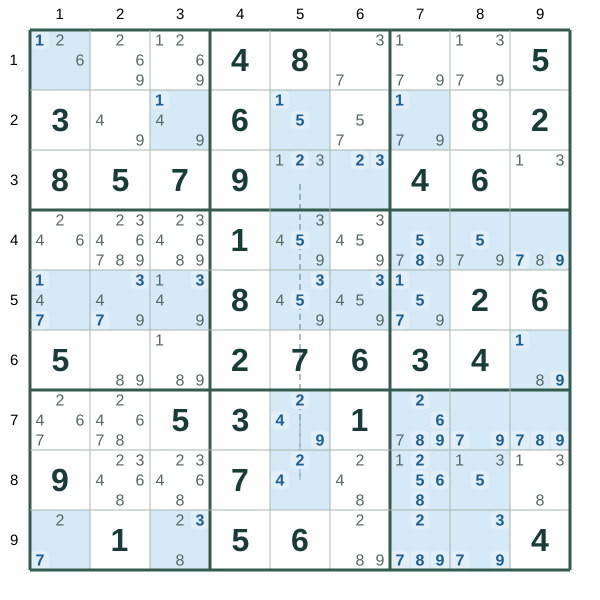
Withdraw this assumption and its consequences. Return to the unchanged candidate snapshot before examining the next possibility.
Step 12 · Reasoning

Branch 3: suppose R7C5=9 is true.
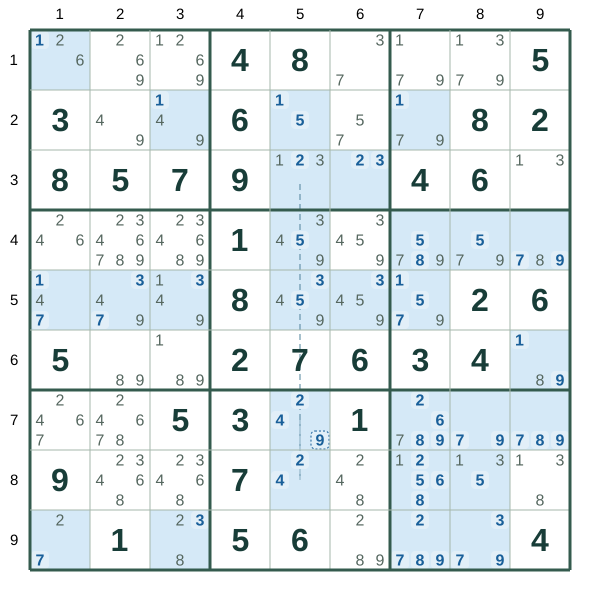
Branch 3: suppose R7C5=9 is true.
Step 13 · Reasoning

R7C5=9 is true. Remove {R7C7=9, R7C8=9, R7C9=9}.
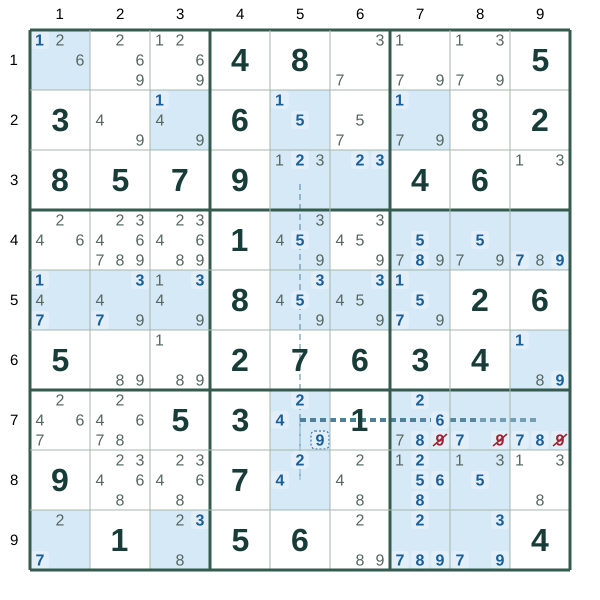
R7C5=9 is true. Remove {R7C7=9, R7C8=9, R7C9=9}.
Step 14 · Reasoning

After the preceding exclusions, R7C8=7 is the only remaining option in R7C8. It is forced under this assumption.
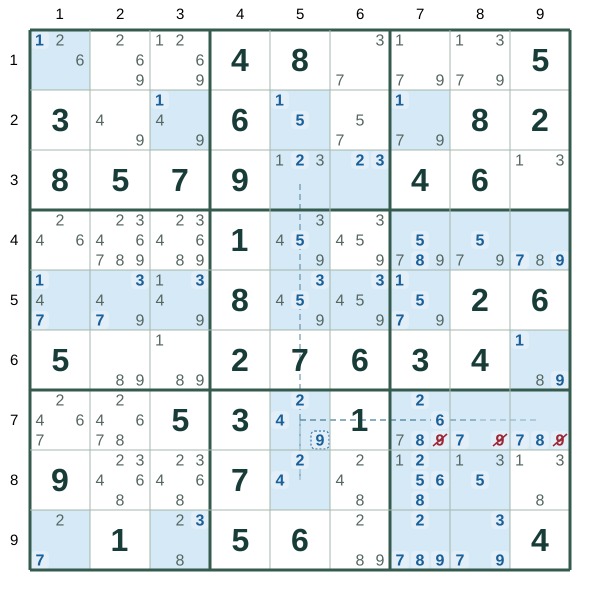
After the preceding exclusions, R7C8=7 is the only remaining option in R7C8. It is forced under this assumption.
Step 15 · Reasoning

R7C8=7 is true. Remove {R7C9=7, R9C7=7, R9C8=7}.
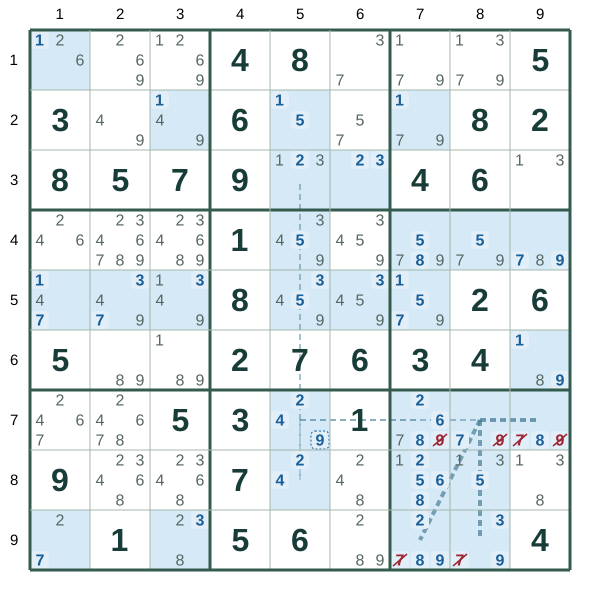
R7C8=7 is true. Remove {R7C9=7, R9C7=7, R9C8=7}.
Step 16 · Reasoning

After the preceding exclusions, R7C9=8 is the only remaining option in R7C9. It is forced under this assumption.
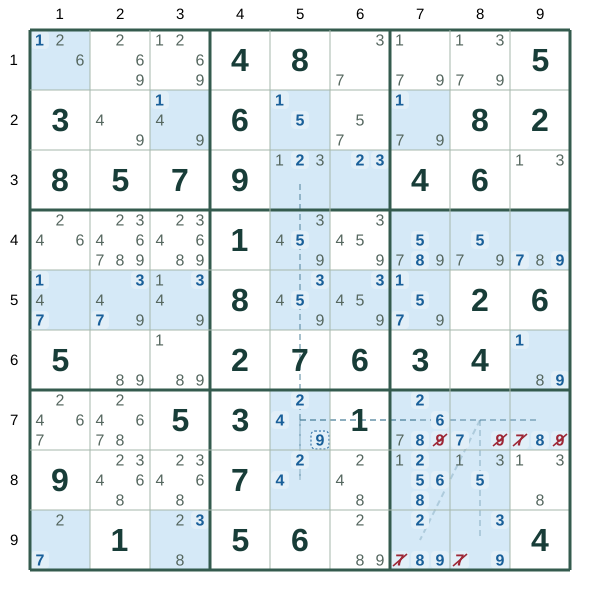
After the preceding exclusions, R7C9=8 is the only remaining option in R7C9. It is forced under this assumption.
Step 17 · Reasoning

R7C9=8 is true. Remove {R7C7=8, R8C7=8, R9C7=8}.
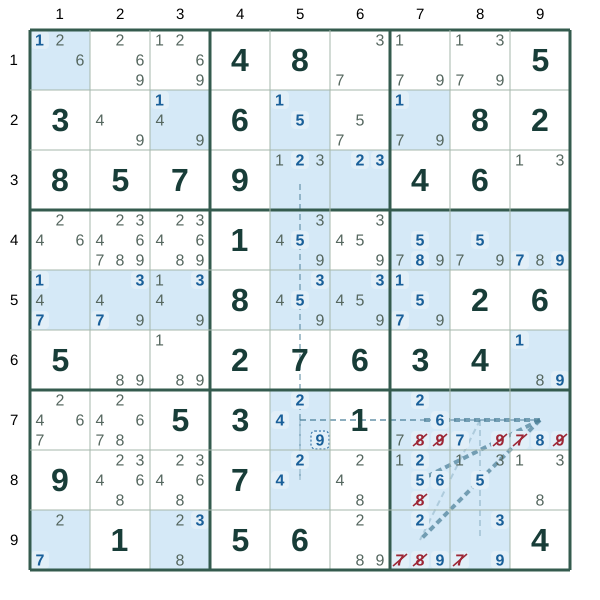
R7C9=8 is true. Remove {R7C7=8, R8C7=8, R9C7=8}.
Step 18 · Reasoning

After the preceding exclusions, R9C1=7 is the only remaining option in row 9. It is forced under this assumption.
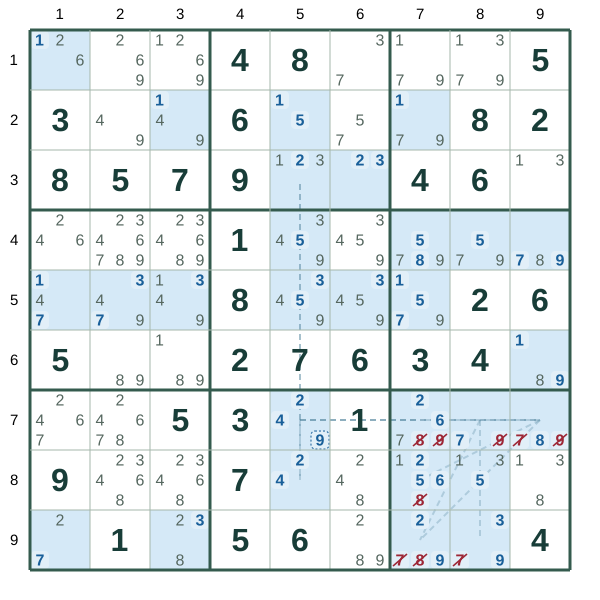
After the preceding exclusions, R9C1=7 is the only remaining option in row 9. It is forced under this assumption.
Step 19 · Reasoning

After the preceding exclusions, R4C7=8 is the only remaining option in column 7. It is forced under this assumption.
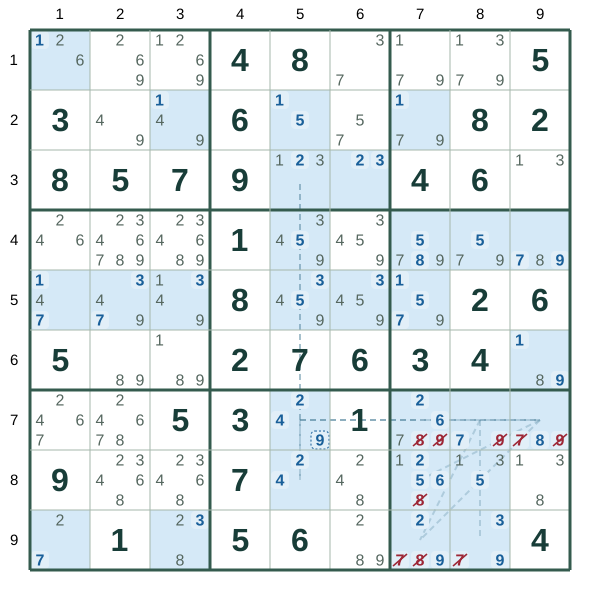
After the preceding exclusions, R4C7=8 is the only remaining option in column 7. It is forced under this assumption.
Step 20 · Reasoning

R4C7=8 is true. Remove R4C7=5.
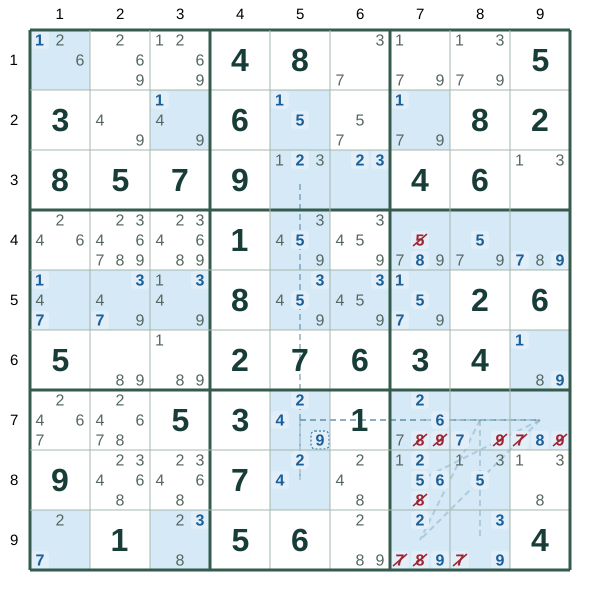
R4C7=8 is true. Remove R4C7=5.
Step 21 · Reasoning

After the preceding exclusions, R4C9=7 is the only remaining option in column 9. It is forced under this assumption.
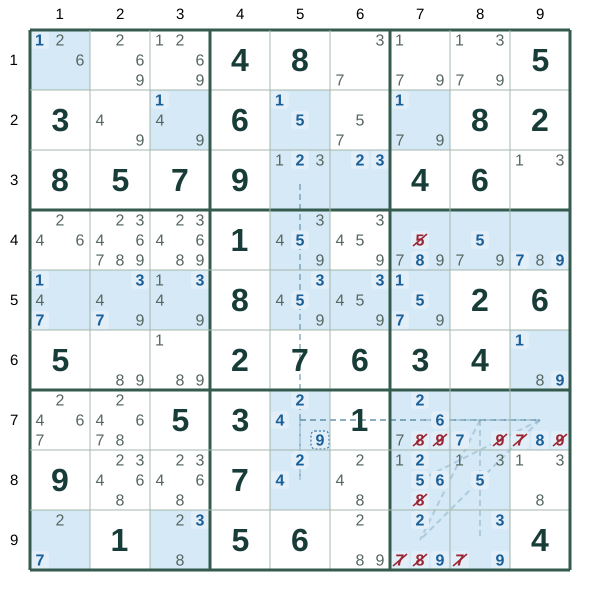
After the preceding exclusions, R4C9=7 is the only remaining option in column 9. It is forced under this assumption.
Step 22 · Reasoning

R4C9=7 is true. Remove R4C9=9.
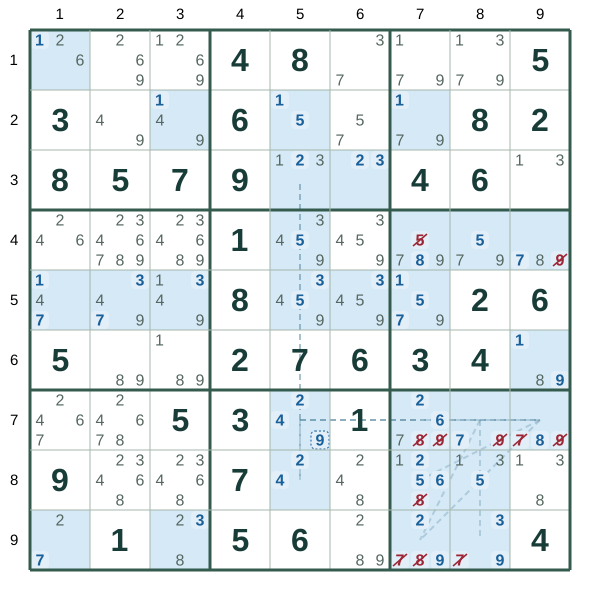
R4C9=7 is true. Remove R4C9=9.
Step 23 · Reasoning

After the preceding exclusions, R6C9=9 is the only remaining option in column 9. It is forced under this assumption.
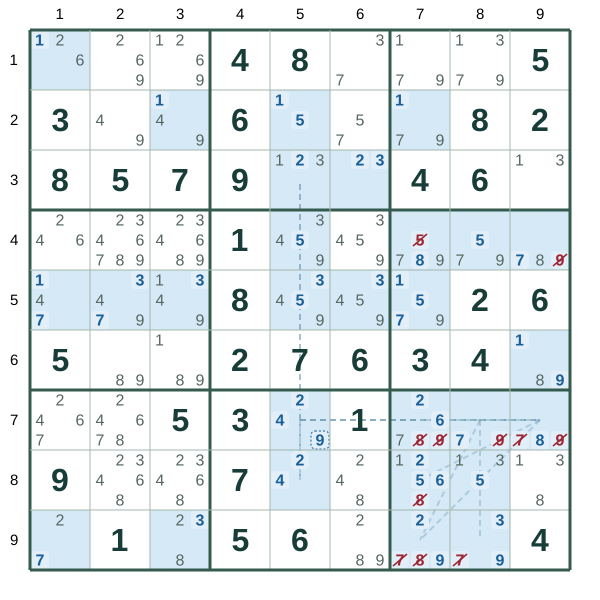
After the preceding exclusions, R6C9=9 is the only remaining option in column 9. It is forced under this assumption.
Step 24 · Reasoning

R6C9=9 is true. Remove R6C9=1.
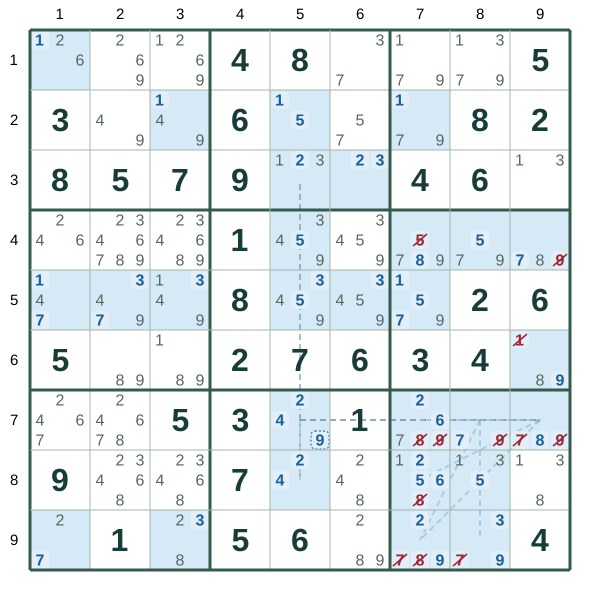
R6C9=9 is true. Remove R6C9=1.
Step 25 · Reasoning

After the preceding exclusions, R5C7=1 is the only remaining option in box 6. It is forced under this assumption.
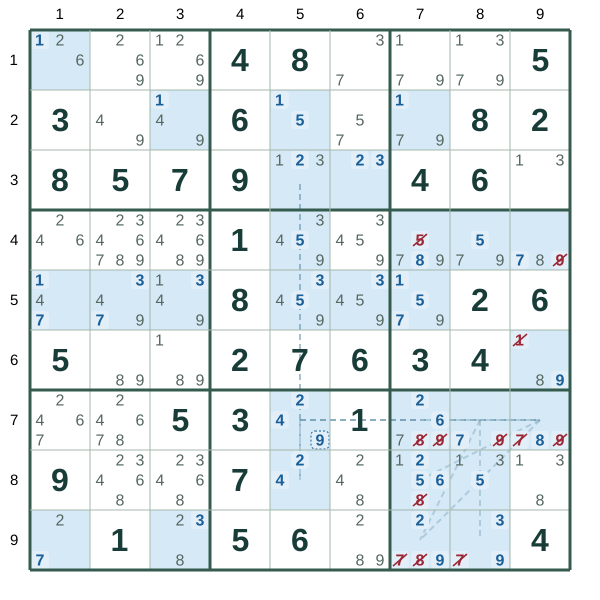
After the preceding exclusions, R5C7=1 is the only remaining option in box 6. It is forced under this assumption.
Step 26 · Reasoning

R5C7=1 is true. Remove {R5C7=5, R5C7=7}.
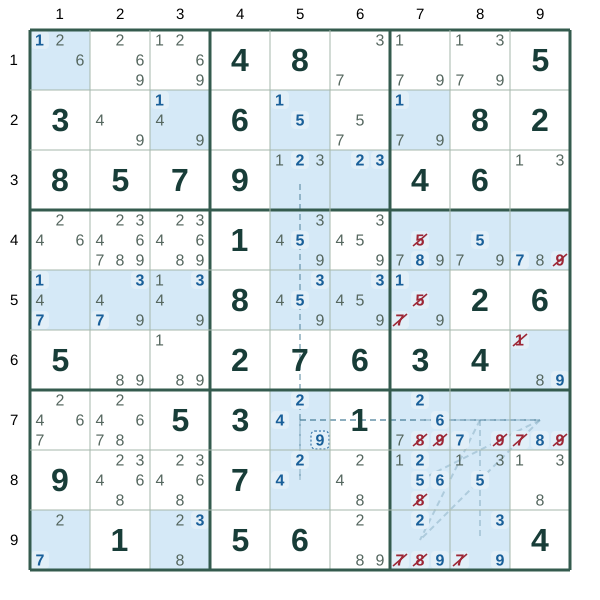
R5C7=1 is true. Remove {R5C7=5, R5C7=7}.
Step 27 · Reasoning

After the preceding exclusions, R4C8=5 is the only remaining option in box 6. It is forced under this assumption.
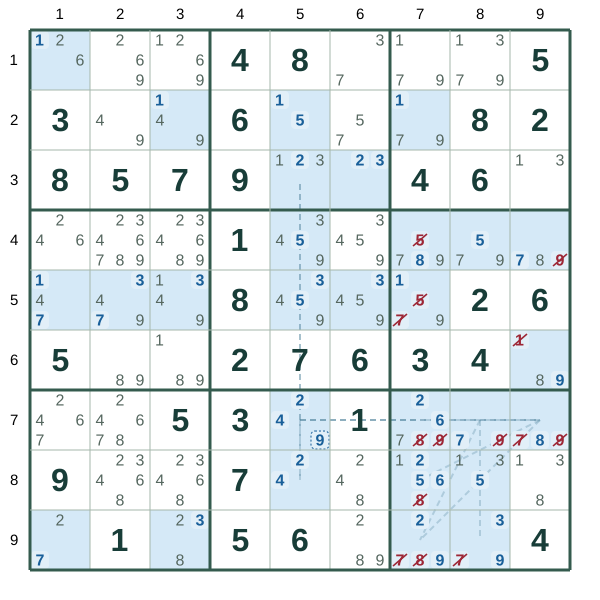
After the preceding exclusions, R4C8=5 is the only remaining option in box 6. It is forced under this assumption.
Step 28 · Reasoning

R4C8=5 is true. Remove {R4C5=5, R8C8=5}.
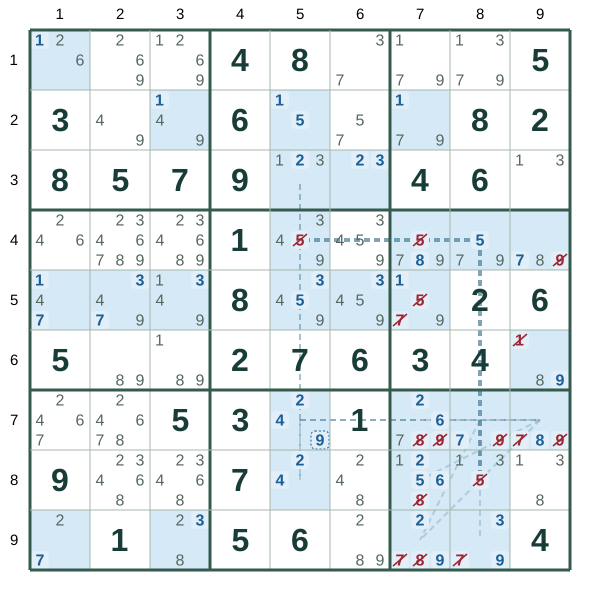
R4C8=5 is true. Remove {R4C5=5, R8C8=5}.
Step 29 · Reasoning

R5C7=1 is true. Remove {R2C7=1, R5C1=1}.
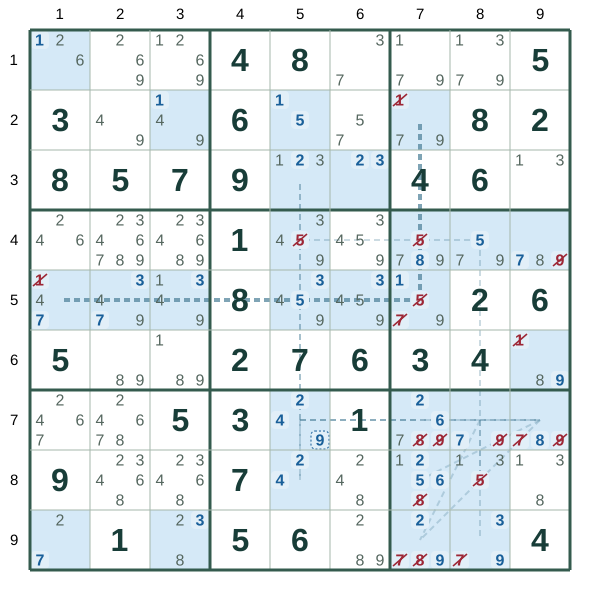
R5C7=1 is true. Remove {R2C7=1, R5C1=1}.
Step 30 · Reasoning

R9C1=7 is true. Remove R5C1=7.
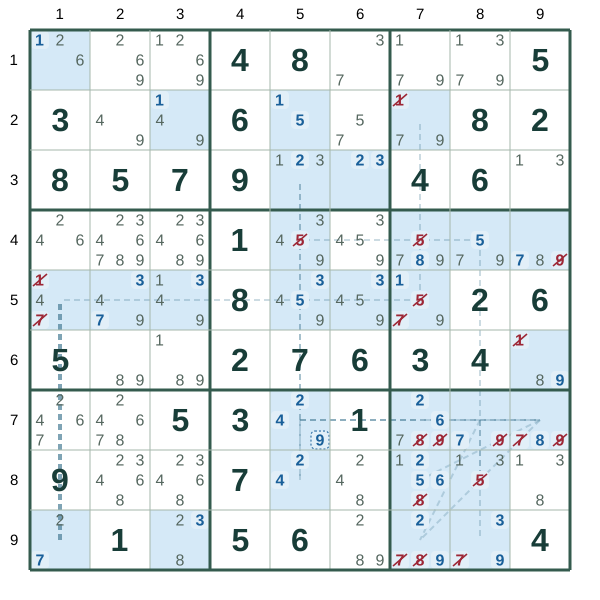
R9C1=7 is true. Remove R5C1=7.
Step 31 · Reasoning

After the preceding exclusions, R5C2=7 is the only remaining option in row 5. It is forced under this assumption.
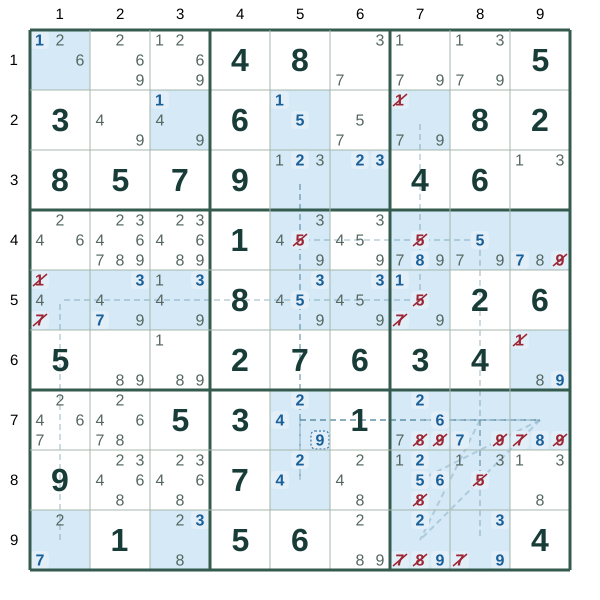
After the preceding exclusions, R5C2=7 is the only remaining option in row 5. It is forced under this assumption.
Step 32 · Reasoning

R5C2=7 is true. Remove R5C2=3.
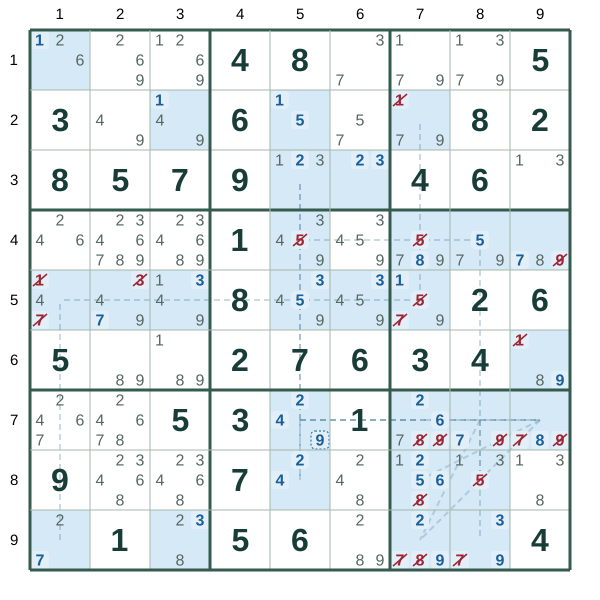
R5C2=7 is true. Remove R5C2=3.
Step 33 · Reasoning

After the preceding exclusions, R8C7=5 is the only remaining option in row 8. It is forced under this assumption.
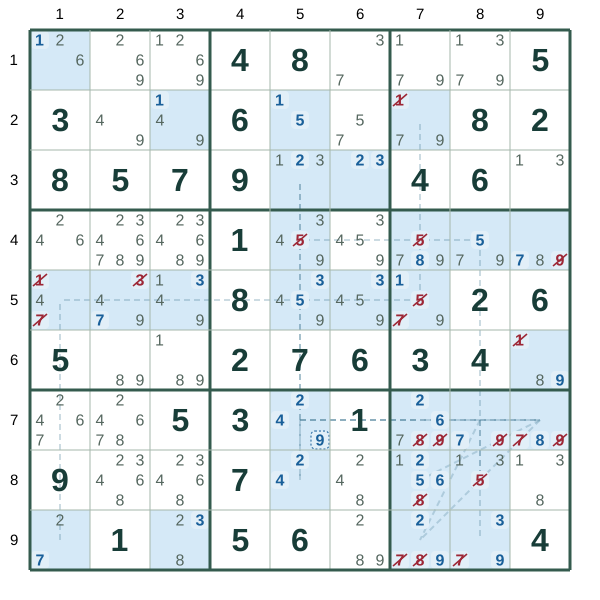
After the preceding exclusions, R8C7=5 is the only remaining option in row 8. It is forced under this assumption.
Step 34 · Reasoning

R8C7=5 is true. Remove {R8C7=2, R8C7=6}.
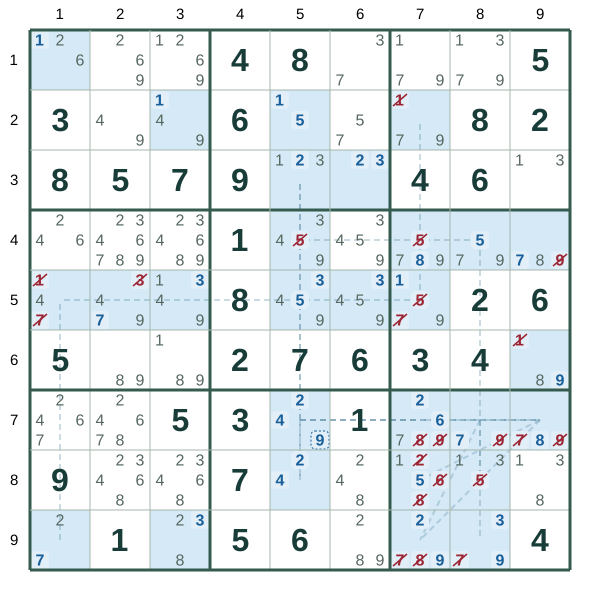
R8C7=5 is true. Remove {R8C7=2, R8C7=6}.
Step 35 · Reasoning

After the preceding exclusions, R1C1=1 is the only remaining option in column 1. It is forced under this assumption.
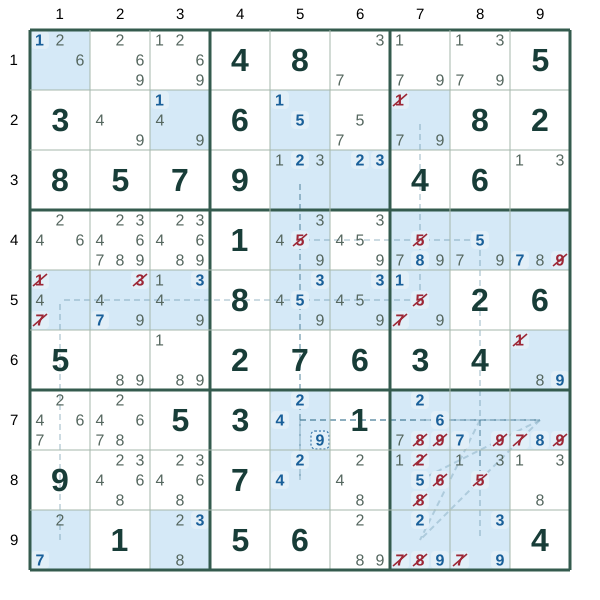
After the preceding exclusions, R1C1=1 is the only remaining option in column 1. It is forced under this assumption.
Step 36 · Reasoning

After the preceding exclusions, R7C7=6 is the only remaining option in column 7. It is forced under this assumption.
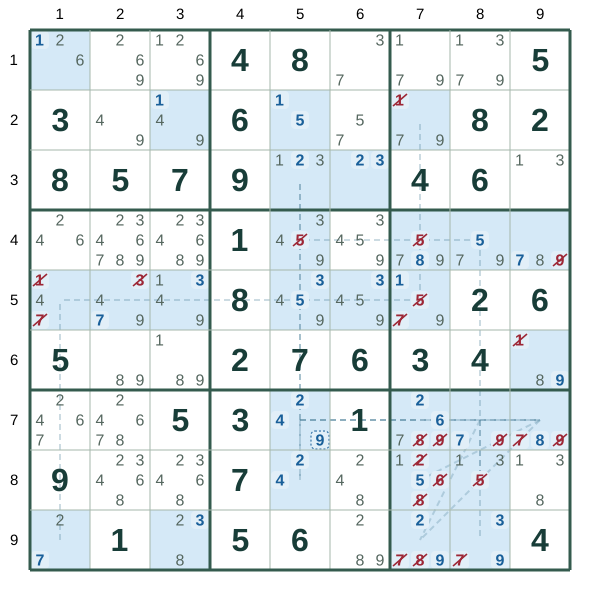
After the preceding exclusions, R7C7=6 is the only remaining option in column 7. It is forced under this assumption.
Step 37 · Reasoning

R7C7=6 is true. Remove R7C7=2.
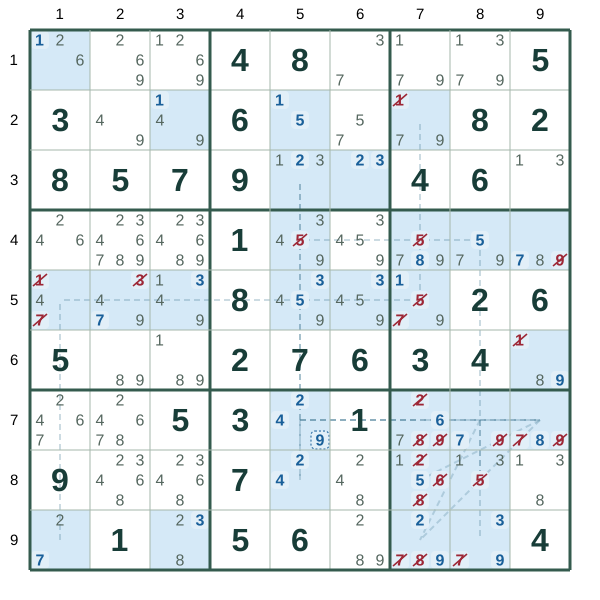
R7C7=6 is true. Remove R7C7=2.
Step 38 · Reasoning

After the preceding exclusions, R9C7=2 is the only remaining option in box 9. It is forced under this assumption.
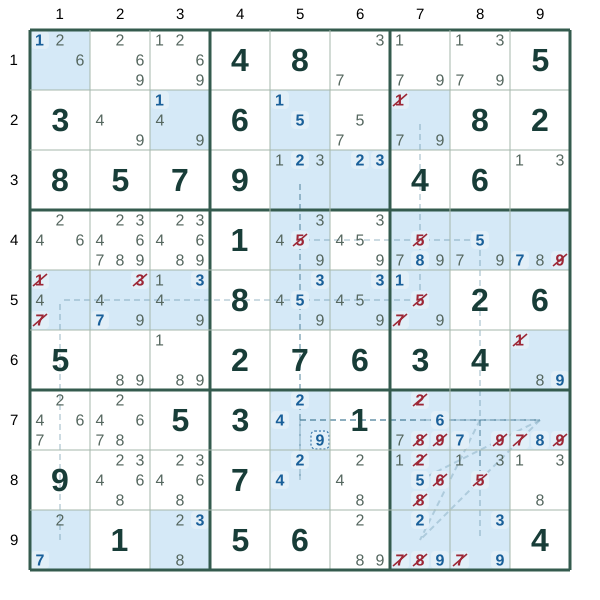
After the preceding exclusions, R9C7=2 is the only remaining option in box 9. It is forced under this assumption.
Step 39 · Reasoning

R9C7=2 is true. Remove R9C7=9.
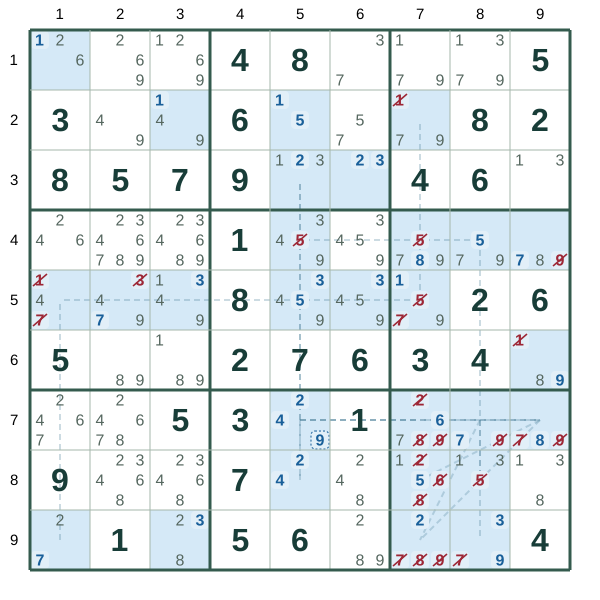
R9C7=2 is true. Remove R9C7=9.
Step 40 · Reasoning

After the preceding exclusions, R9C8=9 is the only remaining option in box 9. It is forced under this assumption.
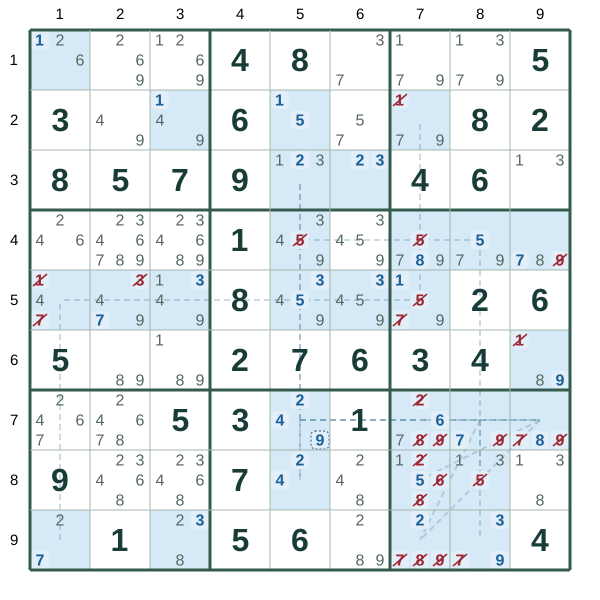
After the preceding exclusions, R9C8=9 is the only remaining option in box 9. It is forced under this assumption.
Step 41 · Reasoning

R9C8=9 is true. Remove R9C8=3.
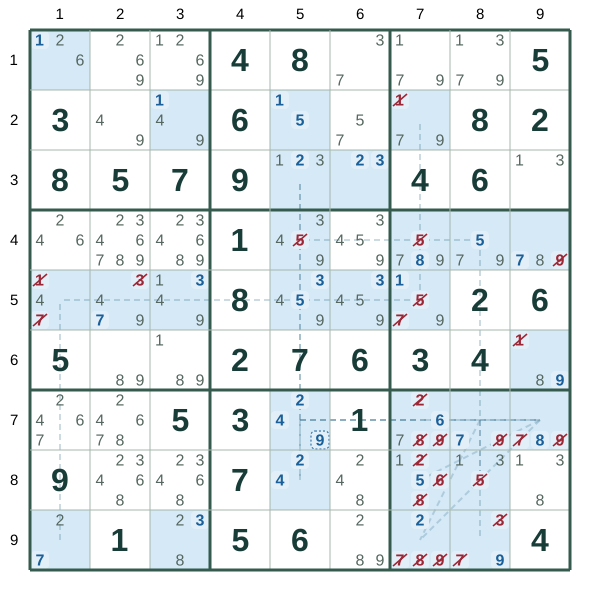
R9C8=9 is true. Remove R9C8=3.
Step 42 · Reasoning

R1C1=1 is true. Remove R2C3=1.
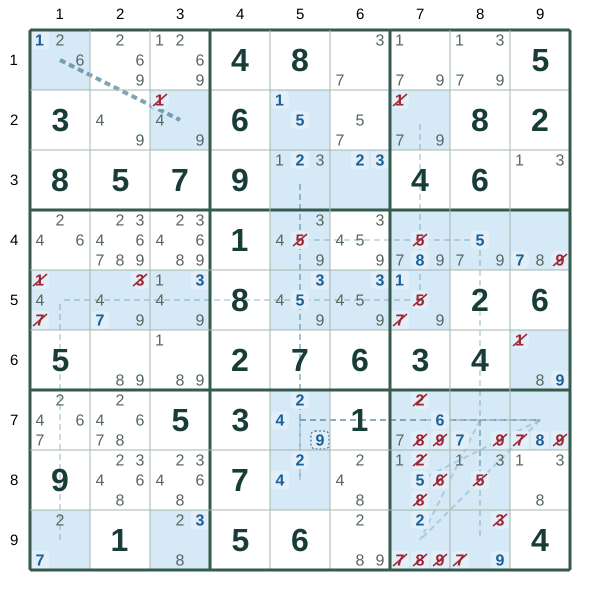
R1C1=1 is true. Remove R2C3=1.
Step 43 · Reasoning

After the preceding exclusions, R2C5=1 is the only remaining option in row 2. It is forced under this assumption.
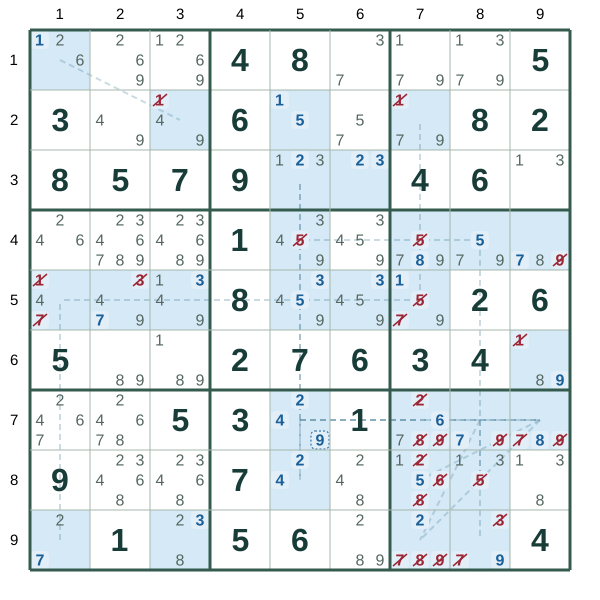
After the preceding exclusions, R2C5=1 is the only remaining option in row 2. It is forced under this assumption.
Step 44 · Reasoning

R2C5=1 is true. Remove R2C5=5.
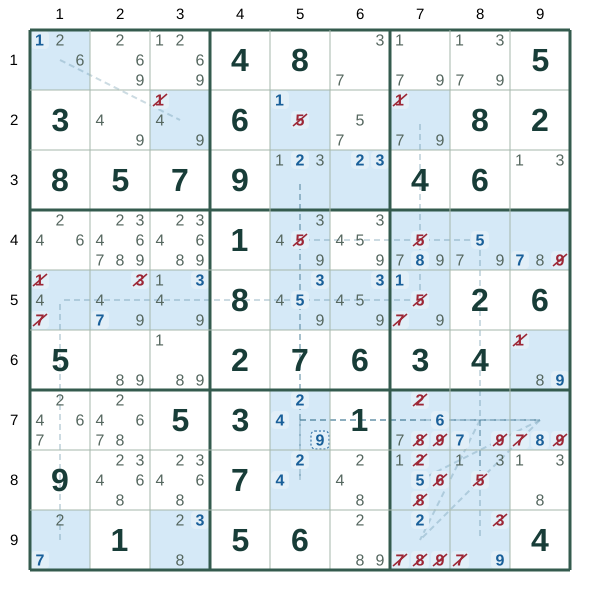
R2C5=1 is true. Remove R2C5=5.
Step 45 · Reasoning

After the preceding exclusions, R9C3=3 is the only remaining option in row 9. It is forced under this assumption.
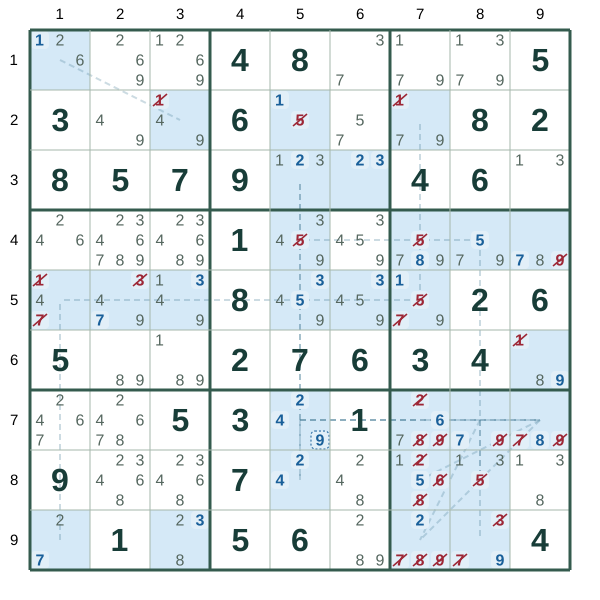
After the preceding exclusions, R9C3=3 is the only remaining option in row 9. It is forced under this assumption.
Step 46 · Reasoning

After the preceding exclusions, R5C5=5 is the only remaining option in column 5. It is forced under this assumption.
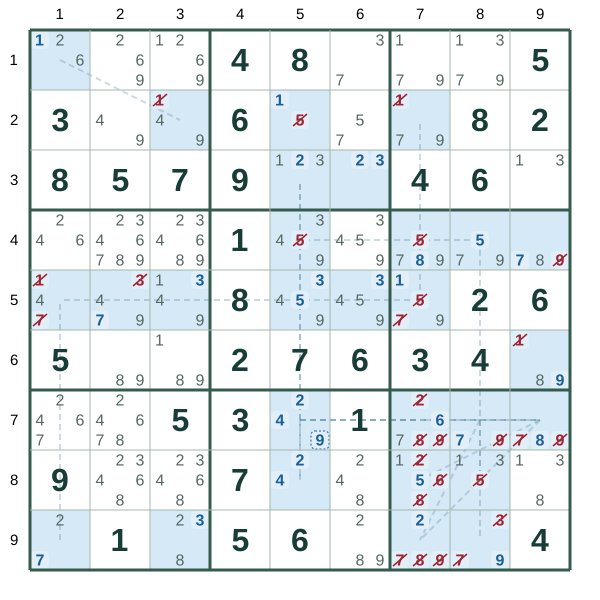
After the preceding exclusions, R5C5=5 is the only remaining option in column 5. It is forced under this assumption.
Step 47 · Reasoning

R5C5=5 is true. Remove R5C5=3.
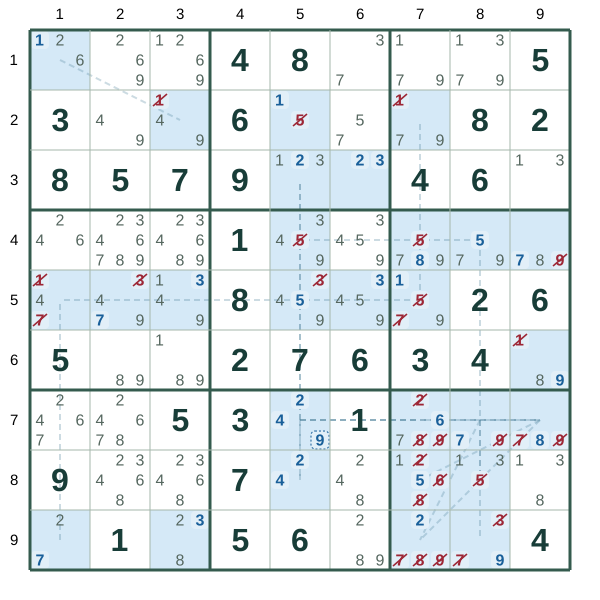
R5C5=5 is true. Remove R5C5=3.
Step 48 · Reasoning

R9C3=3 is true. Remove R5C3=3.
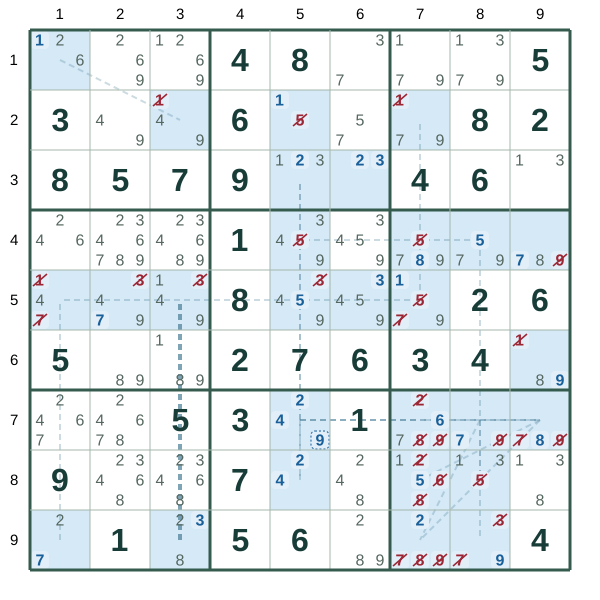
R9C3=3 is true. Remove R5C3=3.
Step 49 · Reasoning

After the preceding exclusions, R5C6=3 is the only remaining option in row 5. It is forced under this assumption.
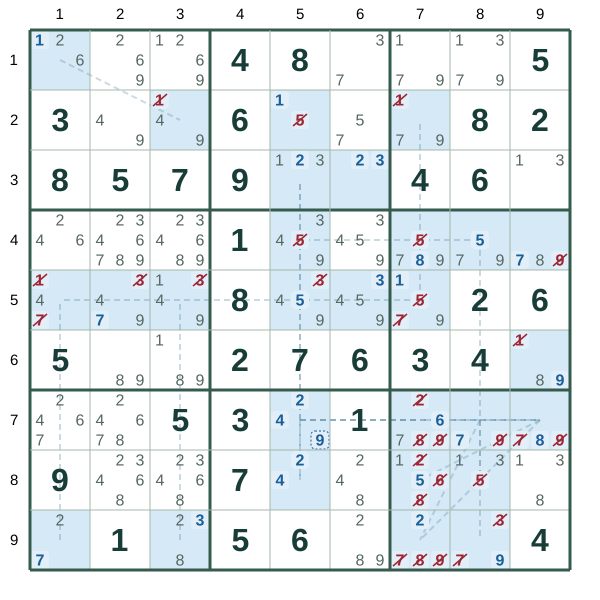
After the preceding exclusions, R5C6=3 is the only remaining option in row 5. It is forced under this assumption.
Step 50 · Reasoning

R5C6=3 is true. Remove R3C6=3.
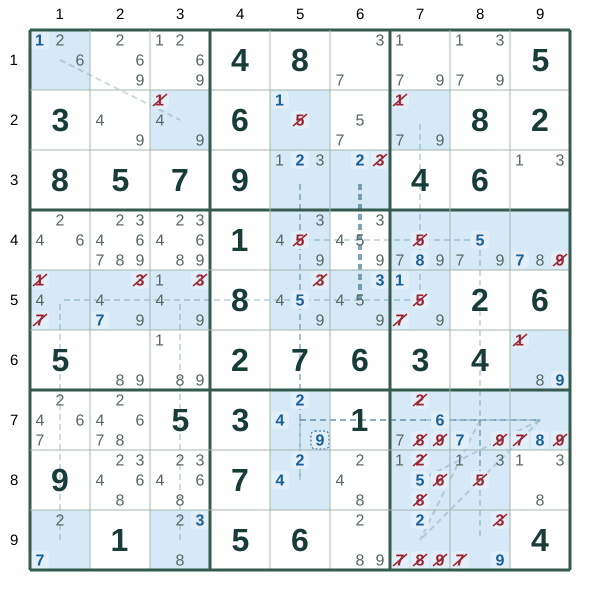
R5C6=3 is true. Remove R3C6=3.
Step 51 · Reasoning

After the preceding exclusions, R3C6=2 is the only remaining option in R3C6. It is forced under this assumption.
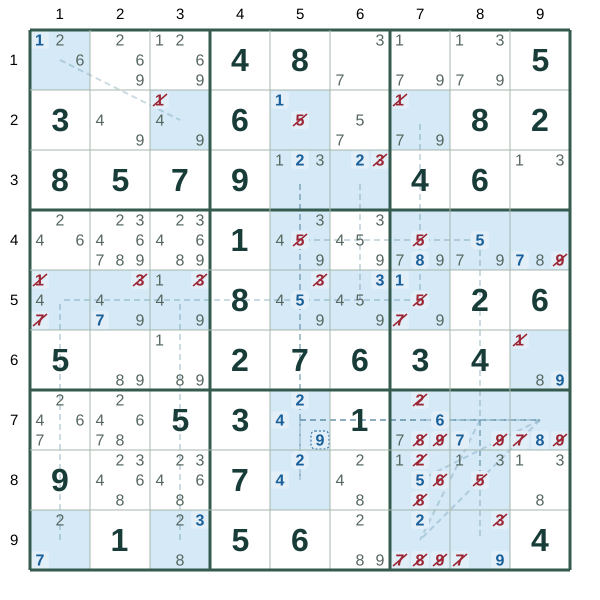
After the preceding exclusions, R3C6=2 is the only remaining option in R3C6. It is forced under this assumption.
Step 52 · Reasoning

Every possible branch reaches the same fact: R3C6=2 is true. After withdrawing all assumptions, this fact remains certain.
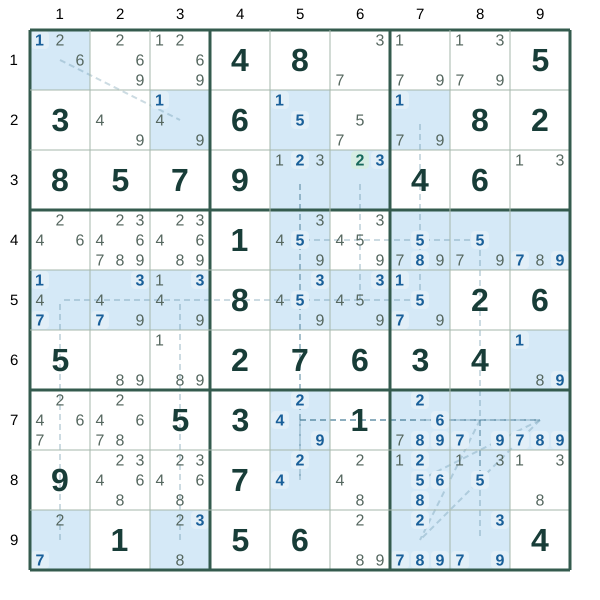
Every possible branch reaches the same fact: R3C6=2 is true. After withdrawing all assumptions, this fact remains certain.
Step 53 · Conclusion

R3C6=2 is forced by this pattern.
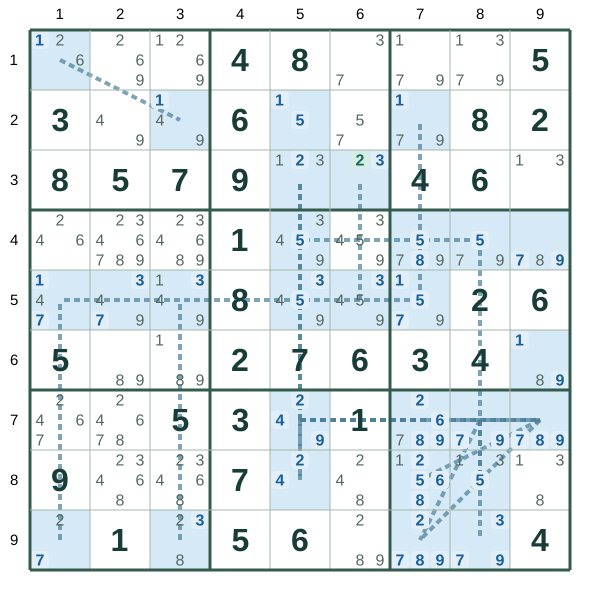
R3C6=2 is forced by this pattern.

What it allows

R3C6=2 is forced by this pattern.
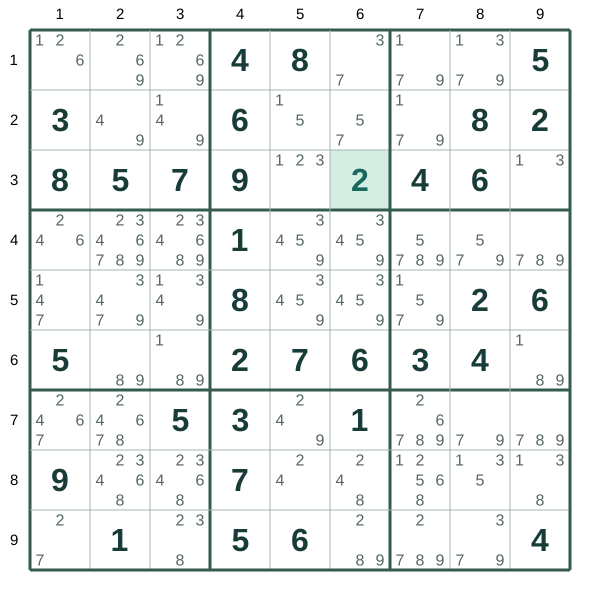
Forcing Net · Remove a refuted candidate or apply the result shared by all exhaustive branches.

Practice

This course is adapted from Platon Sudoku App. Read the complete example here, then continue learning and practising in the app.

View on Google Play