Platon Sudoku · Sudoku Study
Single-Digit Grouped AIC · Step-by-step example
A grouped node means at least one of several candidates is true; it can participate in an alternating inference chain. Eliminate a target seen by the chain’s forcing endpoints.
This course is adapted from Platon Sudoku App. Read the complete example here, then continue learning and practising in the app.
View on Google PlayRecognize the pattern
A grouped node means at least one of several candidates is true; it can participate in an alternating inference chain.
How to find it
Check that the grouped cells share the required region, then trace the strong and weak links through one or more group nodes.
What it allows
Eliminate a target seen by the chain’s forcing endpoints.
Avoid the mix-up
A true group does not mean every member is true. Preserve the group’s OR meaning when following the chain.
Step-by-step example · One group
This example starts from a saved intermediate position. Its candidates include earlier logical eliminations; they are not fresh automatic notes.
Blue: evidence. Green: conclusion. Crossed-out digits: eliminated candidates. R1C1 means row 1, column 1.
Step 1 · Where to look
In box 6, 2 can go only in R4C7, R4C8, R5C8. The digit must appear once in this region.
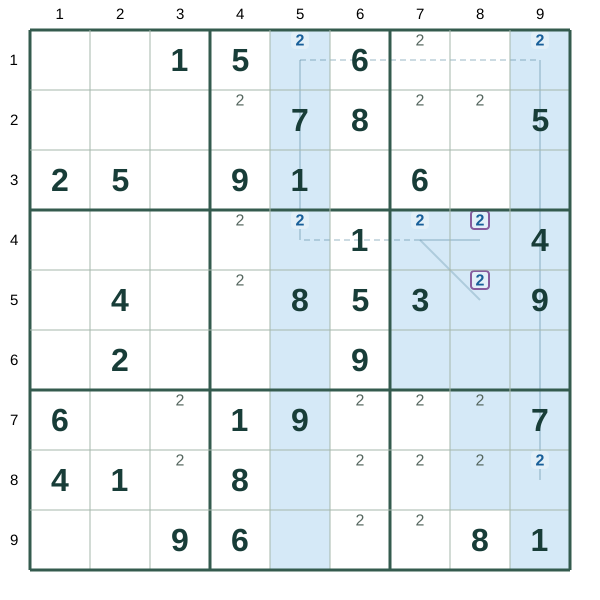
G1: R4C8=2, R5C8=2
1: OR group A: at least one candidate is true
Step 2 · Reasoning
In column 5, 2 can go only in R1C5, R4C5. The digit must appear once in this region.
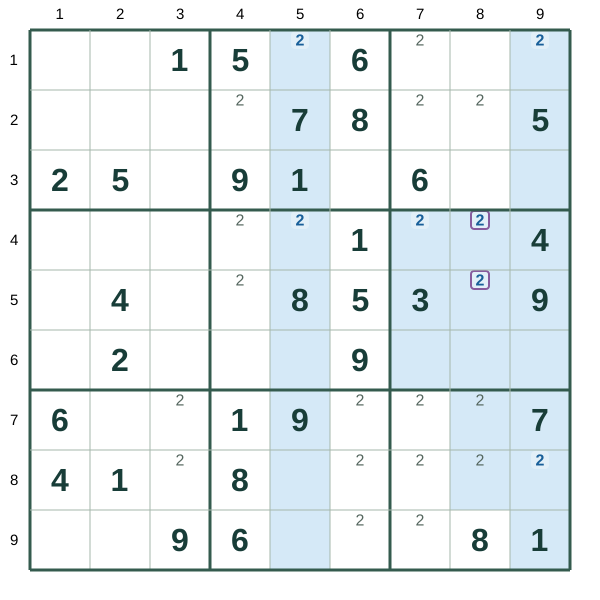
G1: R4C8=2, R5C8=2
1: OR group A: at least one candidate is true
Step 3 · Reasoning
In column 9, 2 can go only in R1C9, R8C9. The digit must appear once in this region.
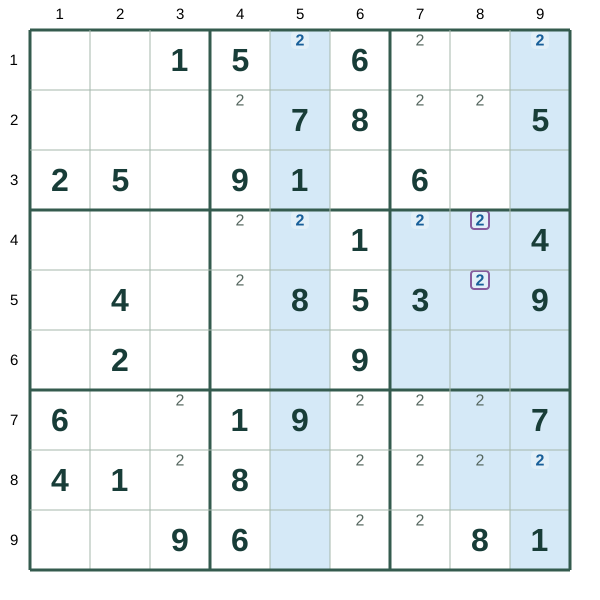
G1: R4C8=2, R5C8=2
1: OR group A: at least one candidate is true
Step 4 · Name the OR candidate groups
The numbered braces and legend define these named groups: OR candidate group A = R4C8=2, R5C8=2. Each group is one OR state: at least one candidate in it is true, but the chain does not claim that every member is true.
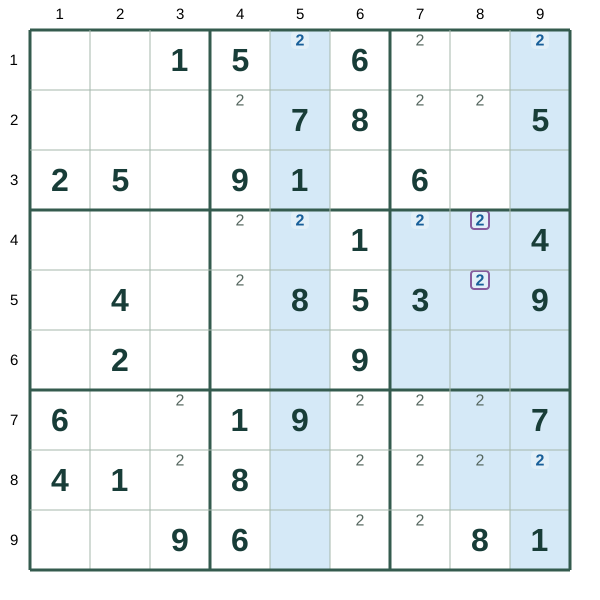
G1: R4C8=2, R5C8=2
1: OR group A: at least one candidate is true
Step 5 · Reasoning
Branch 1: suppose OR candidate group A is false.
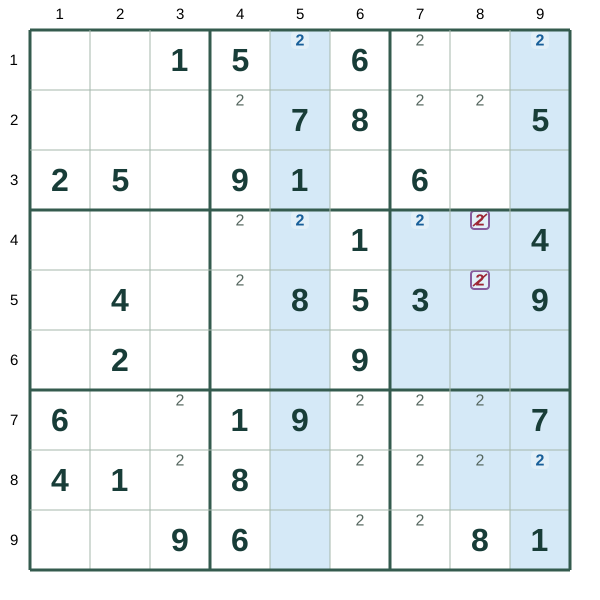
G1: R4C8=2, R5C8=2
1: OR group A: at least one candidate is true
Step 6 · Group strong link: force the other side
Case 1: OR candidate group A is false, so the group strong link forces R4C7=2. If this is an OR group, at least one of its candidates is true.
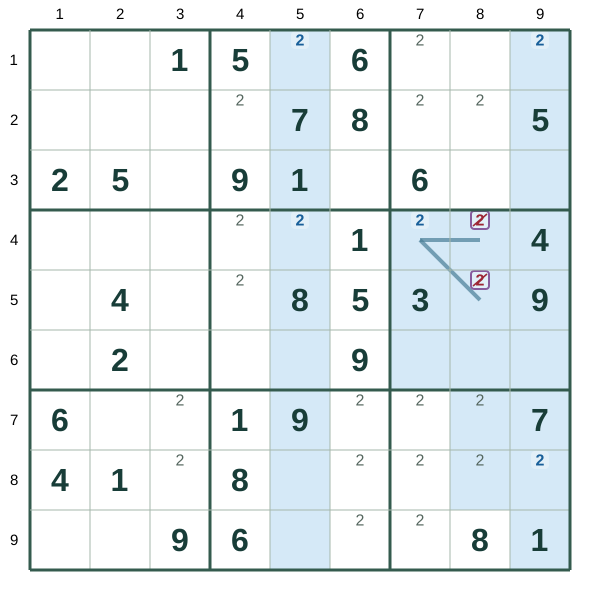
G1: R4C8=2, R5C8=2
1: OR group A: at least one candidate is true
Step 7 · Group weak link: exclude the conflicting side
R4C7=2 is true as a chain state, so the mutually exclusive side R4C5=2 is false.
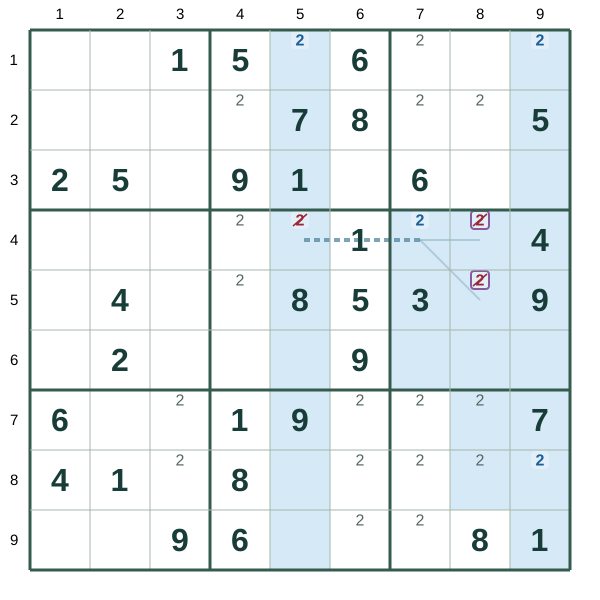
G1: R4C8=2, R5C8=2
1: OR group A: at least one candidate is true
Step 8 · Group strong link: one side must remain
R4C5=2 is false, so the group strong link forces R1C5=2.
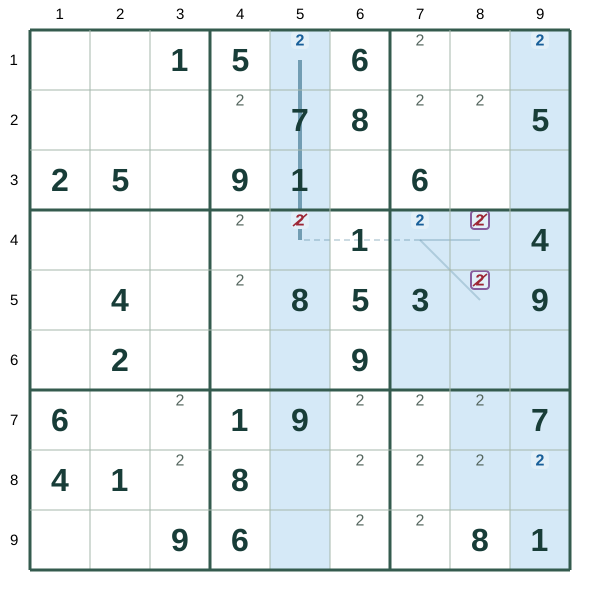
G1: R4C8=2, R5C8=2
1: OR group A: at least one candidate is true
Step 9 · Group weak link: exclude the conflicting side
R1C5=2 is true as a chain state, so the mutually exclusive side R1C9=2 is false.
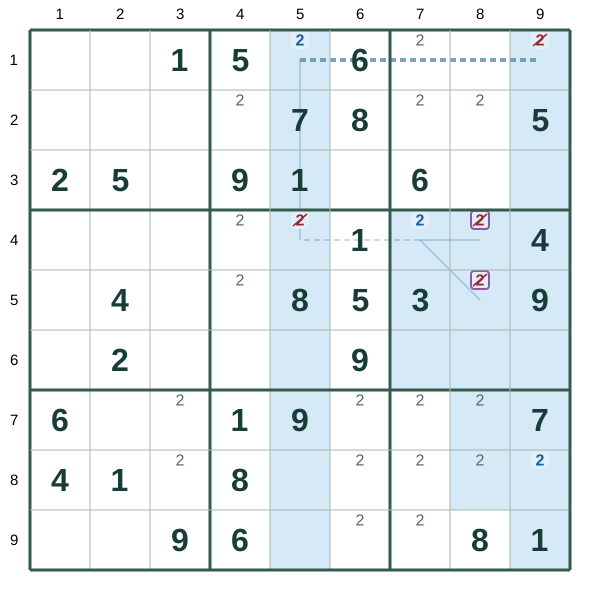
G1: R4C8=2, R5C8=2
1: OR group A: at least one candidate is true
Step 10 · The indirect endpoint excludes the targets
R8C9=2 is true as the endpoint state, so it excludes the targets.
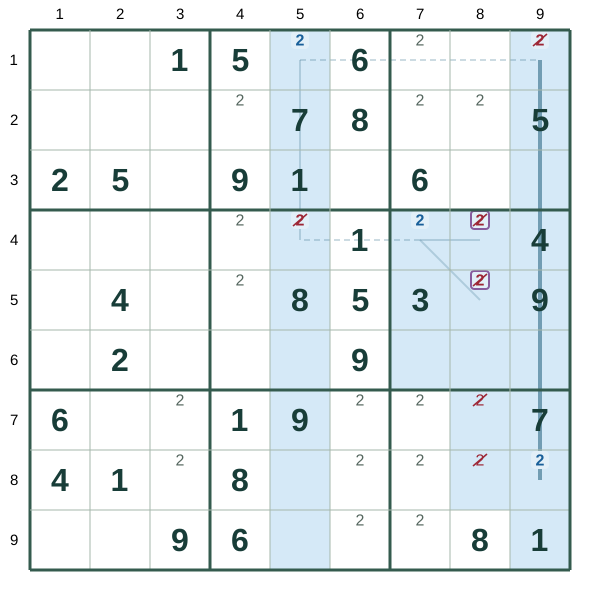
G1: R4C8=2, R5C8=2
1: OR group A: at least one candidate is true
Step 11 · Withdraw the previous rectangle filling
Withdraw this assumption and its consequences. Return to the unchanged candidate snapshot before examining the next possibility.
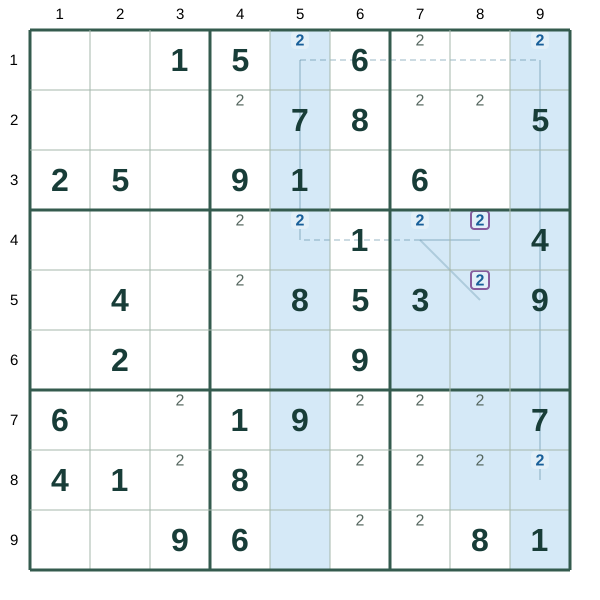
G1: R4C8=2, R5C8=2
1: OR group A: at least one candidate is true
Step 12 · Case 2: the first endpoint is true
The first endpoint OR candidate group A is true as an OR state, so it excludes the targets.
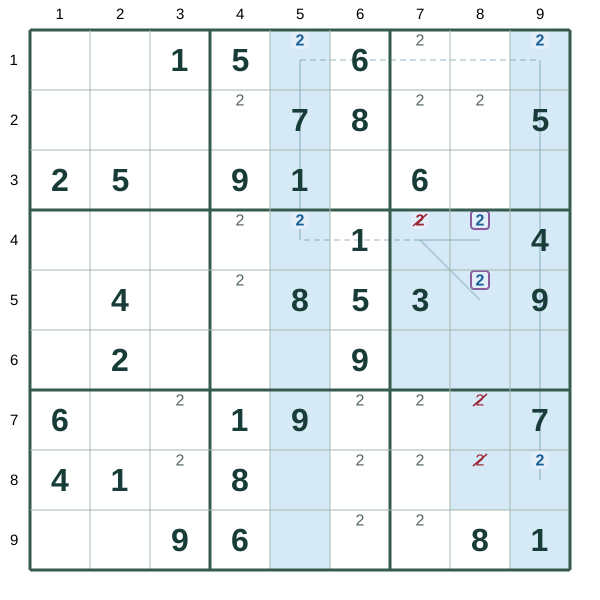
G1: R4C8=2, R5C8=2
1: OR group A: at least one candidate is true
Step 13 · Both endpoint cases agree
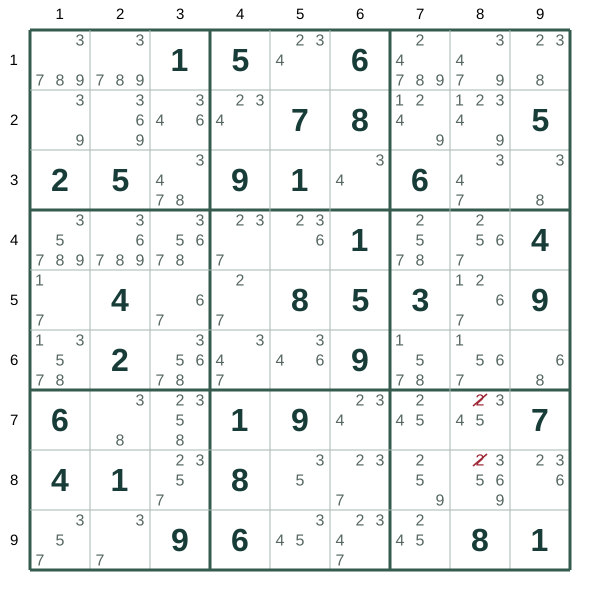
The two endpoint cases exhaust the alternatives, and both exclude R7C8=2, R8C8=2. Remove them after withdrawing the temporary states.
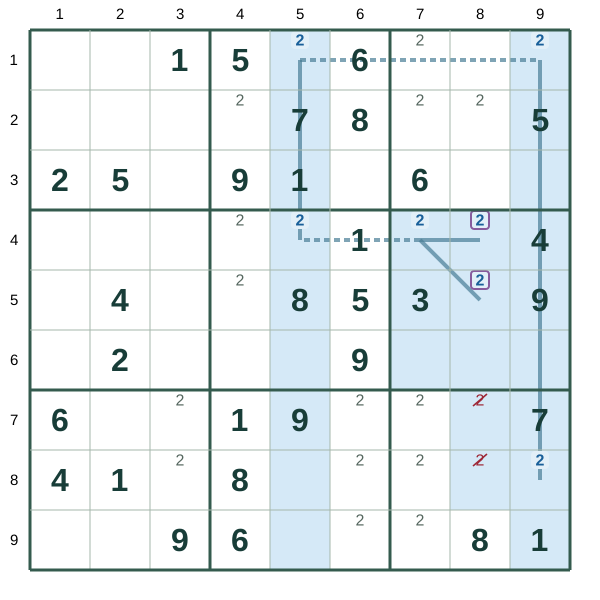
G1: R4C8=2, R5C8=2
1: OR group A: at least one candidate is true
What it allows
The two endpoint cases exhaust the alternatives, and both exclude R7C8=2, R8C8=2. Remove them after withdrawing the temporary states.
Step-by-step example · Several groups
This example starts from a saved intermediate position. Its candidates include earlier logical eliminations; they are not fresh automatic notes.
Blue: evidence. Green: conclusion. Crossed-out digits: eliminated candidates. R1C1 means row 1, column 1.
Step 1 · Where to look
In box 1, 8 can go only in R2C2, R3C1. The digit must appear once in this region.
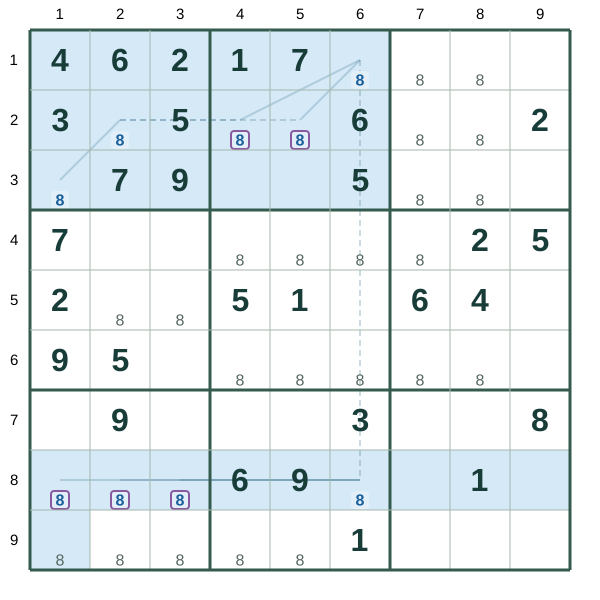
G1: R2C4=8, R2C5=8
G2: R8C1=8, R8C2=8, R8C3=8
1: OR group A: at least one candidate is true · 2: OR group B: at least one candidate is true
Step 2 · Reasoning
In box 2, 8 can go only in R1C6, R2C4, R2C5. The digit must appear once in this region.
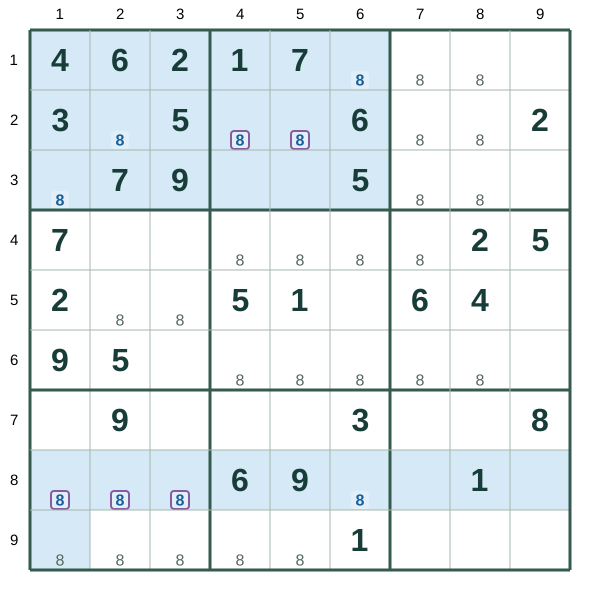
G1: R2C4=8, R2C5=8
G2: R8C1=8, R8C2=8, R8C3=8
1: OR group A: at least one candidate is true · 2: OR group B: at least one candidate is true
Step 3 · Reasoning
In row 8, 8 can go only in R8C1, R8C2, R8C3, R8C6. The digit must appear once in this region.
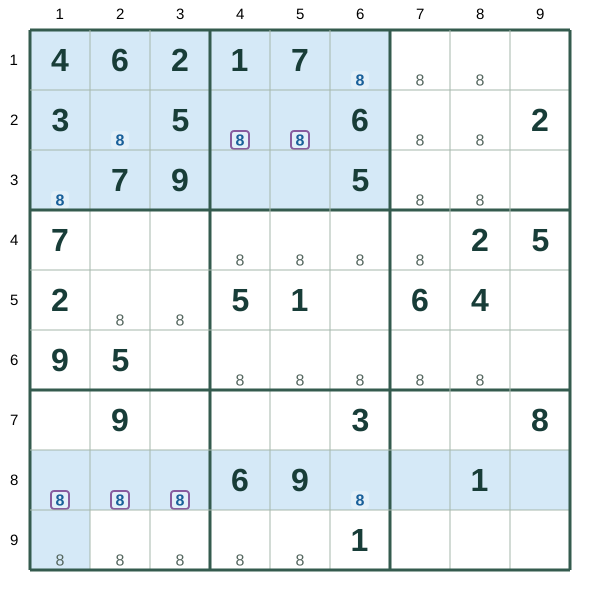
G1: R2C4=8, R2C5=8
G2: R8C1=8, R8C2=8, R8C3=8
1: OR group A: at least one candidate is true · 2: OR group B: at least one candidate is true
Step 4 · Name the OR candidate groups
The numbered braces and legend define these named groups: OR candidate group A = R2C4=8, R2C5=8, OR candidate group B = R8C1=8, R8C2=8, R8C3=8. Each group is one OR state: at least one candidate in it is true, but the chain does not claim that every member is true.
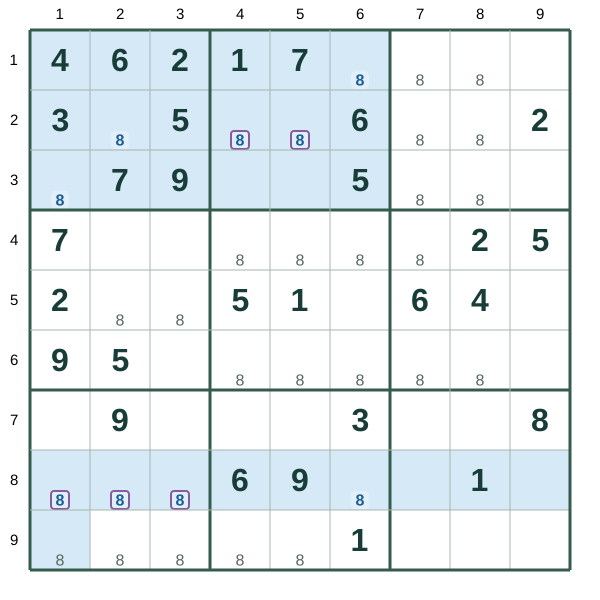
G1: R2C4=8, R2C5=8
G2: R8C1=8, R8C2=8, R8C3=8
1: OR group A: at least one candidate is true · 2: OR group B: at least one candidate is true
Step 5 · Reasoning
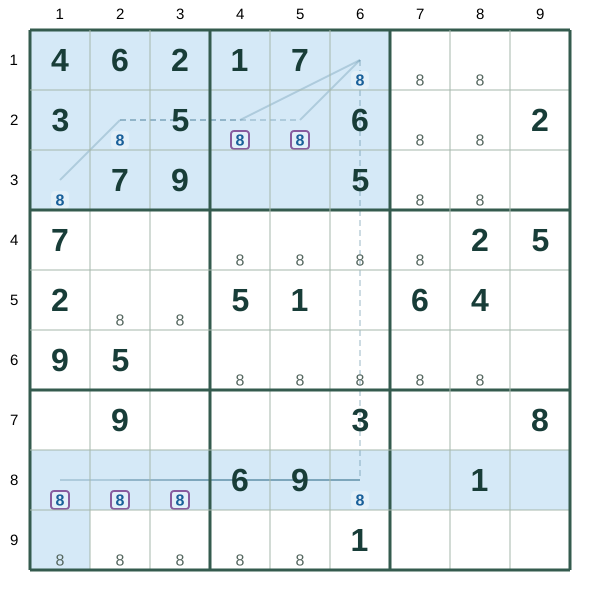
Branch 1: suppose R3C1=8 is false.
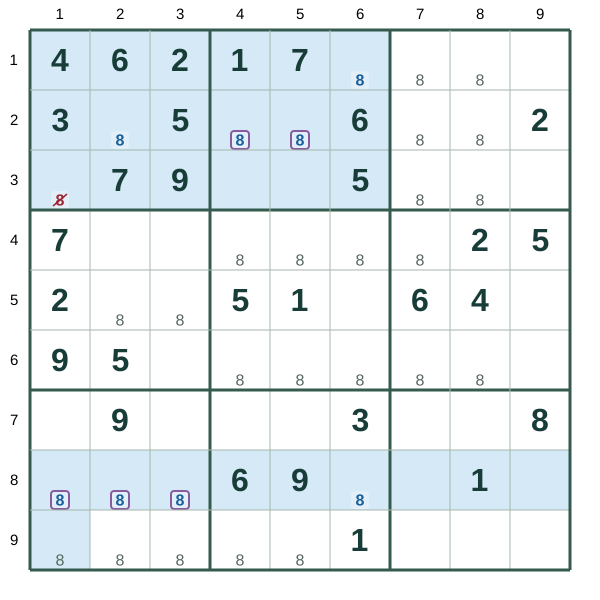
G1: R2C4=8, R2C5=8
G2: R8C1=8, R8C2=8, R8C3=8
1: OR group A: at least one candidate is true · 2: OR group B: at least one candidate is true
Step 6 · Group strong link: force the other side
Case 1: R3C1=8 is false, so the group strong link forces R2C2=8. If this is an OR group, at least one of its candidates is true.
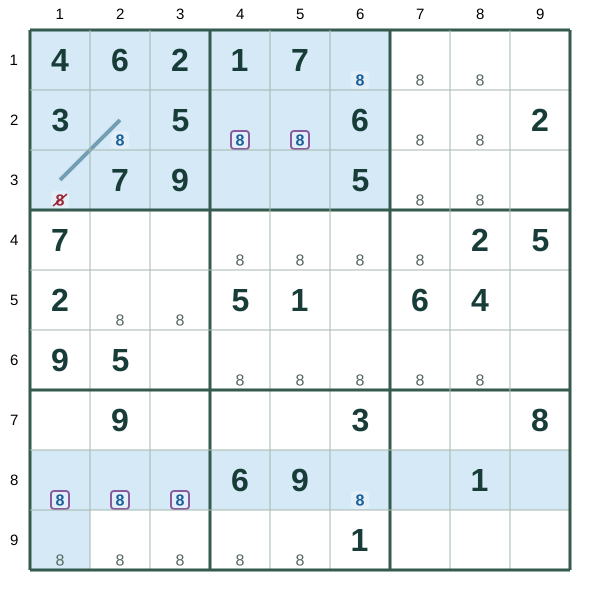
G1: R2C4=8, R2C5=8
G2: R8C1=8, R8C2=8, R8C3=8
1: OR group A: at least one candidate is true · 2: OR group B: at least one candidate is true
Step 7 · Group weak link: exclude the conflicting side
R2C2=8 is true as a chain state, so the mutually exclusive side R2C4=8, R2C5=8 is false.
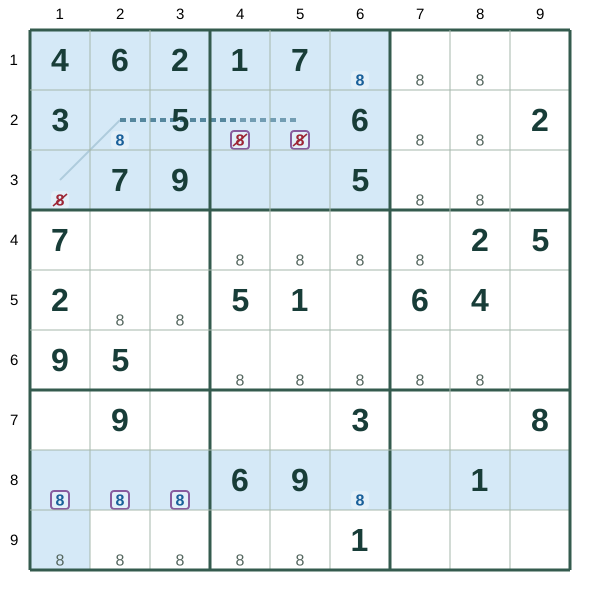
G1: R2C4=8, R2C5=8
G2: R8C1=8, R8C2=8, R8C3=8
1: OR group A: at least one candidate is true · 2: OR group B: at least one candidate is true
Step 8 · Group strong link: one side must remain
OR candidate group A is false, so the group strong link forces R1C6=8.
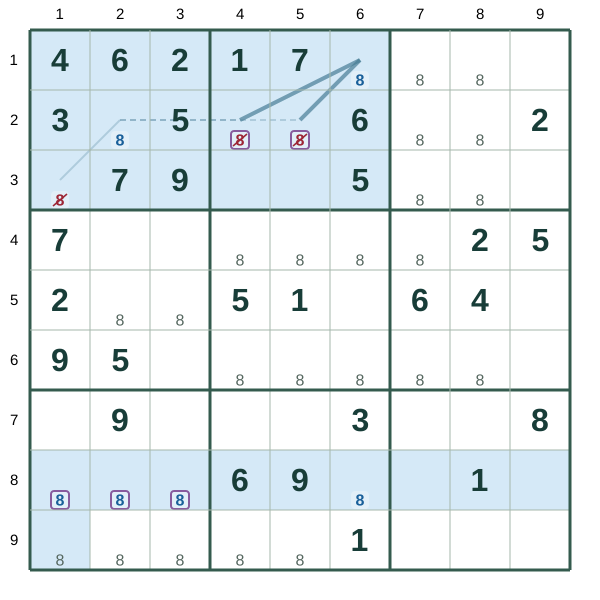
G1: R2C4=8, R2C5=8
G2: R8C1=8, R8C2=8, R8C3=8
1: OR group A: at least one candidate is true · 2: OR group B: at least one candidate is true
Step 9 · Group weak link: exclude the conflicting side
R1C6=8 is true as a chain state, so the mutually exclusive side R8C6=8 is false.
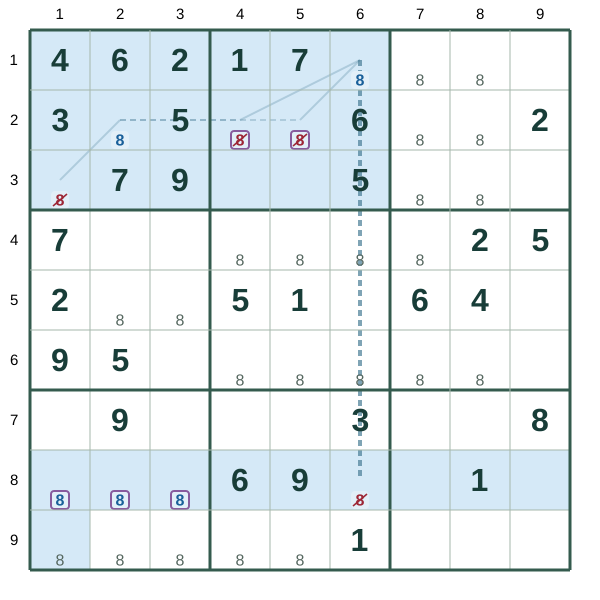
G1: R2C4=8, R2C5=8
G2: R8C1=8, R8C2=8, R8C3=8
1: OR group A: at least one candidate is true · 2: OR group B: at least one candidate is true
Step 10 · The indirect endpoint excludes the targets
OR candidate group B is true as the endpoint state, so it excludes the targets.
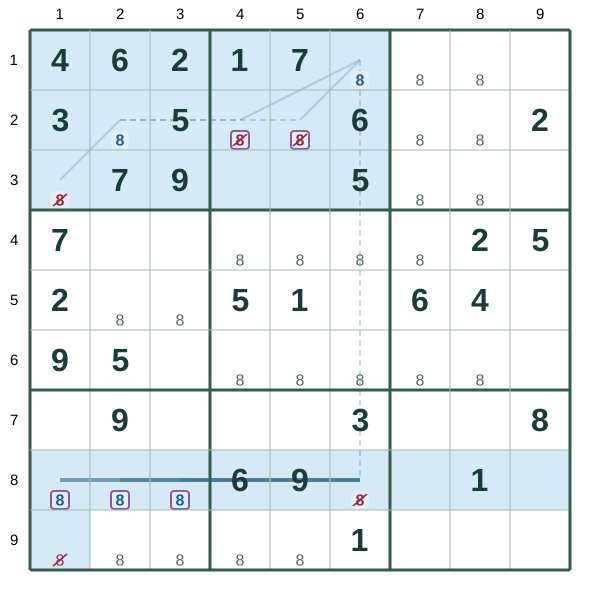
G1: R2C4=8, R2C5=8
G2: R8C1=8, R8C2=8, R8C3=8
1: OR group A: at least one candidate is true · 2: OR group B: at least one candidate is true
Step 11 · Withdraw the previous rectangle filling
Withdraw this assumption and its consequences. Return to the unchanged candidate snapshot before examining the next possibility.
G1: R2C4=8, R2C5=8
G2: R8C1=8, R8C2=8, R8C3=8
1: OR group A: at least one candidate is true · 2: OR group B: at least one candidate is true
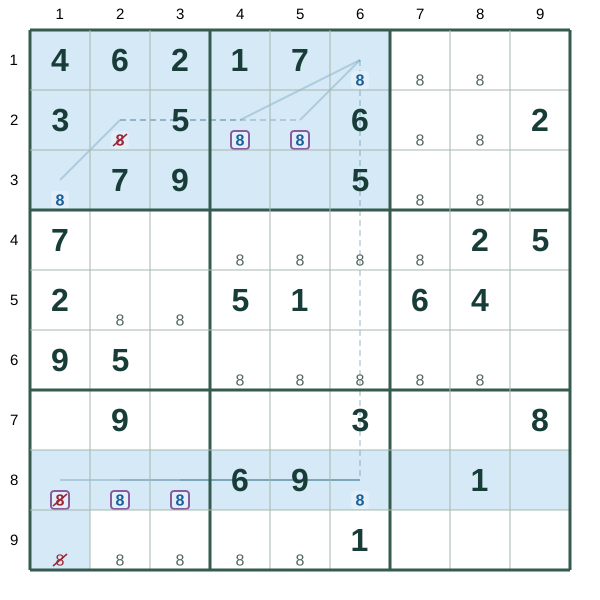
Step 12 · Case 2: the first endpoint is true
The first endpoint R3C1=8 is true as an OR state, so it excludes the targets.
G1: R2C4=8, R2C5=8
G2: R8C1=8, R8C2=8, R8C3=8
1: OR group A: at least one candidate is true · 2: OR group B: at least one candidate is true
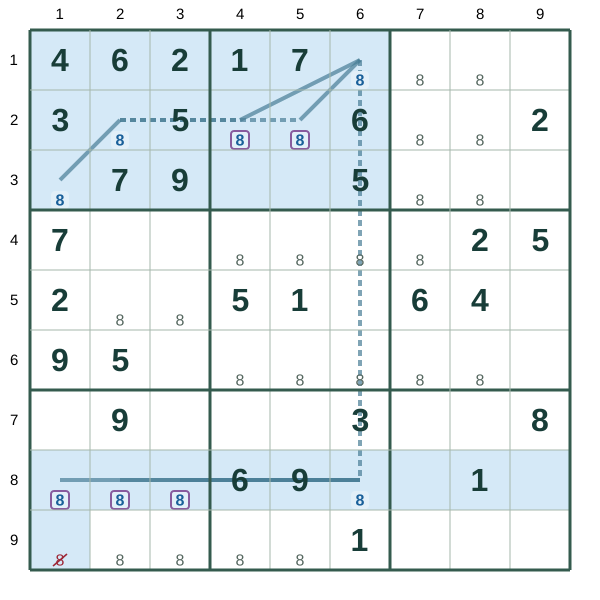
Step 13 · Both endpoint cases agree
The two endpoint cases exhaust the alternatives, and both exclude R9C1=8. Remove them after withdrawing the temporary states.
G1: R2C4=8, R2C5=8
G2: R8C1=8, R8C2=8, R8C3=8
1: OR group A: at least one candidate is true · 2: OR group B: at least one candidate is true
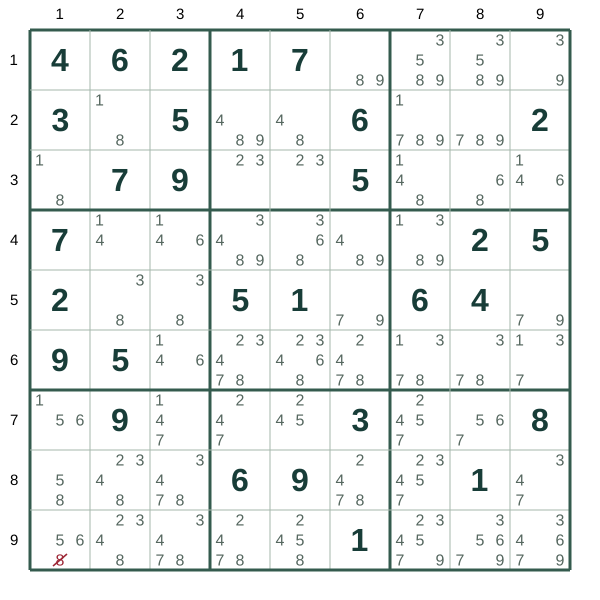
What it allows
The two endpoint cases exhaust the alternatives, and both exclude R9C1=8. Remove them after withdrawing the temporary states.
Practice
This course is adapted from Platon Sudoku App. Read the complete example here, then continue learning and practising in the app.
View on Google Play