Platon Sudoku · Sudoku Study
Simple Coloring · Step-by-step example
One connected network of strong links for one digit has two opposite states, A and B. Either A is true or B is true. Remove a candidate seen by both states (color trap), or remove every candidate in a state whose two members see each other (color conflict).
This course is adapted from Platon Sudoku App. Read the complete example here, then continue learning and practising in the app.
View on Google PlayRecognize the pattern
One connected network of strong links for one digit has two opposite states, A and B. Either A is true or B is true.
How to find it
Start with a region containing exactly two candidates for one digit, then alternate A and B across every connected strong link.
What it allows
Remove a candidate seen by both states (color trap), or remove every candidate in a state whose two members see each other (color conflict).
Avoid the mix-up
Color only candidates joined by verified strong links. A shared color is a hypothetical state, not a placed answer.
Step-by-step example · Color trap
This example starts from a saved intermediate position. Its candidates include earlier logical eliminations; they are not fresh automatic notes.
Blue: evidence. Green: conclusion. Crossed-out digits: eliminated candidates. R1C1 means row 1, column 1.
Step 1 · Find the first strong link
In box 1, 4 can go only in R1C3 or R3C2. These candidates belong to the same coloring component and are marked round A and square B; A and B are opposite states.
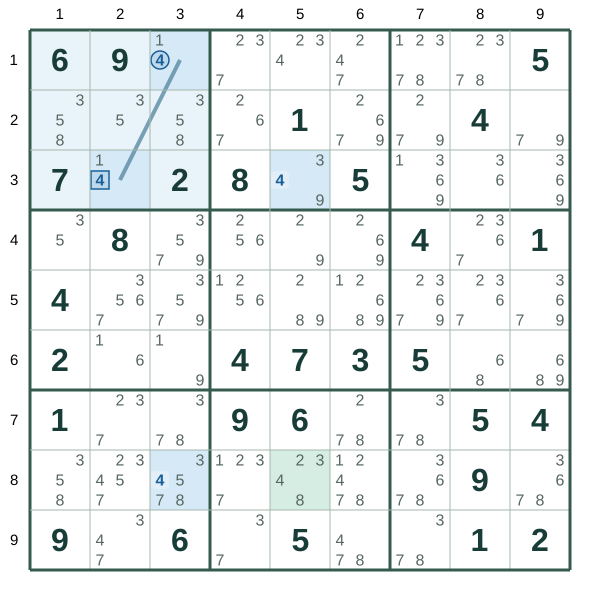
● 1A: R1C3=4
■ 1B: R3C2=4
Step 2 · Follow the strong links
Continue through every connected strong link for 4. Within this component, each link joins round A and square B, the two opposite states.
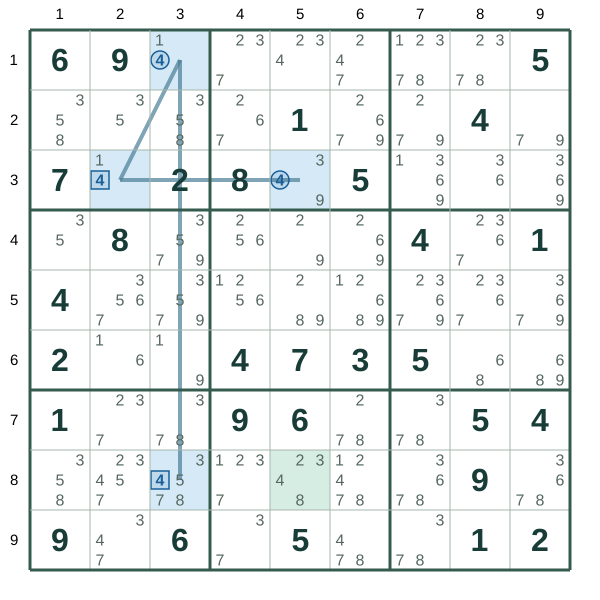
● 1A: R1C3=4, R3C5=4
■ 1B: R3C2=4, R8C3=4
Step 3 · Complete the color network
These 4 candidates form one connected network. Every solid line is a strong link for 4.
● 1A: R1C3=4, R3C5=4
■ 1B: R3C2=4, R8C3=4
Step 4 · Understand the two states
Either every A is true and every B false, or every B is true and every A false. We do not need to know which state wins.
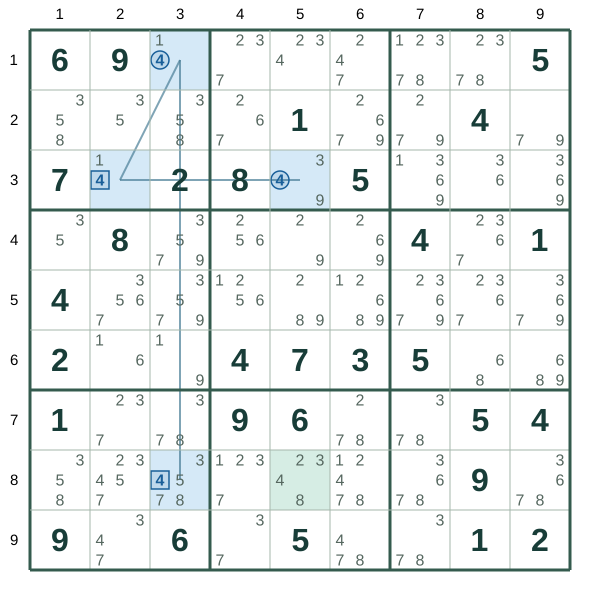
● 1A: R1C3=4, R3C5=4
■ 1B: R3C2=4, R8C3=4
Step 5 · Find a target that sees A and B
R8C5=4 sees A at R3C5=4 and B at R8C3=4. Whichever state is true, one of those two candidates excludes the target.
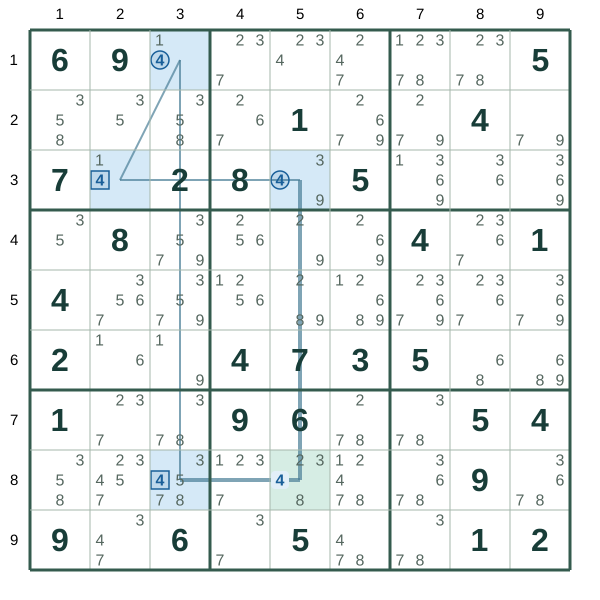
● 1A: R1C3=4, R3C5=4
■ 1B: R3C2=4, R8C3=4
Step 6 · Remove the trapped candidate
Because every target sees both possible states, remove R8C5=4.
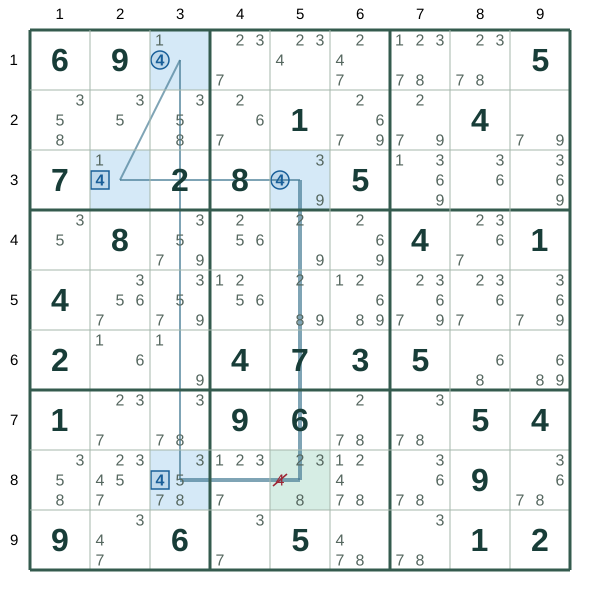
● 1A: R1C3=4, R3C5=4
■ 1B: R3C2=4, R8C3=4
What it allows
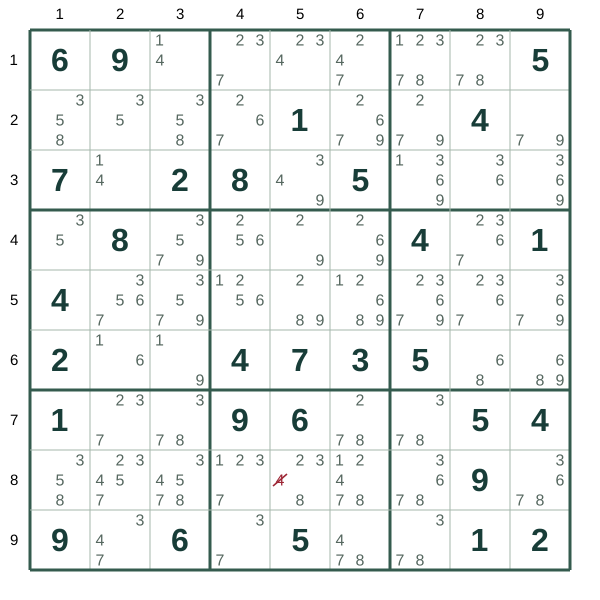
Because every target sees both possible states, remove R8C5=4.
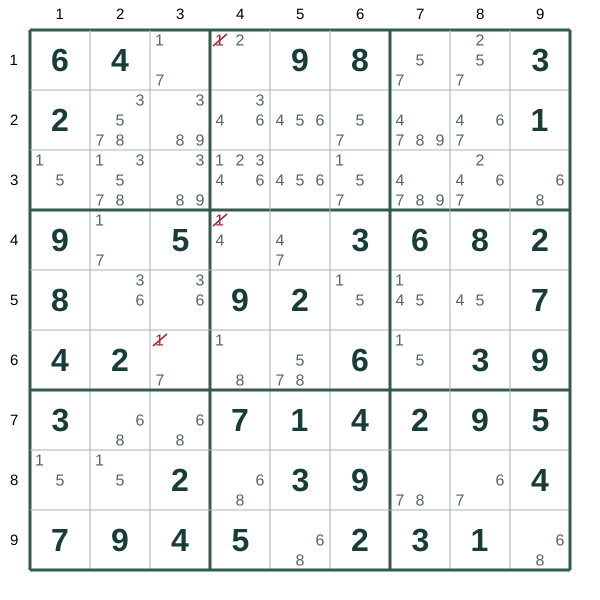
Step-by-step example · Same-color conflict
This example starts from a saved intermediate position. Its candidates include earlier logical eliminations; they are not fresh automatic notes.
Blue: evidence. Green: conclusion. Crossed-out digits: eliminated candidates. R1C1 means row 1, column 1.
Step 1 · Find the first strong link
In row 1, 1 can go only in R1C3 or R1C4. These candidates belong to the same coloring component and are marked round A and square B; A and B are opposite states.
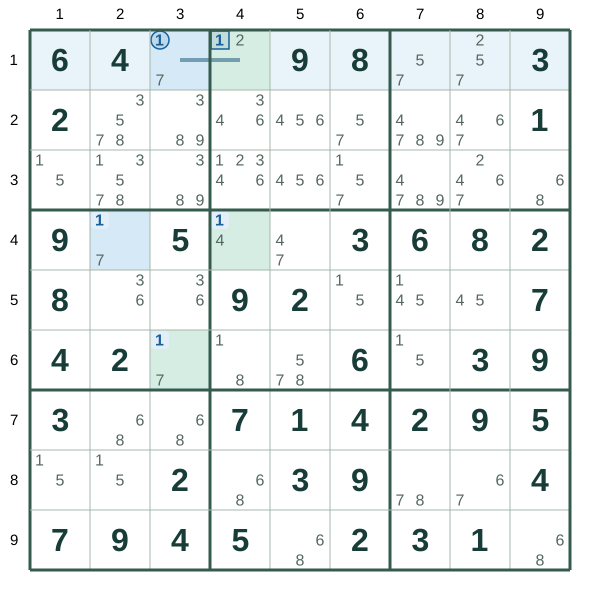
● 1A: R1C3=1
■ 1B: R1C4=1
Step 2 · Follow the strong links
Continue through every connected strong link for 1. Within this component, each link joins round A and square B, the two opposite states.
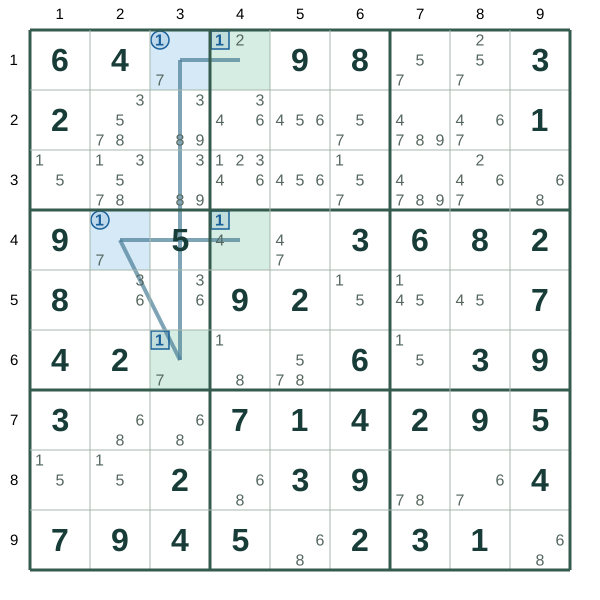
● 1A: R1C3=1, R4C2=1
■ 1B: R1C4=1, R4C4=1, R6C3=1
Step 3 · Complete the color network
These 5 candidates form one connected network. Every strong link joins A to B, so all A candidates share one state and all B candidates share the other.
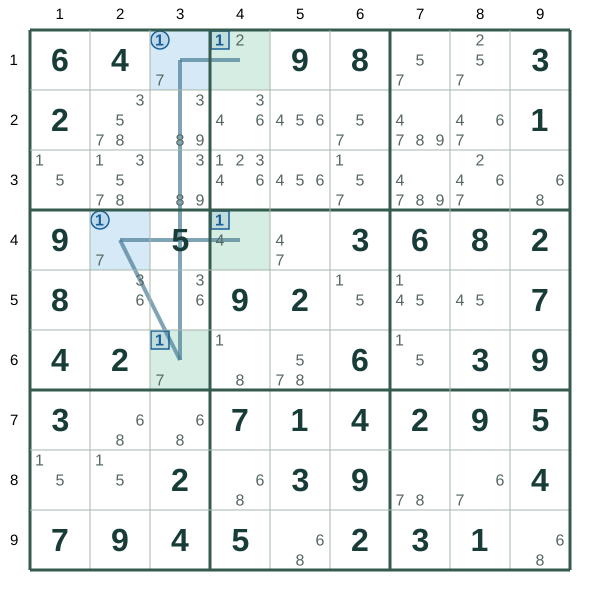
● 1A: R1C3=1, R4C2=1
■ 1B: R1C4=1, R4C4=1, R6C3=1
Step 4 · Find the same-state conflict
R1C4=1 and R4C4=1 are both in state B and see each other. They cannot both be 1, so state B is impossible.
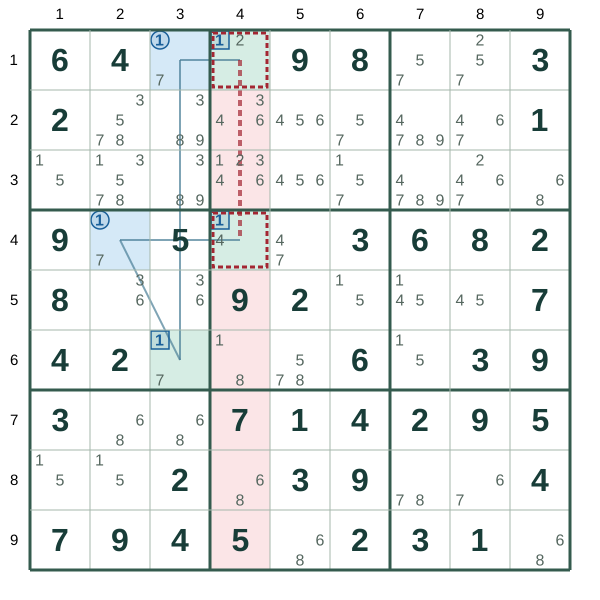
● 1A: R1C3=1, R4C2=1
■ 1B: R1C4=1, R4C4=1, R6C3=1
Step 5 · State B is impossible
The conflict rules out the whole B state. Cross out every state-B candidate together: R1C4=1, R4C4=1, R6C3=1.
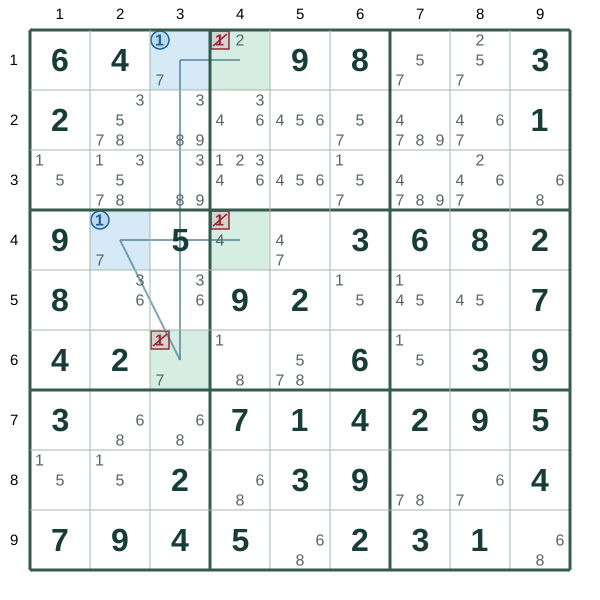
● 1A: R1C3=1, R4C2=1
■ 1B: R1C4=1, R4C4=1, R6C3=1
Step 6 · Remove the conflicting state
Remove the invalid state-B candidates: R1C4=1, R4C4=1, R6C3=1.
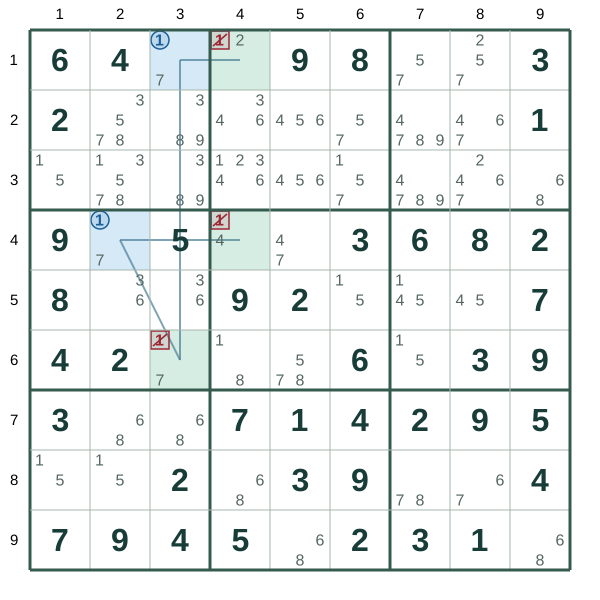
● 1A: R1C3=1, R4C2=1
■ 1B: R1C4=1, R4C4=1, R6C3=1
What it allows
Remove the invalid state-B candidates: R1C4=1, R4C4=1, R6C3=1.
Practice
This course is adapted from Platon Sudoku App. Read the complete example here, then continue learning and practising in the app.
View on Google Play