Platon Sudoku · Sudoku Study
Empty Rectangle · Step-by-step example
Inside one box, a digit is confined to a row and column crossing at a cell without that digit. An outside strong link connects to one arm. Remove the digit where the other arm meets the far end of the outside link.
This course is adapted from Platon Sudoku App. Read the complete example here, then continue learning and practising in the app.
View on Google PlayRecognize the pattern
Inside one box, a digit is confined to a row and column crossing at a cell without that digit. An outside strong link connects to one arm.
How to find it
Scan a box for a row–column cross with an empty center, then find a strong link outside the box along one arm.
What it allows
Remove the digit where the other arm meets the far end of the outside link.
Avoid the mix-up
The crossing center must not contain the candidate. Check all candidates in the box and both ends of the outside strong link.
Step-by-step example · Strong row
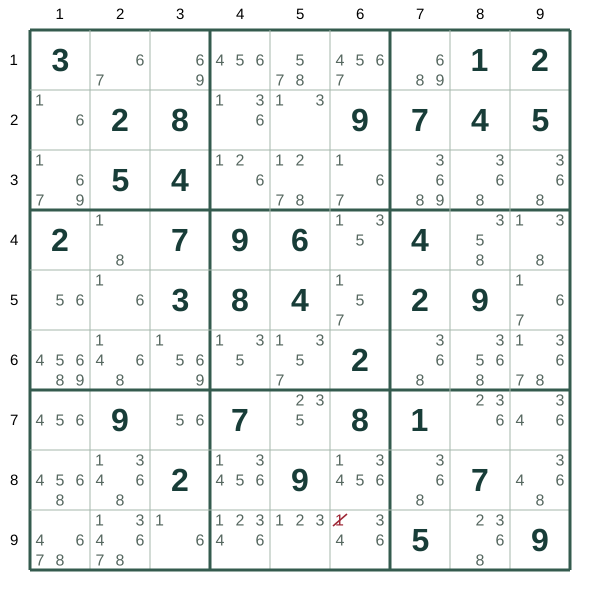
This example starts from a saved intermediate position. Its candidates include earlier logical eliminations; they are not fresh automatic notes.
Blue: evidence. Green: conclusion. Crossed-out digits: eliminated candidates. R1C1 means row 1, column 1.
Step 1 · Find the cross, empty area, and strong pair
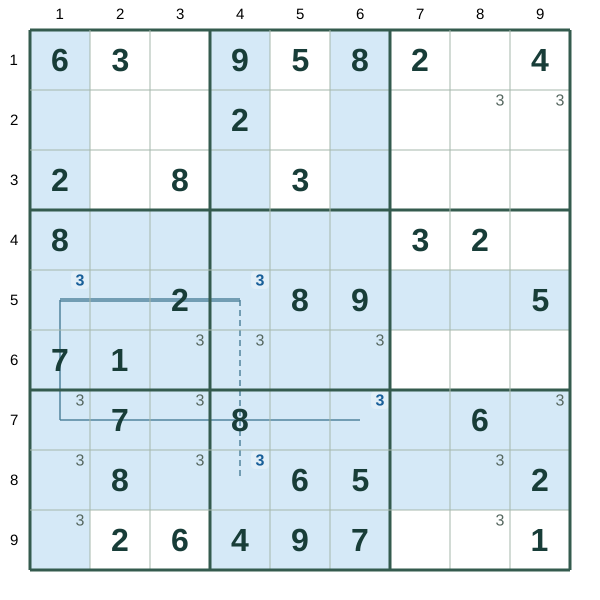
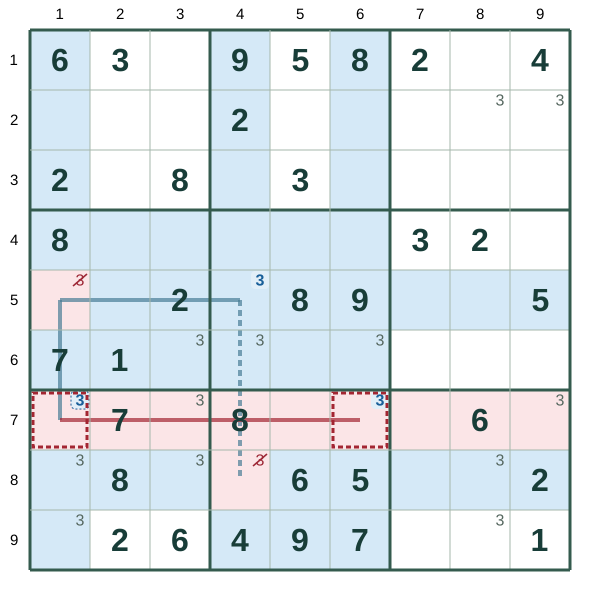
In box 8, every candidate 3 lies on row 7 or column 4, forming a candidate cross. Its intersection R7C4 and the four hatched cells outside the cross contain no 3; this empty area gives the pattern its name. Outside the box, R5C1 and R5C4 are the only two candidates in row 5, so this strong pair carries the deduction into the cross.
Step 2 · Two places in row 5
In row 5, 3 can only go in R5C1 or R5C4. One of them must be 3.
Step 3 · Try an assumption
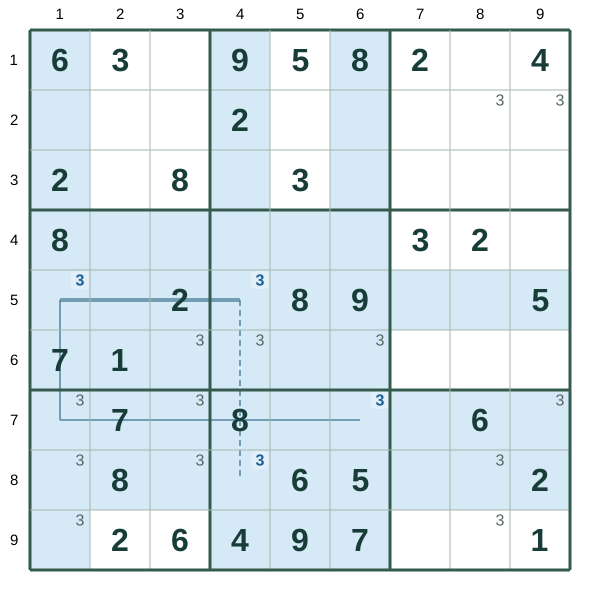
What if R7C1 were 3? Numbers marked ? are part of this assumption, not confirmed answers. R5C1 shares column 1 with R7C1, so it cannot also be 3.
Step 4 · One side of the box is ruled out
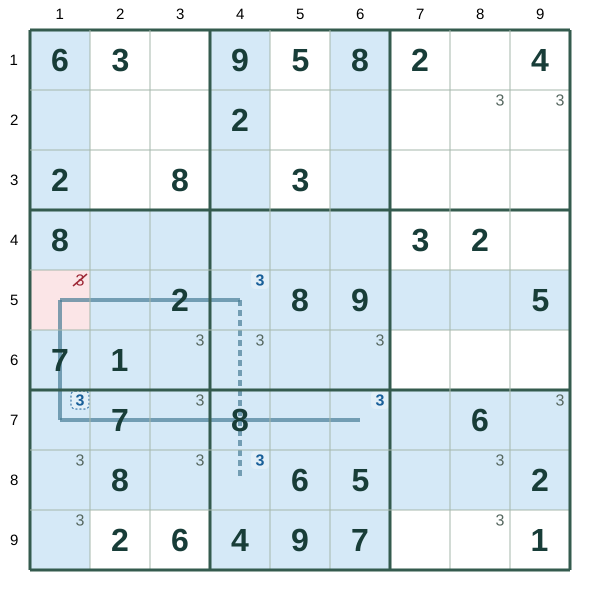
R5C1 cannot be 3, so row 5 has only R5C4 left. Under this assumption, it must be 3. R5C4 is now 3. It shares column 4 with R8C4, so those candidates are ruled out. This side of box 8 has no 3 left.
Step 5 · The assumption creates a conflict
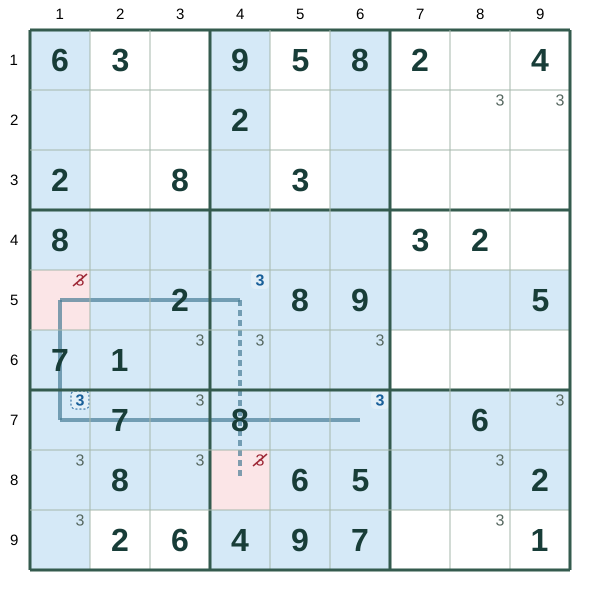
box 8 still needs a 3, and only R7C6 is left. It must be 3, but it shares row 7 with our assumed R7C1: that would put 3 there twice!
Step 6 · The original assumption cannot be right
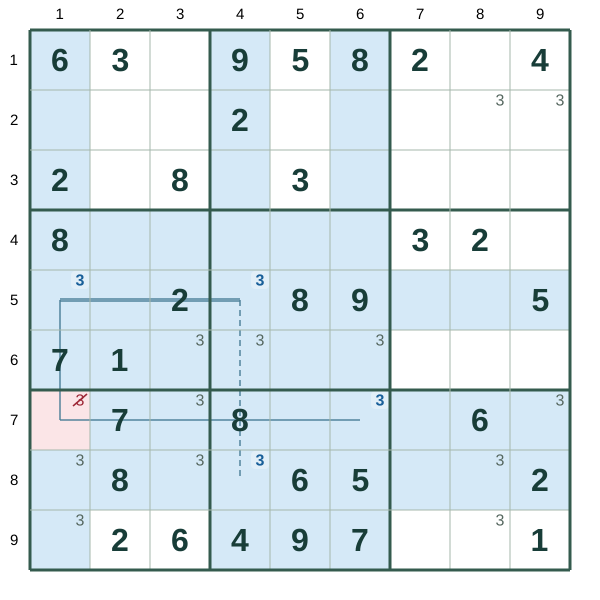
Assuming R7C1 contains 3 leads to a contradiction. Remove that candidate; all hypothetical numbers are withdrawn.
What it allows
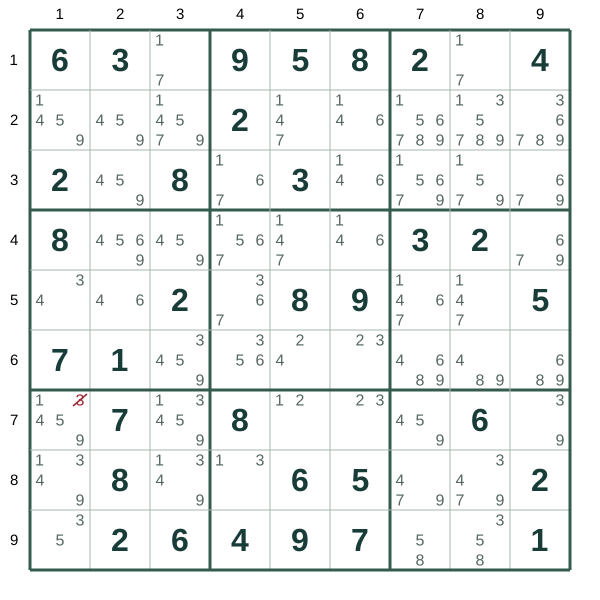
Assuming R7C1 contains 3 leads to a contradiction. Remove that candidate; all hypothetical numbers are withdrawn.
Step-by-step example · Strong column
This example starts from a saved intermediate position. Its candidates include earlier logical eliminations; they are not fresh automatic notes.
Blue: evidence. Green: conclusion. Crossed-out digits: eliminated candidates. R1C1 means row 1, column 1.
Step 1 · Find the cross, empty area, and strong pair
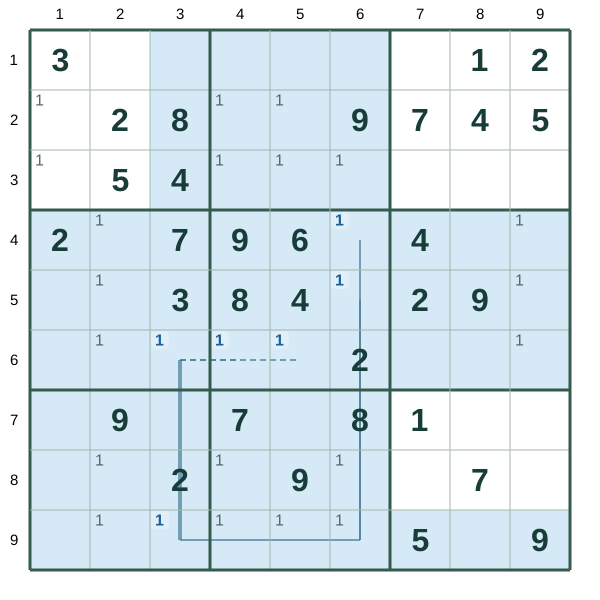
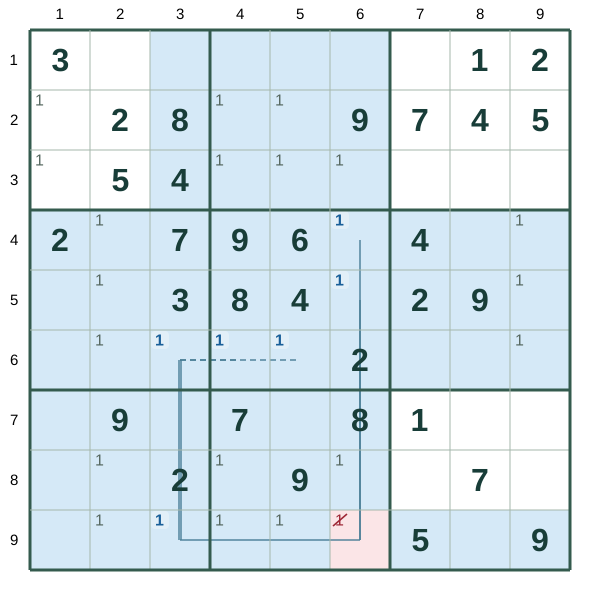
In box 5, every candidate 1 lies on row 6 or column 6, forming a candidate cross. Its intersection R6C6 and the four hatched cells outside the cross contain no 1; this empty area gives the pattern its name. Outside the box, R9C3 and R6C3 are the only two candidates in column 3, so this strong pair carries the deduction into the cross.
Step 2 · Two places in column 3
In column 3, 1 can only go in R9C3 or R6C3. One of them must be 1.
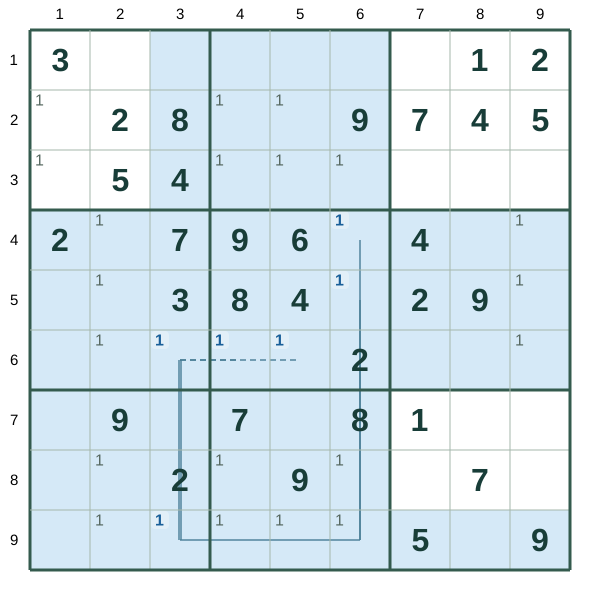
Step 3 · Try an assumption
What if R9C6 were 1? Numbers marked ? are part of this assumption, not confirmed answers. R9C3 shares row 9 with R9C6, so it cannot also be 1.
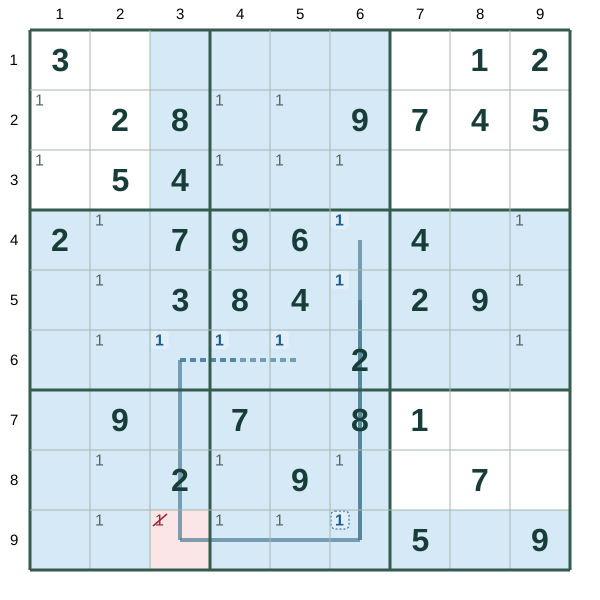
Step 4 · One side of the box is ruled out
R9C3 cannot be 1, so column 3 has only R6C3 left. Under this assumption, it must be 1. R6C3 is now 1. It shares row 6 with R6C4, R6C5, so those candidates are ruled out. This side of box 5 has no 1 left.
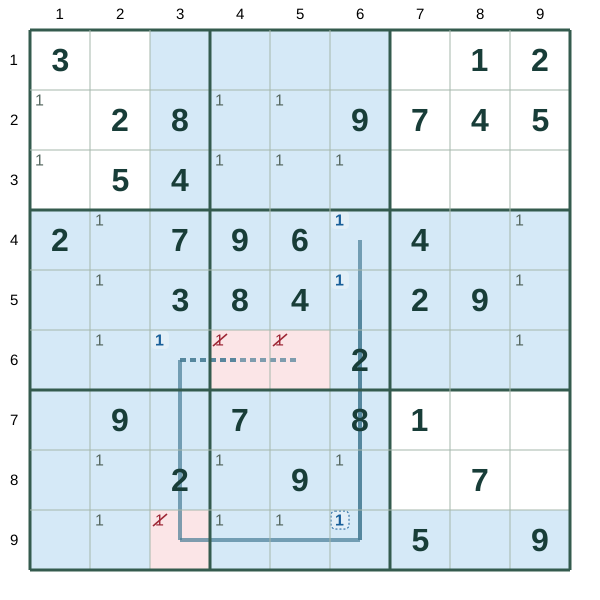
Step 5 · The assumption creates a conflict
box 5 still needs a 1 in R4C6, R5C6. But all these cells share column 6 with our assumed R9C6, so none can be 1. The box has nowhere left for 1!
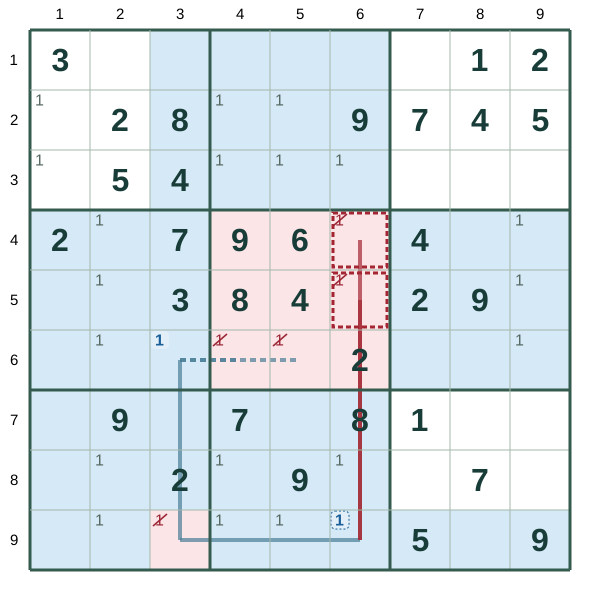
Step 6 · The original assumption cannot be right
Assuming R9C6 contains 1 leads to a contradiction. Remove that candidate; all hypothetical numbers are withdrawn.
What it allows
Assuming R9C6 contains 1 leads to a contradiction. Remove that candidate; all hypothetical numbers are withdrawn.
Practice
This course is adapted from Platon Sudoku App. Read the complete example here, then continue learning and practising in the app.
View on Google Play