Platon Sudoku · Sudoku Study
Hidden Rectangle · Step-by-step example
A 2·7 rectangle has two exact strong links that would otherwise force a deadly alternating pair. Remove that pair digit from the target corner.
This course is adapted from Platon Sudoku App. Read the complete example here, then continue learning and practising in the app.
View on Google Play ↗Recognize the pattern
A 2·7 rectangle has two exact strong links that would otherwise force a deadly alternating pair.
How to find it
Trace both strong links through the four corners and identify the corner whose pair digit would close the deadly rectangle.
What it allows
Remove that pair digit from the target corner.
Avoid the mix-up
Check both links and all four corners. One link alone does not prove the elimination.
Step-by-step example · Top left
This example starts from a saved intermediate position. Its candidates include earlier logical eliminations; they are not fresh automatic notes.
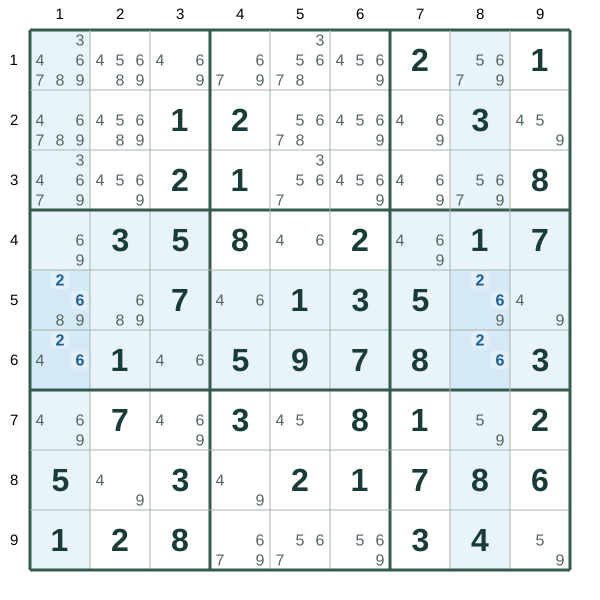
Blue: evidence. Green: conclusion. Crossed-out digits: eliminated candidates. R1C1 means row 1, column 1.
Step 1 · Where to look
This argument assumes the puzzle has exactly one solution. These four cells occupy two rows, two columns and two boxes. Swapping the two digits would preserve every region.
Step 2 · Follow the two strong links
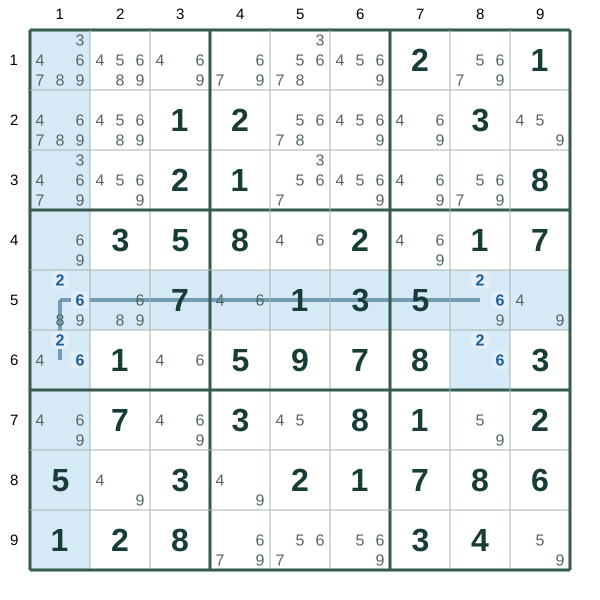
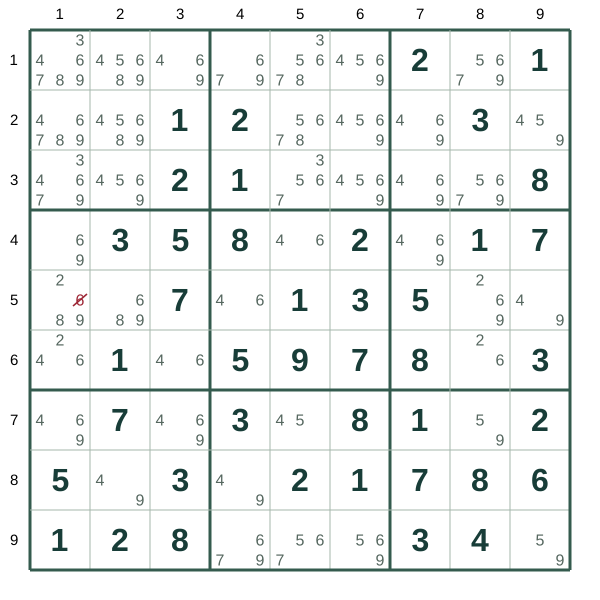
R6C8 is an exact bivalue corner containing only 2, 6. The target R5C1 is its diagonal corner because it lies in the rectangle’s other row and other column. Candidate 2 forms a row strong link through R5C1 in row 5 and a column strong link through it in column 1.
Step 3 · Assume R5C1=6
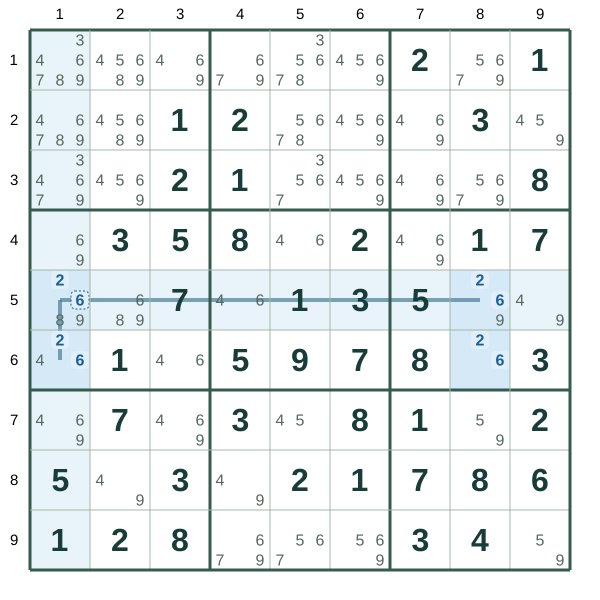
If R5C1=6, R5C1 cannot contain 2. The row strong link forces R5C8 to 2, and the column strong link forces R6C1 to 2; the exact bivalue corner R6C8 becomes 6. Exchanging 2, 6 in the resulting rectangle gives a second solution, so the assumption is false.
Step 4 · Remove the diagonal candidate
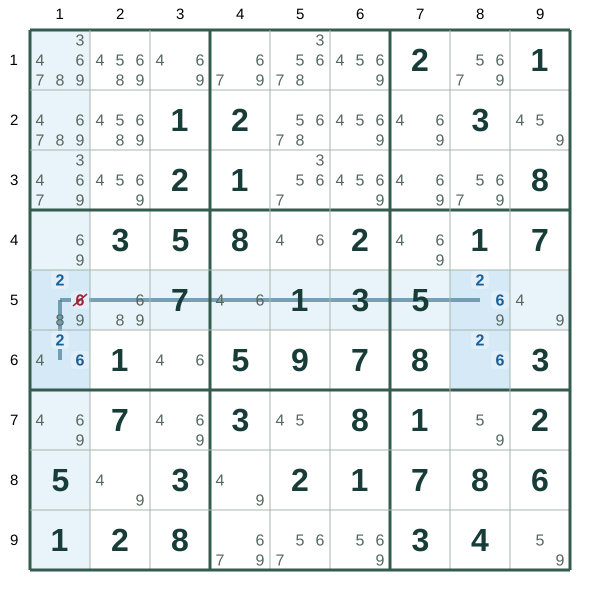
Remove R5C1=6. Candidate 6 at R5C1 would create the two-solution rectangle shown above.
What it allows
Remove R5C1=6. Candidate 6 at R5C1 would create the two-solution rectangle shown above.
Step-by-step example · Top right
This example starts from a saved intermediate position. Its candidates include earlier logical eliminations; they are not fresh automatic notes.
Blue: evidence. Green: conclusion. Crossed-out digits: eliminated candidates. R1C1 means row 1, column 1.
Step 1 · Where to look
This argument assumes the puzzle has exactly one solution. These four cells occupy two rows, two columns and two boxes. Swapping the two digits would preserve every region.
Step 2 · Follow the two strong links
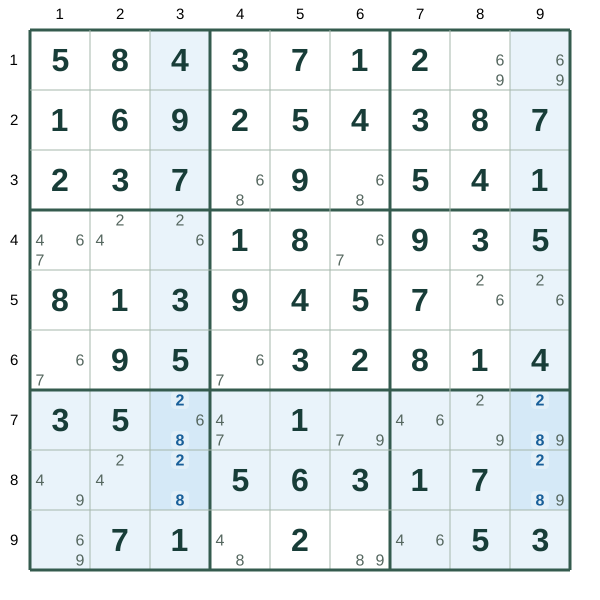
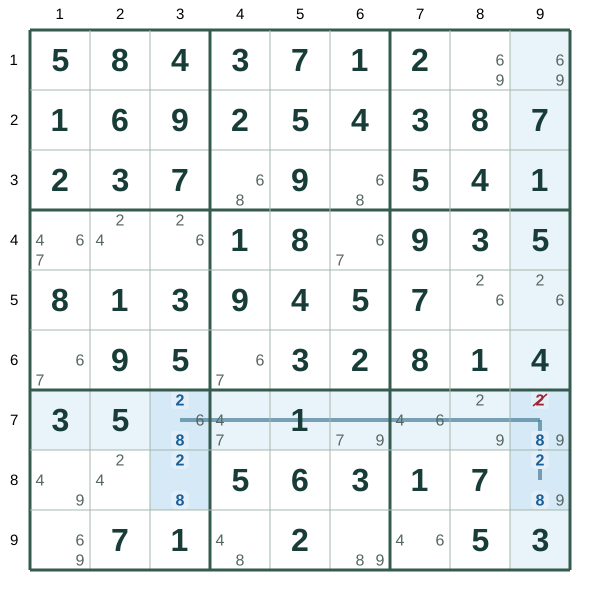
R8C3 is an exact bivalue corner containing only 2, 8. The target R7C9 is its diagonal corner because it lies in the rectangle’s other row and other column. Candidate 8 forms a row strong link through R7C9 in row 7 and a column strong link through it in column 9.
Step 3 · Assume R7C9=2
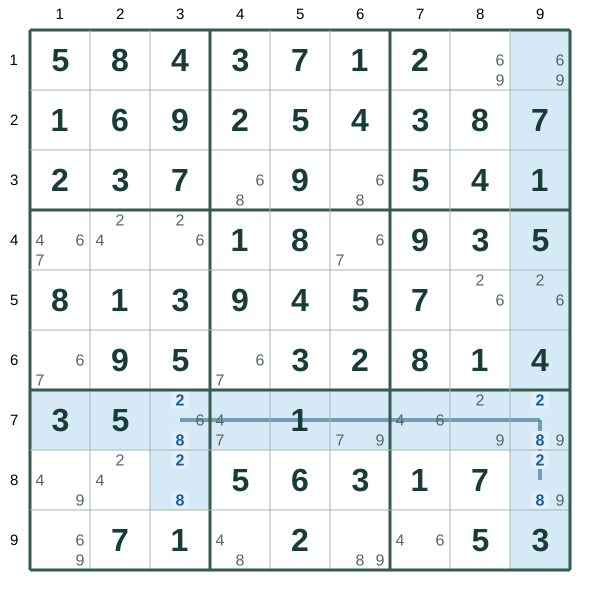
If R7C9=2, R7C9 cannot contain 8. The row strong link forces R7C3 to 8, and the column strong link forces R8C9 to 8; the exact bivalue corner R8C3 becomes 2. Exchanging 2, 8 in the resulting rectangle gives a second solution, so the assumption is false.
Step 4 · Remove the diagonal candidate
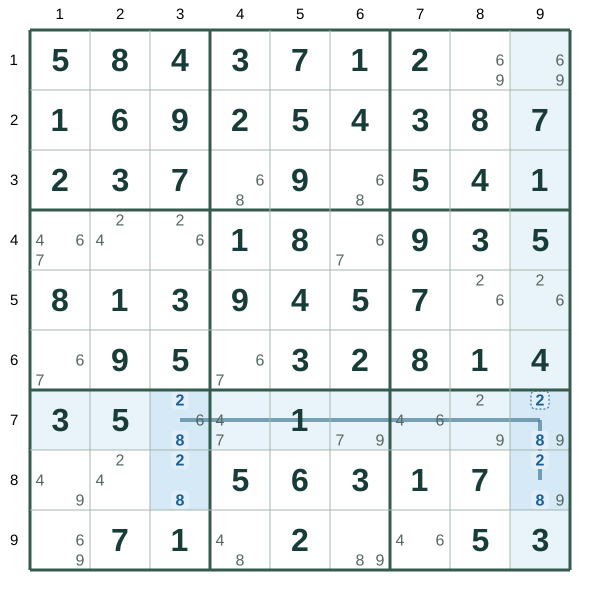
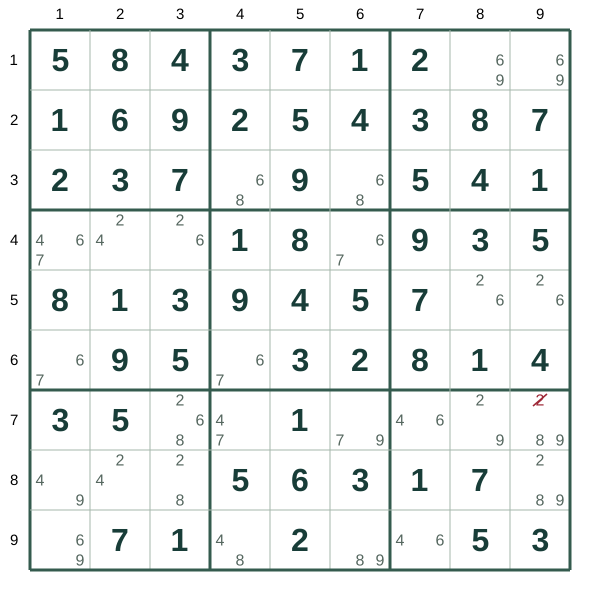
Remove R7C9=2. Candidate 2 at R7C9 would create the two-solution rectangle shown above.
What it allows
Remove R7C9=2. Candidate 2 at R7C9 would create the two-solution rectangle shown above.
Step-by-step example · Bottom left
This example starts from a saved intermediate position. Its candidates include earlier logical eliminations; they are not fresh automatic notes.
Blue: evidence. Green: conclusion. Crossed-out digits: eliminated candidates. R1C1 means row 1, column 1.
Step 1 · Where to look
This argument assumes the puzzle has exactly one solution. These four cells occupy two rows, two columns and two boxes. Swapping the two digits would preserve every region.
Step 2 · Follow the two strong links
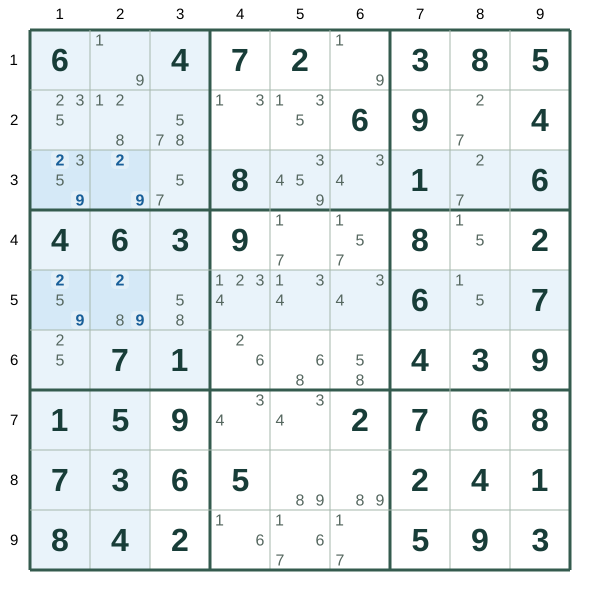
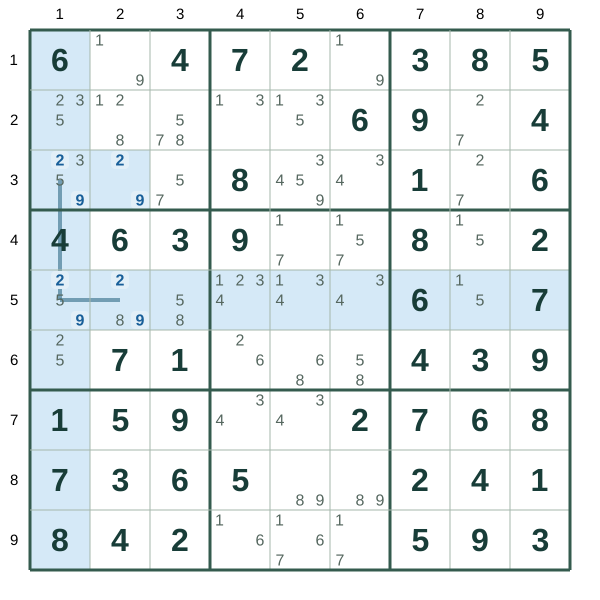
R3C2 is an exact bivalue corner containing only 2, 9. The target R5C1 is its diagonal corner because it lies in the rectangle’s other row and other column. Candidate 9 forms a row strong link through R5C1 in row 5 and a column strong link through it in column 1.
Step 3 · Assume R5C1=2
If R5C1=2, R5C1 cannot contain 9. The row strong link forces R5C2 to 9, and the column strong link forces R3C1 to 9; the exact bivalue corner R3C2 becomes 2. Exchanging 2, 9 in the resulting rectangle gives a second solution, so the assumption is false.
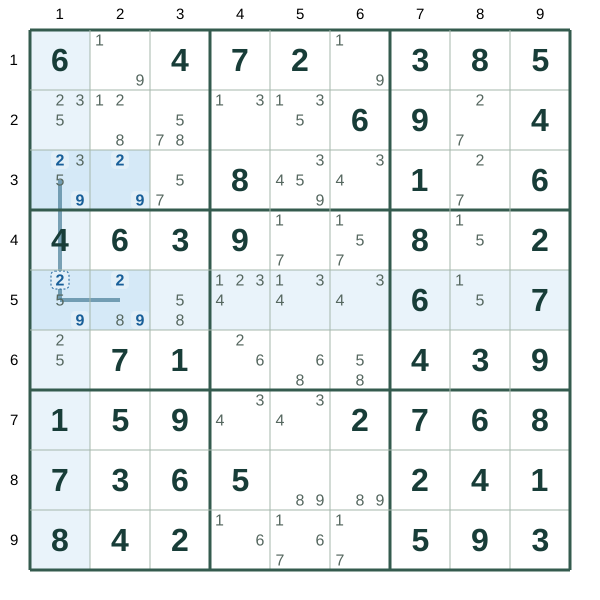
Step 4 · Remove the diagonal candidate
Remove R5C1=2. Candidate 2 at R5C1 would create the two-solution rectangle shown above.
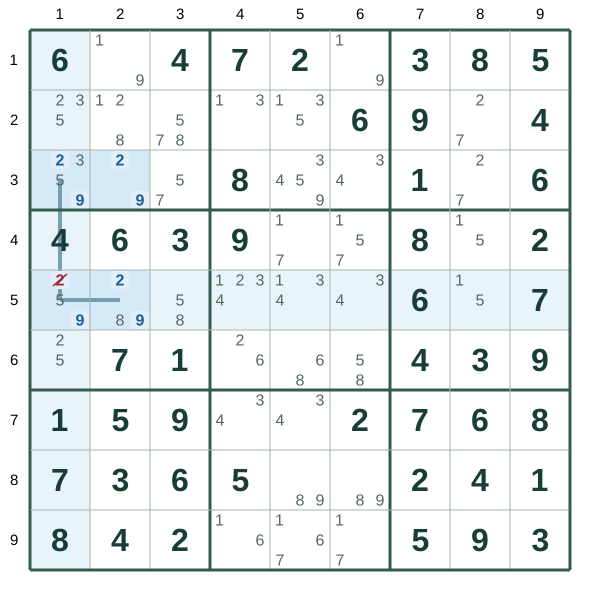
What it allows
Remove R5C1=2. Candidate 2 at R5C1 would create the two-solution rectangle shown above.
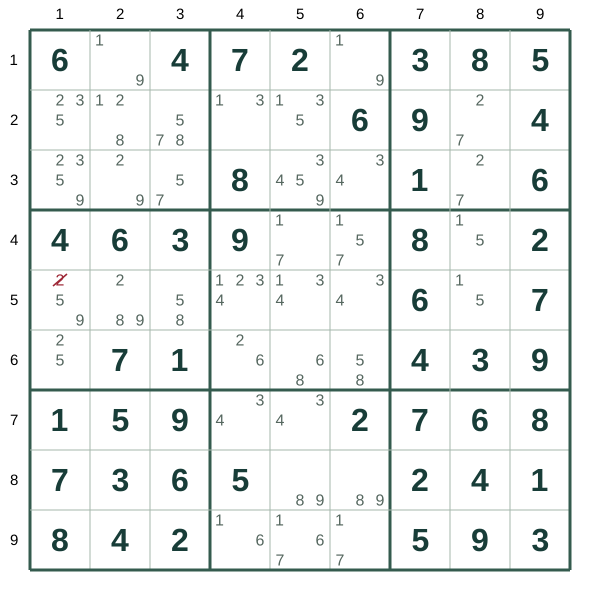
Step-by-step example · Bottom right
This example starts from a saved intermediate position. Its candidates include earlier logical eliminations; they are not fresh automatic notes.
Blue: evidence. Green: conclusion. Crossed-out digits: eliminated candidates. R1C1 means row 1, column 1.
Step 1 · Where to look
This argument assumes the puzzle has exactly one solution. These four cells occupy two rows, two columns and two boxes. Swapping the two digits would preserve every region.
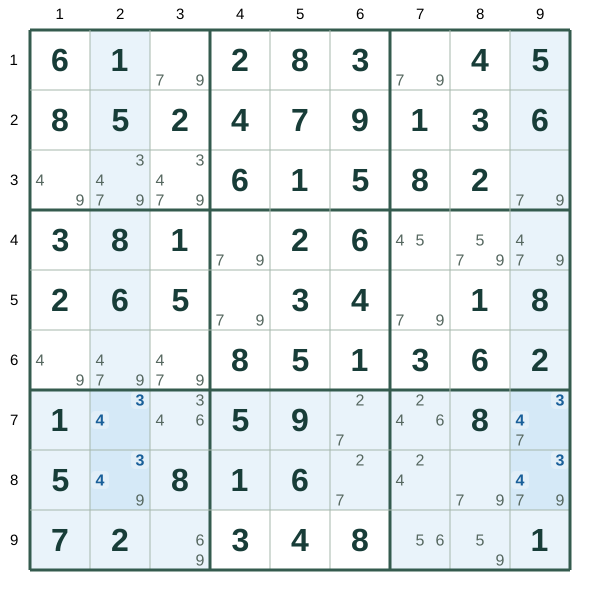
Step 2 · Follow the two strong links
R7C2 is an exact bivalue corner containing only 3, 4. The target R8C9 is its diagonal corner because it lies in the rectangle’s other row and other column. Candidate 3 forms a row strong link through R8C9 in row 8 and a column strong link through it in column 9.
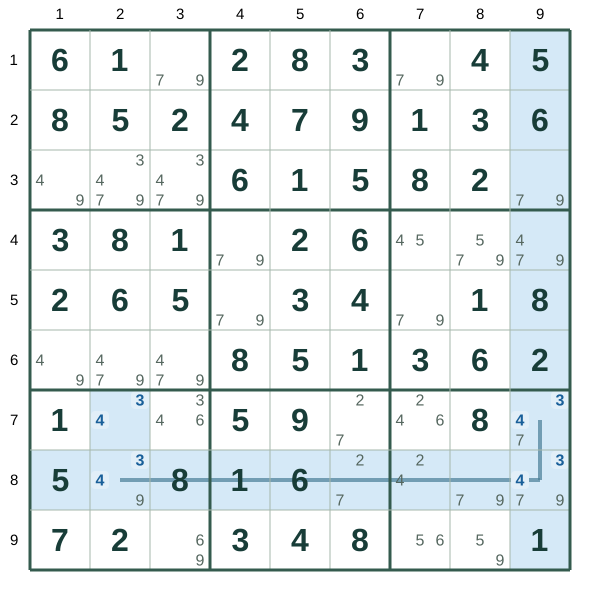
Step 3 · Assume R8C9=4
If R8C9=4, R8C9 cannot contain 3. The row strong link forces R8C2 to 3, and the column strong link forces R7C9 to 3; the exact bivalue corner R7C2 becomes 4. Exchanging 3, 4 in the resulting rectangle gives a second solution, so the assumption is false.
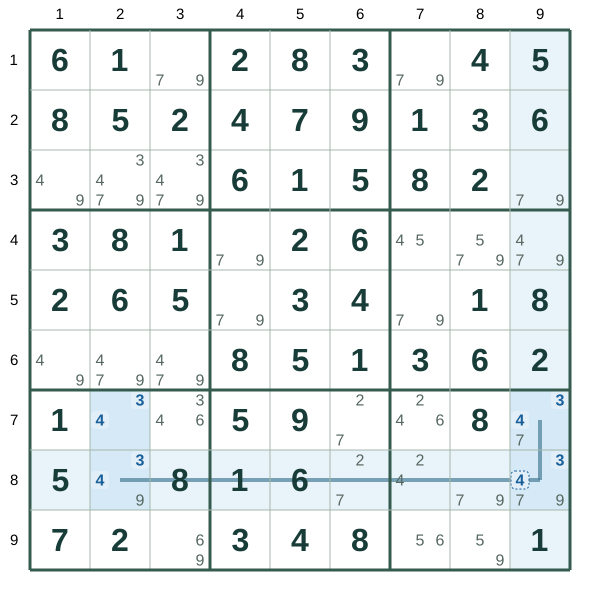
Step 4 · Remove the diagonal candidate
Remove R8C9=4. Candidate 4 at R8C9 would create the two-solution rectangle shown above.
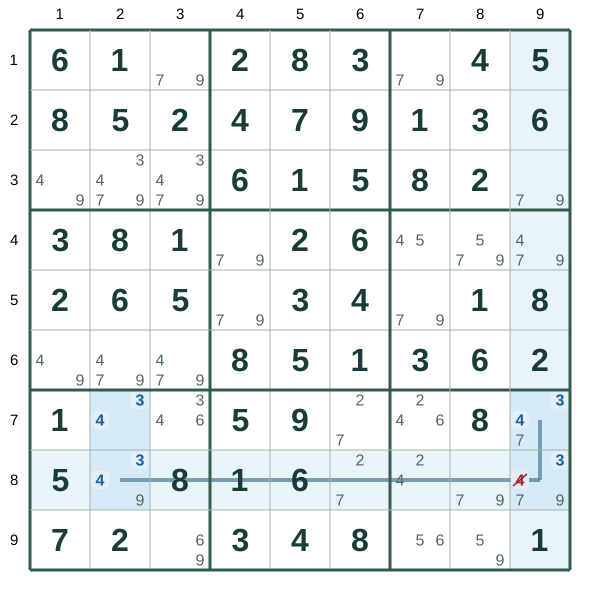
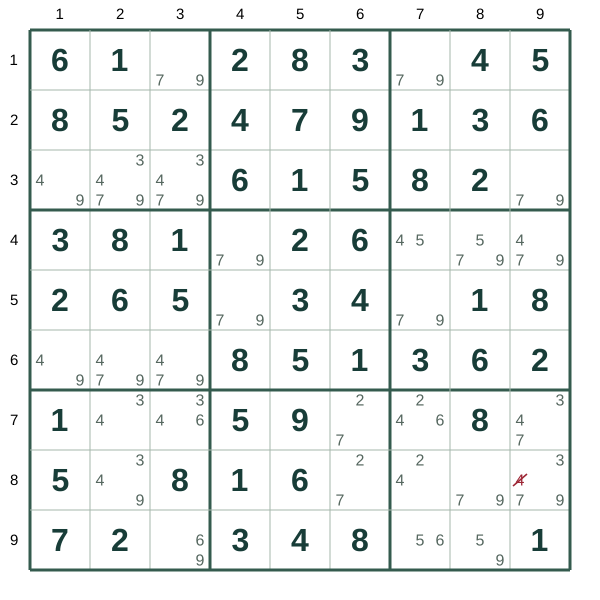
What it allows
Remove R8C9=4. Candidate 4 at R8C9 would create the two-solution rectangle shown above.
Lesson directory
Practice
This course is adapted from Platon Sudoku App. Read the complete example here, then continue learning and practising in the app.
View on Google Play ↗