Platon Sudoku · Sudoku Study
Unique Rectangle · Step-by-step example
Four cells in two rows, two columns, and two boxes form a deadly rectangle when all four are restricted to the same pair. Remove both pair digits from the fourth corner.
This course is adapted from Platon Sudoku App. Read the complete example here, then continue learning and practising in the app.
View on Google PlayRecognize the pattern
Four cells in two rows, two columns, and two boxes form a deadly rectangle when all four are restricted to the same pair.
How to find it
Find three corners with only the same pair and inspect the remaining corner for extra candidates.
What it allows
Remove both pair digits from the fourth corner.
Avoid the mix-up
The four corners must occupy exactly two boxes; if the fourth has only the pair, the puzzle would have two solutions.
Step-by-step example · Top left
This example starts from a saved intermediate position. Its candidates include earlier logical eliminations; they are not fresh automatic notes.
Blue: evidence. Green: conclusion. Crossed-out digits: eliminated candidates. R1C1 means row 1, column 1.
Step 1 · Where to look
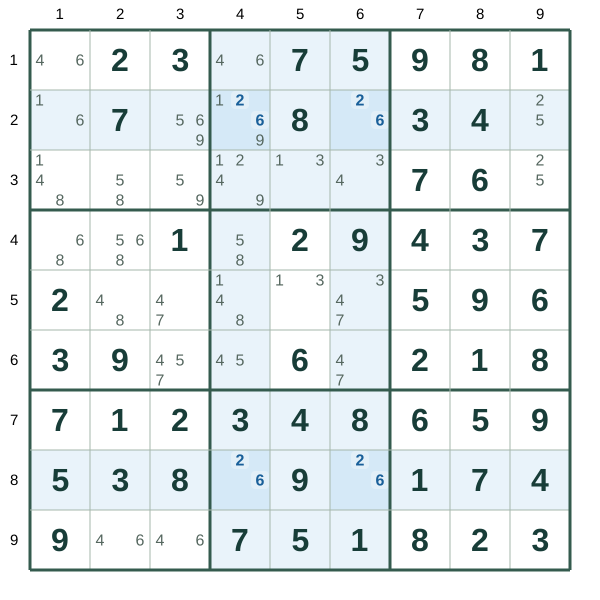
This argument assumes the puzzle has exactly one solution. These four cells occupy two rows, two columns and two boxes. Swapping the two digits would preserve every region.
Step 2 · Unique Rectangle Type 1
Type 1: three corners have only 2, 6. If the fourth also took one of these digits, the rectangle could be swapped. The fourth must use another digit.
Step 3 · Rectangle filling 1
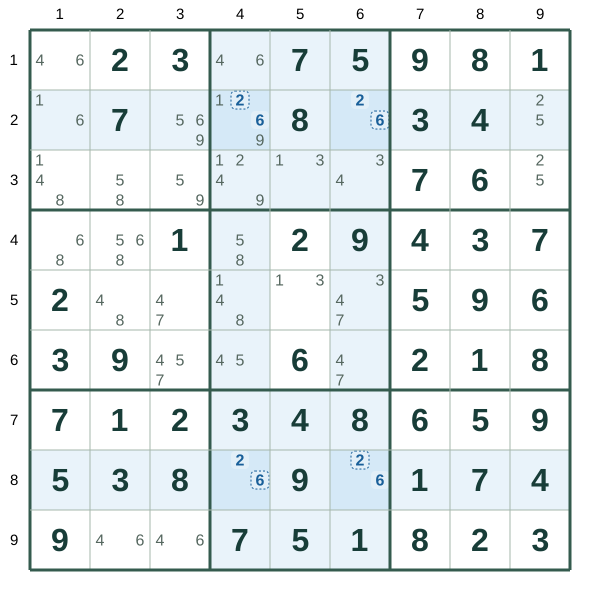
Possible rectangle filling 1: R2C4=2, R2C6=6, R8C4=6, R8C6=2. Swapping all four entries gives the other filling. These are hypothetical values only.
Step 4 · Withdraw the previous rectangle filling
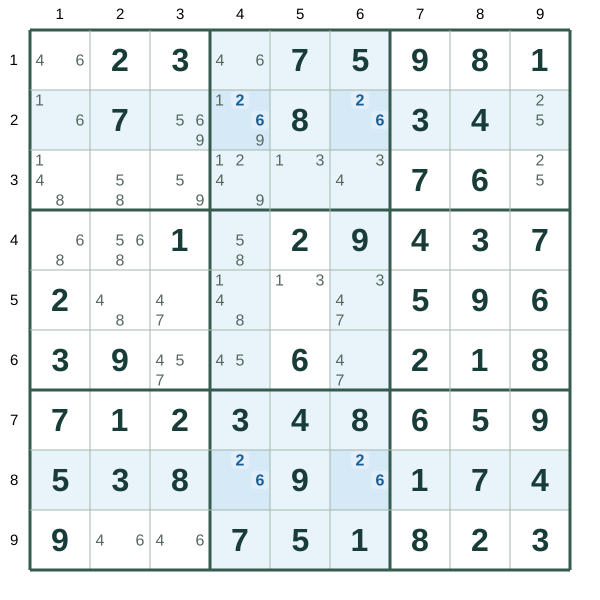
Withdraw this assumption and its consequences. Return to the unchanged candidate snapshot before examining the next possibility.
Step 5 · Rectangle filling 2
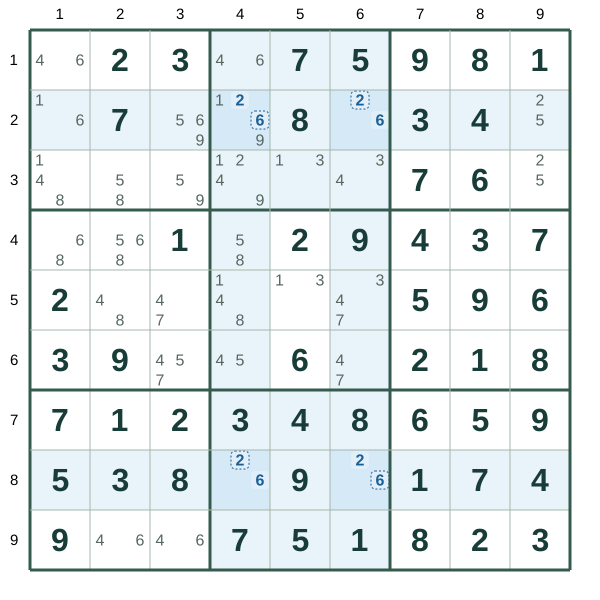
Possible rectangle filling 2: R2C4=6, R2C6=2, R8C4=2, R8C6=6. Swapping all four entries gives the other filling. These are hypothetical values only.
Step 6 · Withdraw the previous rectangle filling
Withdraw this assumption and its consequences. Return to the unchanged candidate snapshot before examining the next possibility.
Step 7 · Type 1: remove both rectangle digits
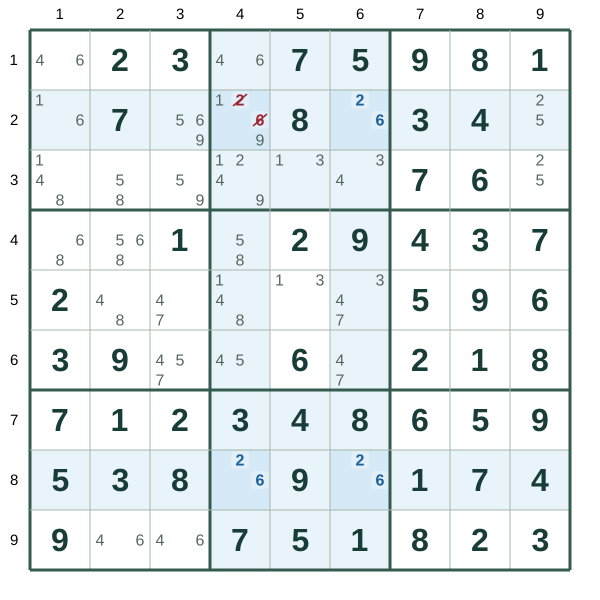
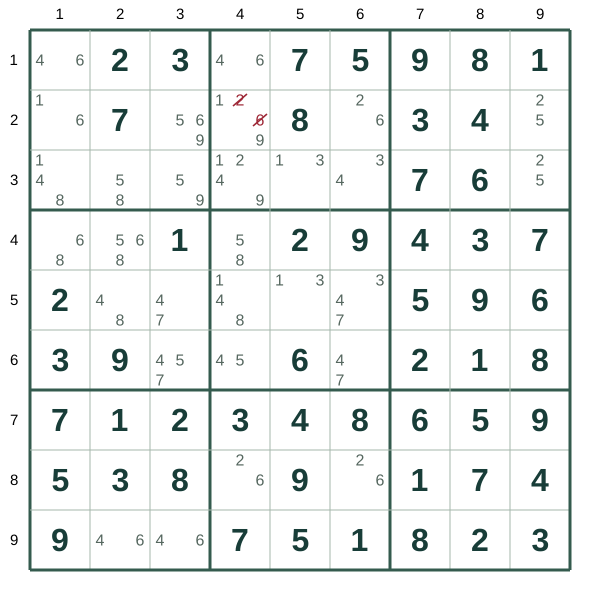
The other three corners are exact bivalue cells containing only 2, 6. If the fourth corner R2C4 took either rectangle digit, the four corners would have two swappable fillings. Remove R2C4=2, R2C4=6; R2C4 must use one of its extra candidates.
What it allows
The other three corners are exact bivalue cells containing only 2, 6. If the fourth corner R2C4 took either rectangle digit, the four corners would have two swappable fillings. Remove R2C4=2, R2C4=6; R2C4 must use one of its extra candidates.
Step-by-step example · Top right
This example starts from a saved intermediate position. Its candidates include earlier logical eliminations; they are not fresh automatic notes.
Blue: evidence. Green: conclusion. Crossed-out digits: eliminated candidates. R1C1 means row 1, column 1.
Step 1 · Where to look
This argument assumes the puzzle has exactly one solution. These four cells occupy two rows, two columns and two boxes. Swapping the two digits would preserve every region.
Step 2 · Unique Rectangle Type 1
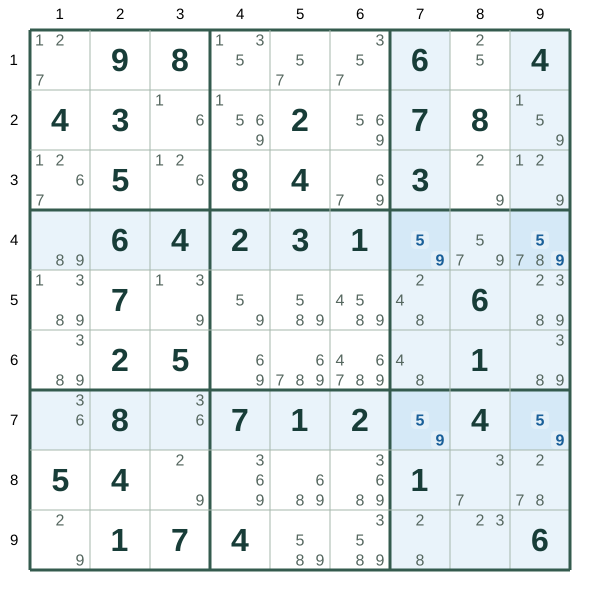
Type 1: three corners have only 5, 9. If the fourth also took one of these digits, the rectangle could be swapped. The fourth must use another digit.
Step 3 · Rectangle filling 1
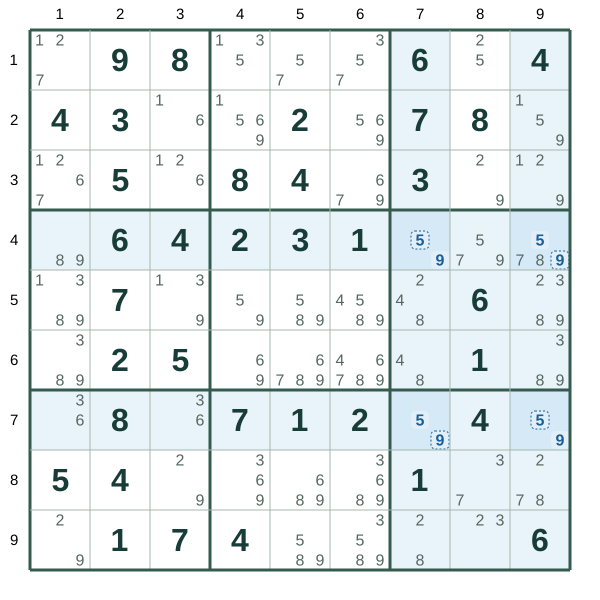
Possible rectangle filling 1: R4C7=5, R4C9=9, R7C7=9, R7C9=5. Swapping all four entries gives the other filling. These are hypothetical values only.
Step 4 · Withdraw the previous rectangle filling
Withdraw this assumption and its consequences. Return to the unchanged candidate snapshot before examining the next possibility.
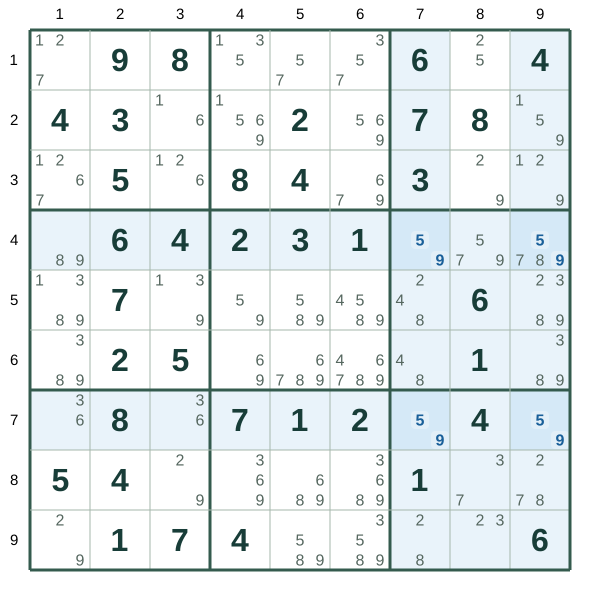
Step 5 · Rectangle filling 2
Possible rectangle filling 2: R4C7=9, R4C9=5, R7C7=5, R7C9=9. Swapping all four entries gives the other filling. These are hypothetical values only.
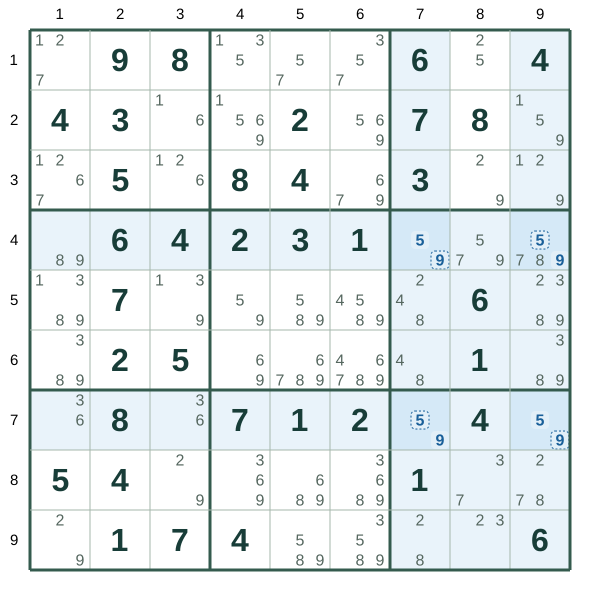
Step 6 · Withdraw the previous rectangle filling
Withdraw this assumption and its consequences. Return to the unchanged candidate snapshot before examining the next possibility.
Step 7 · Type 1: remove both rectangle digits
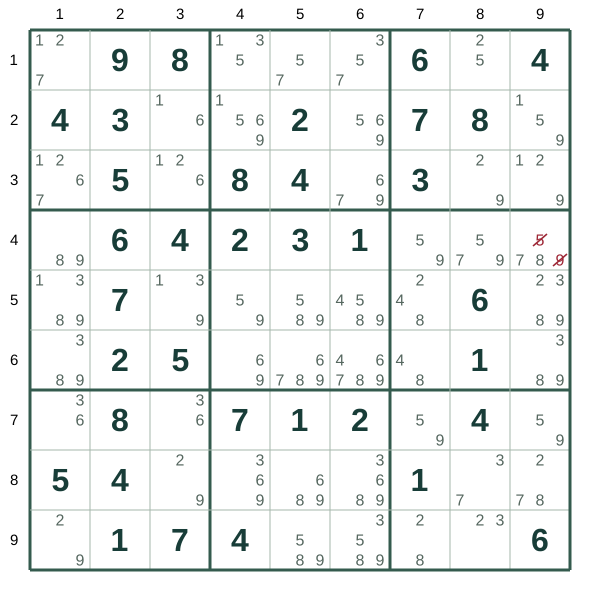
The other three corners are exact bivalue cells containing only 5, 9. If the fourth corner R4C9 took either rectangle digit, the four corners would have two swappable fillings. Remove R4C9=5, R4C9=9; R4C9 must use one of its extra candidates.
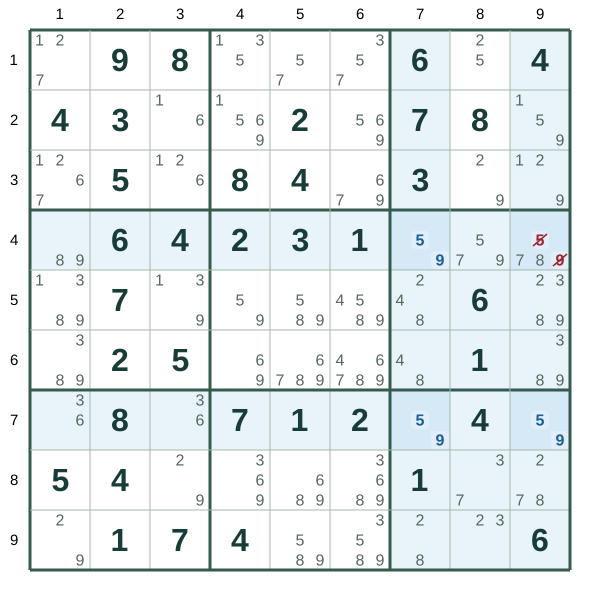
What it allows
The other three corners are exact bivalue cells containing only 5, 9. If the fourth corner R4C9 took either rectangle digit, the four corners would have two swappable fillings. Remove R4C9=5, R4C9=9; R4C9 must use one of its extra candidates.
Step-by-step example · Bottom left
This example starts from a saved intermediate position. Its candidates include earlier logical eliminations; they are not fresh automatic notes.
Blue: evidence. Green: conclusion. Crossed-out digits: eliminated candidates. R1C1 means row 1, column 1.
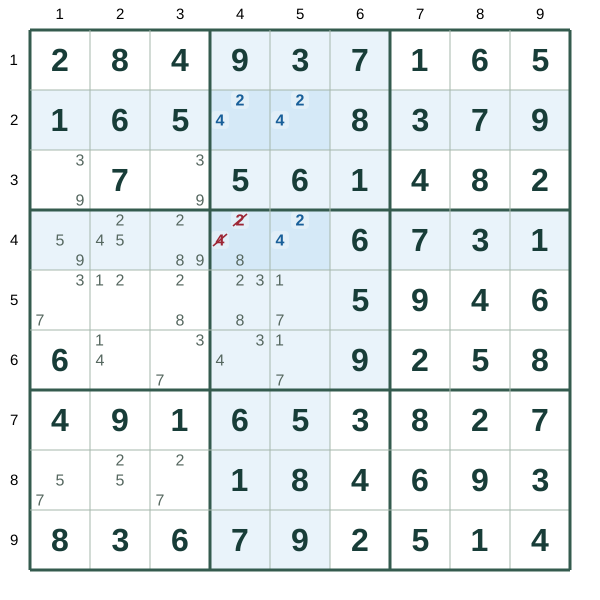
Step 1 · Where to look
This argument assumes the puzzle has exactly one solution. These four cells occupy two rows, two columns and two boxes. Swapping the two digits would preserve every region.
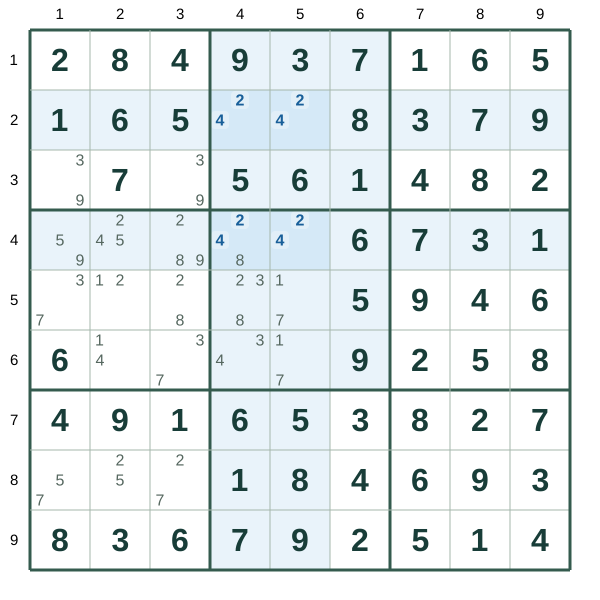
Step 2 · Unique Rectangle Type 1
Type 1: three corners have only 2, 4. If the fourth also took one of these digits, the rectangle could be swapped. The fourth must use another digit.
Step 3 · Rectangle filling 1
Possible rectangle filling 1: R2C4=2, R2C5=4, R4C4=4, R4C5=2. Swapping all four entries gives the other filling. These are hypothetical values only.
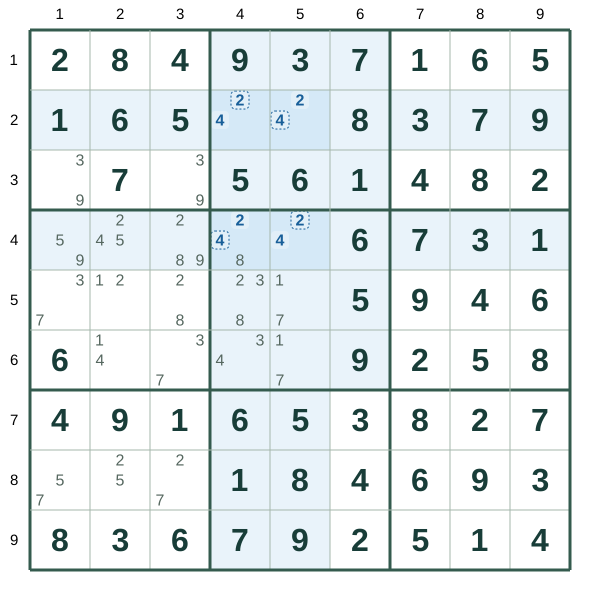
Step 4 · Withdraw the previous rectangle filling
Withdraw this assumption and its consequences. Return to the unchanged candidate snapshot before examining the next possibility.
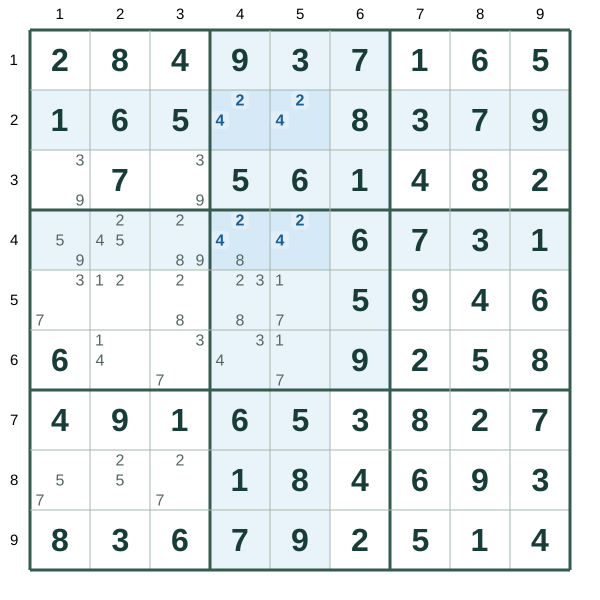
Step 5 · Rectangle filling 2
Possible rectangle filling 2: R2C4=4, R2C5=2, R4C4=2, R4C5=4. Swapping all four entries gives the other filling. These are hypothetical values only.
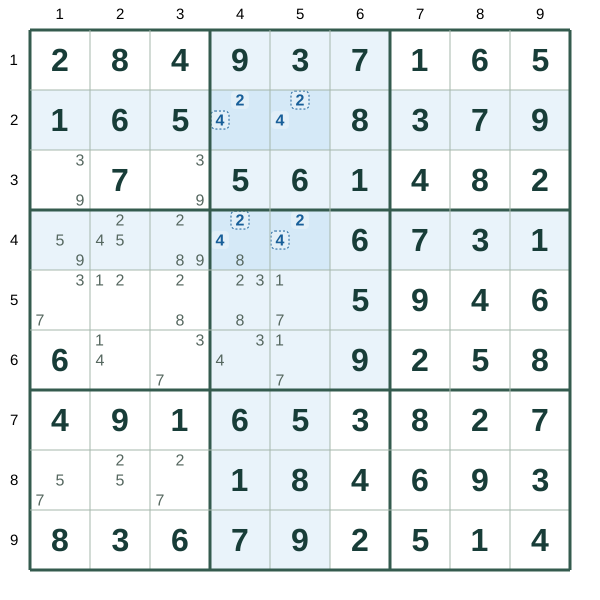
Step 6 · Withdraw the previous rectangle filling
Withdraw this assumption and its consequences. Return to the unchanged candidate snapshot before examining the next possibility.
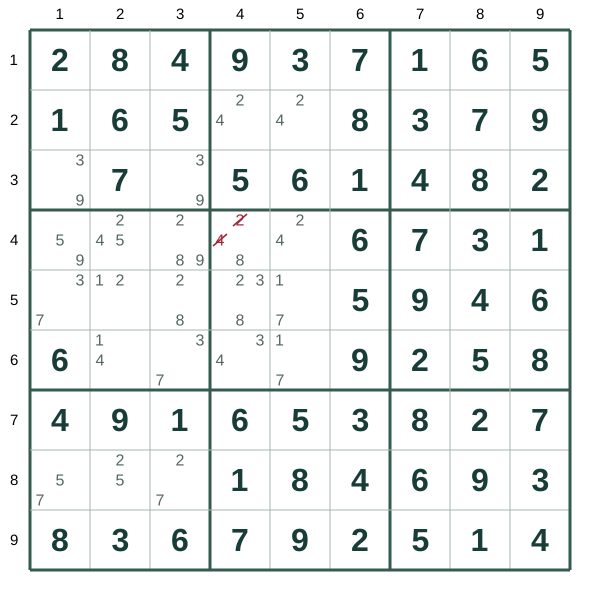
Step 7 · Type 1: remove both rectangle digits
The other three corners are exact bivalue cells containing only 2, 4. If the fourth corner R4C4 took either rectangle digit, the four corners would have two swappable fillings. Remove R4C4=2, R4C4=4; R4C4 must use one of its extra candidates.
What it allows
The other three corners are exact bivalue cells containing only 2, 4. If the fourth corner R4C4 took either rectangle digit, the four corners would have two swappable fillings. Remove R4C4=2, R4C4=4; R4C4 must use one of its extra candidates.
Step-by-step example · Bottom right
This example starts from a saved intermediate position. Its candidates include earlier logical eliminations; they are not fresh automatic notes.
Blue: evidence. Green: conclusion. Crossed-out digits: eliminated candidates. R1C1 means row 1, column 1.
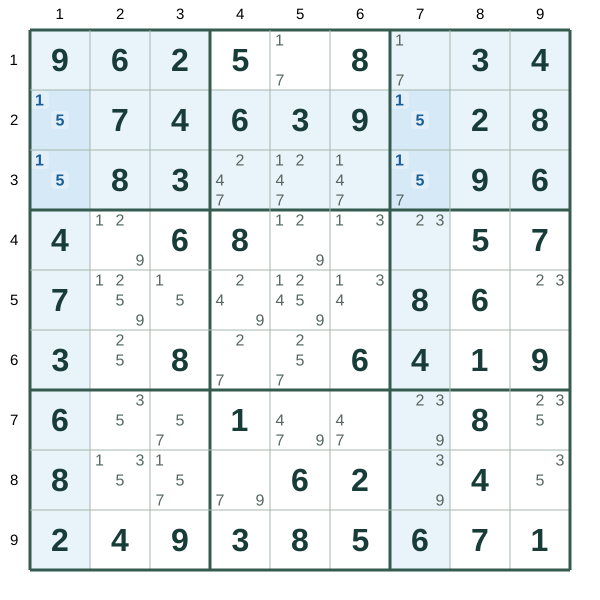
Step 1 · Where to look
This argument assumes the puzzle has exactly one solution. These four cells occupy two rows, two columns and two boxes. Swapping the two digits would preserve every region.
Step 2 · Unique Rectangle Type 1
Type 1: three corners have only 1, 5. If the fourth also took one of these digits, the rectangle could be swapped. The fourth must use another digit.
Step 3 · Rectangle filling 1
Possible rectangle filling 1: R2C1=1, R2C7=5, R3C1=5, R3C7=1. Swapping all four entries gives the other filling. These are hypothetical values only.
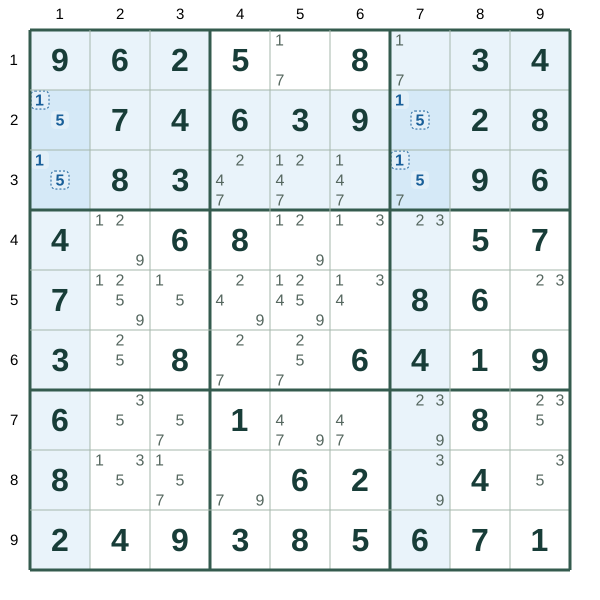
Step 4 · Withdraw the previous rectangle filling
Withdraw this assumption and its consequences. Return to the unchanged candidate snapshot before examining the next possibility.
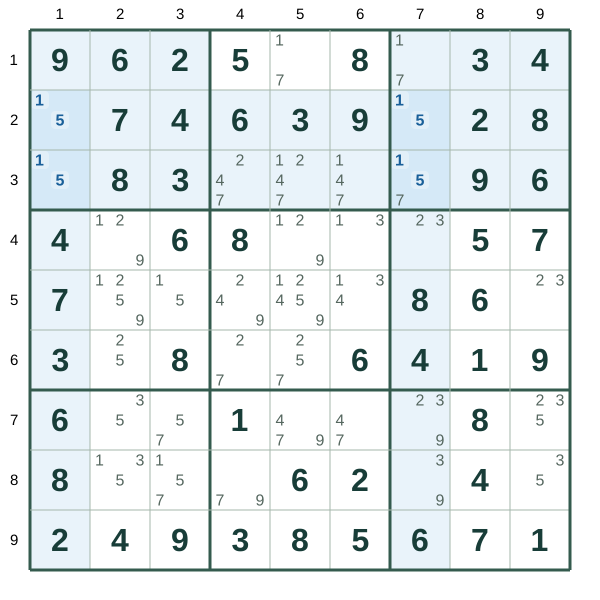
Step 5 · Rectangle filling 2
Possible rectangle filling 2: R2C1=5, R2C7=1, R3C1=1, R3C7=5. Swapping all four entries gives the other filling. These are hypothetical values only.
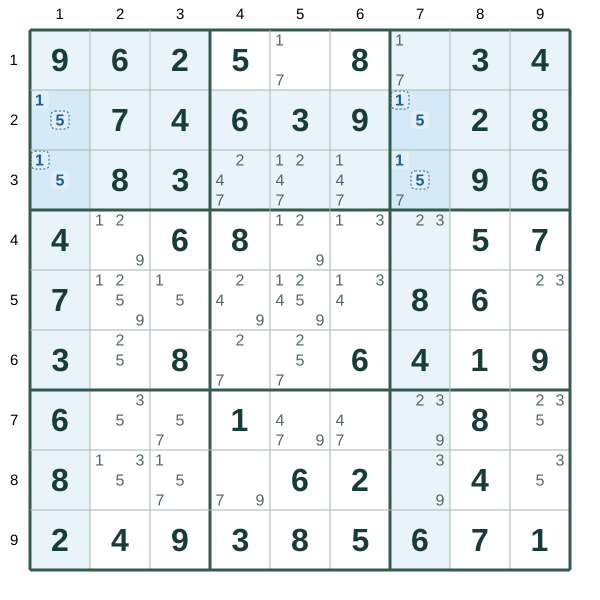
Step 6 · Withdraw the previous rectangle filling
Withdraw this assumption and its consequences. Return to the unchanged candidate snapshot before examining the next possibility.
Step 7 · Type 1: remove both rectangle digits
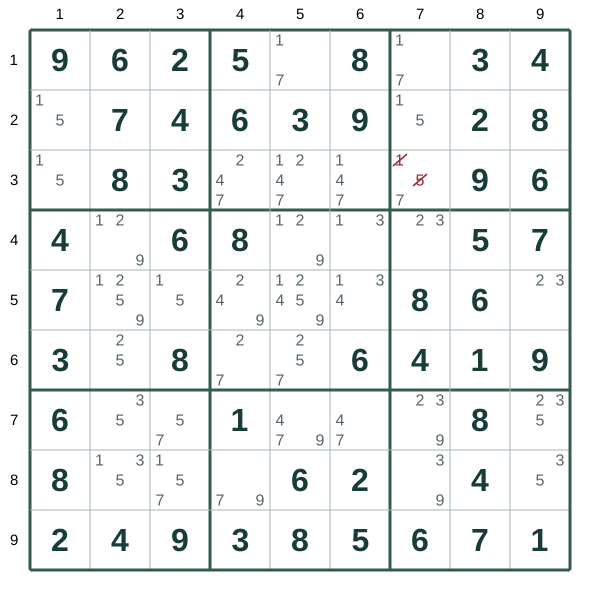
The other three corners are exact bivalue cells containing only 1, 5. If the fourth corner R3C7 took either rectangle digit, the four corners would have two swappable fillings. Remove R3C7=1, R3C7=5; R3C7 must use one of its extra candidates.
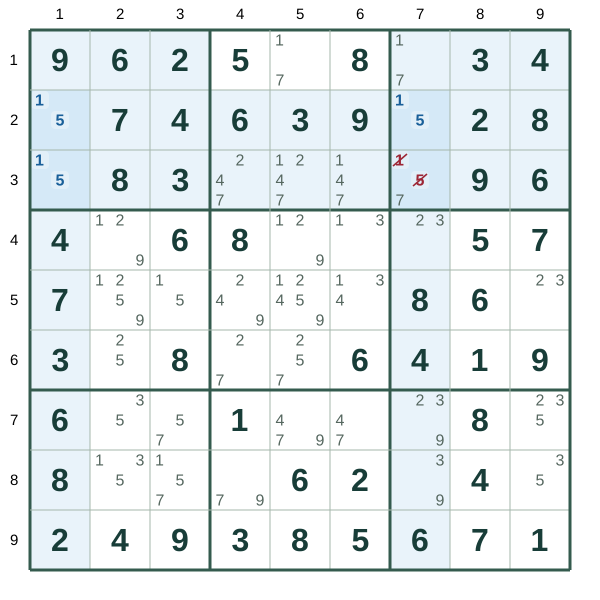
What it allows
The other three corners are exact bivalue cells containing only 1, 5. If the fourth corner R3C7 took either rectangle digit, the four corners would have two swappable fillings. Remove R3C7=1, R3C7=5; R3C7 must use one of its extra candidates.
Practice
This course is adapted from Platon Sudoku App. Read the complete example here, then continue learning and practising in the app.
View on Google Play